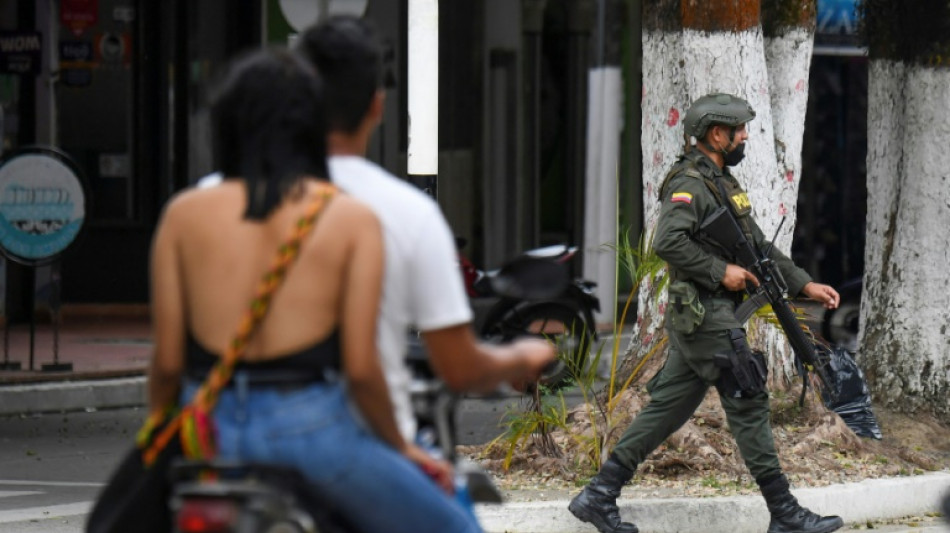
Warring guerrillas bring misery to Colombian region / Photo: ©

 Climate-threatened Fijian utopia rejects calls to relocate
 Bolsonaro's party says it recognizes Lula's election win in Brazil

 Meghan on TV menu for 'Junior MasterChef Australia'
 South Korea's chip boom fuels forecast-beating third-quarter growth

 US-brokered truce begins in Ukraine city occupied by Russia

 Qatar launches Fashion and Crafts Council to connect talent with global markets

 Jordan strikes militant groups in Syria after church attack

 FIA chief praises Middle East motorsport volunteers and officials
 Australia warns of 'unprecedented' AI threat

 Qatar Amir arrives in Moscow for eighth GECF summit

 Kane beats Yamal and Mbappe to taste Ballon d'Or glory

 Ballon d'Or crowns Putellas's return to top of women's game
 Godts stars as PSG beat Lyon to go top of Ligue 1

 NBA inks deal with Kalshi and Polymarket, citing safeguards

 US rapper Macklemore launches 'Free Palestine Tour' after Ed Sheeran fallout

 Venezuela leader criticizes Machado over dramatic return from exile

 Brazil markets battered after Lula win, AI in focus elsewhere
 Lula savors Brazil win as Bolsonaro rejects result, markets tumble

 Canadian youths ask court to impose binding climate protections

 Walter Koenig, who played original Chekov on 'Star Trek,' dies at 90

 Netanyahu, rivals trade attacks over Iran as clock counts down to Israel vote
 Townsend urges Scotland to use Nations Championship as World Cup springboard

 Microsoft offers voluntary exit packages to 60,000 staff
 S.Africa ambassador calls for talks with US over 'tense' ties
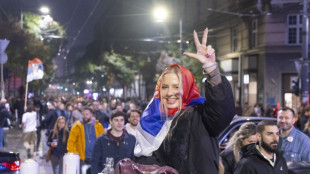 'Smells of freedom': Serbians hopeful after landmark election

Fear reigns in northeastern Colombia on the border with Venezuela where the local population has been caught in the crossfire of rival warring groups of left-wing guerrillas.
Since the start of the year, the National Liberation Army (EL), Colombia's last recognized guerrilla group, and dissidents of the Revolutionary Armed Forces of Colombia (FARC) rebels that laid down arms and signed a 2016 peace deal with the government, have waged a merciless battle in Arauca.
"What is in play is territorial control of the department and multiple trafficking with neighboring Venezuela," on the other side of the Arauca river, a political scientist based in the region who spoke on condition of anonymity, told AFP.
Almost 50 people have been killed in the violence in less than four weeks.
Murders, kidnappings and threats have become a daily occurrence.
A shocking car bombing outside a building housing social organizations on January 19 marked an escalation of violence. FARC dissidents were blamed for the attack.
Simeon Delgado, a 45-year-old security guard and father of three, was killed in the explosion.
"This damn war took him from us. A war we didn't ask to be a part of, we have nothing to do with this conflict," said his sister Alba.
- Devoured by corruption -
At least a dozen deaths were registered in the last week of January.
The modus operandi is almost always the same: gun-totting hitmen on motorbikes who disappear as quickly as they appeared.
"Every day they kill. Often we don't even know why. How could you not be afraid?" said Andres Prada, an indigenous leader.
The conflict revolves around a "triangle of death" area alongside the Arauca river.
The Arauca region is as large as Belgium but sparsely populated. Its economy is driven by the Cano Limon oil field that is heavily guarded by soldiers, as well as agriculture and contraband.
Arauca is "devoured by corruption, and a border region that is a goldmine for guerrillas," said one source, also under the condition of anonymity.
"Everything is transported by the river: people, merchandise and, of course, drugs."
If it was not for some menacing graffiti on walls and nervous-looking soldiers, there would be an air of normality in Arauca.
"No-one is fooled, everyone is spying on everyone else," said a former soldier, now working as a driver.
Bikers don't use helmets "the guerrillas don't allow it" so they can keep an eye on who is moving about.
While some people speak to reporters, no one wants to give their names out of fear.
"If you give my name, tomorrow I will be a corpse," said the family member of one victim.
- Curfew -
On the shores of the river, where Venezuelans with their arms full of goods arrive, the sight of an unknown face causes immediate suspicion.
People surreptitiously take the person's photo with their mobile phones.
Local authorities have imposed a nighttime curfew and FARC dissidents have also banned anyone from moving around after 7:00 pm.
That FARC influence is new, though.
Arauca is a traditional ELN fiefdom where the rebels impose their rules and "revolutionary" tax.
"Nothing happens without the consent of the ELN, which benefits from considerable income from organized extorsion and the oil wells," said the political scientist.
"Everyone pays, in one way or another. The ELN is invisible, but their men are everywhere."
Colombia's right-wing government accuses its populist socialist counterparts in Venezuela of supporting and providing refuge for far left guerrillas.
"The violence began last year in Venezuelan territory when the 10th Front FARC dissidents began to fight the ELN for its bases and income, and then fought directly with Venezuelan security forces," said Camilo Gonzalez, director of the Indepaz think tank.
- Who is defending the people? -
The ELN and FARC had a brief armistice from 2011 but that ended with the 2016 peace deal.
FARC dissidents have gained a lot of ground in the last two years.
"FARC dissidents have been very active in recent months trying to take control of the drug trafficking routes to Venezuela and Brazil," said a security expert in Bogota.
The government has sent more troops but they are barely visible away from oil infrastructure.
Both rebel groups present themselves as "defenders of the people" and accuse their rivals of complicity with the state.
"Each group is attacking populations that allegedly sympathise with or support the other group," said Gonzalez.
"There were a lot of murders in 2021," said one religious leader. "But the dynamic has suddenly accelerated. This is just the beginning."
C.Meier--BTB