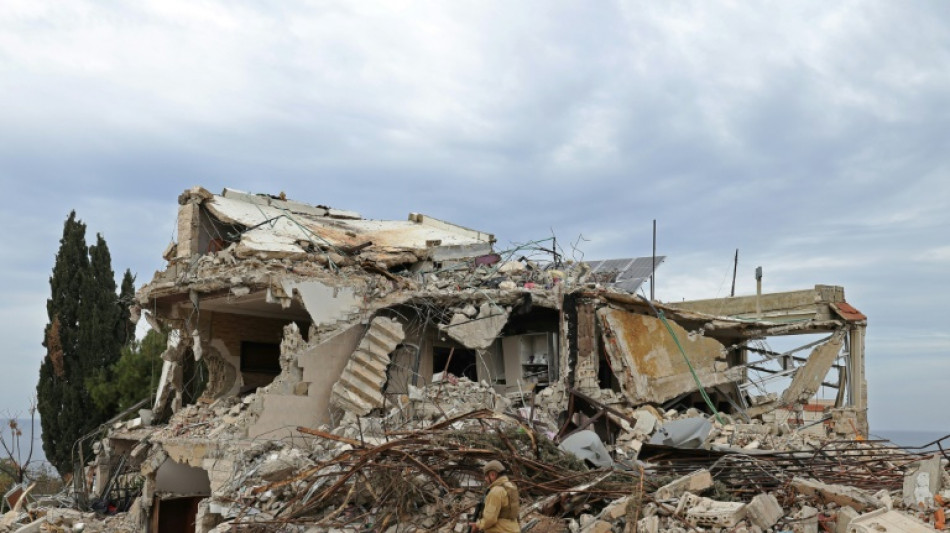
Despite truce, Lebanese from devastated Naqura cannot go home / Photo: © AFP

 US Open under the influence: content creators spark debate

 NBA hammers Clippers over Leonard salary cap violations

 NBA strips five first-round draft picks from Clippers for Leonard salary cap violations
 Kane brace helps Bayern win German Cup opener
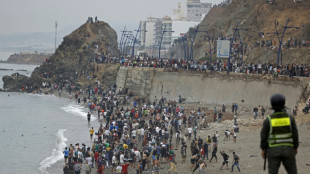
 Migrant plight, local anger divide Ceuta one month after influx
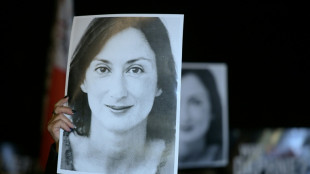 Outrage as Maltese tycoon acquitted of reporter's murder

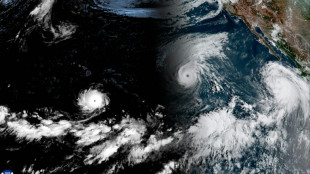 Rare train of Pacific cyclones fueled by historic El Nino
 Macron, King Charles hail UK-France ties after viewing Bayeux Tapestry

 Fury hits out at 'coward' Joshua as 'Battle of Britain' talks go on
 Maltese tycoon acquitted of masterminding reporter's murder

 George Clooney: a Hollywood icon and campaigner

 Europe, US closer than they look on tech rules, says EU tech chief
 Clooney honoured as Hollywood-light Venice Film Festival kicks off

 Third-ranked Pegula, Medvedev power into US Open third round

 Davis-Woodhall a doubt for Ultimate Championship after car crash

 Third-ranked Pegula powers into US Open third round

 Uber says laying off 'about 10%' of workforce worldwide

 US judge rejects bid to break up Google's ad business
 Rupert Murdoch 'very happy' to be played by Guy Pearce in new film

 Wall Street stocks rise despite bond yields, oil rising
 Brennan claims third Vuelta victory in stage 11 sprint

 Nepal flood survivors cling to zipline to cross treacherous river

 US Treasury issues $1 coin with Trump's face on it
 Fernandez 'didn't hesitate' over record Man City move
 Dutch shift 86 tonnes of gold from US, Canada to UK

All signs of life have disappeared from the bombed-out houses and empty streets of the Lebanese border town of Naqura, but despite a fragile Hezbollah-Israel ceasefire that has held since November, no one can return.
The Israeli military is still deployed in parts of Lebanon's south, days ahead of a January 26 deadline to fully implement the terms of the truce.
The deal gave the parties 60 days to withdraw -- Israel back across the border, and Hezbollah farther north -- as the Lebanese army and UN peacekeepers redeployed to the south.
The Lebanese military has asked residents of Naqura not to go back home for their own safety after Israel's army issued similar orders, but in spite of the danger, Mayor Abbas Awada returned to inspect the destruction.
"Naqura has become a disaster zone of a town... the bare necessities of life are absent here," he said in front of the damaged town hall, adding he was worried a lack of funds after years of economic crisis would hamper reconstruction.
"We need at least three years to rebuild," he continued, as a small bulldozer worked to remove rubble near the municipal offices.
Lebanese soldiers deployed in coastal Naqura after Israeli troops pulled out of the country's southwest on January 6, though they remain in the southeast.
The Israelis' withdrawal from Naqura left behind a sea of wreckage.
Opposite the town hall, an old tree has been uprooted. Empty, damaged houses line streets filled with rubble.
Most of the widespread destruction occurred after the truce took hold, Awada said.
"The Israeli army entered the town after the ceasefire" and "destroyed the houses", he said.
"Before the ceasefire, 35 percent of the town was destroyed, but after the truce, 90 percent of it" was demolished, he added, mostly with controlled explosions and bulldozers.
- Smell of death -
Under the November 27 ceasefire deal, which ended more than a year of hostilities between Israel and Hezbollah, the Lebanese army has 60 days to deploy alongside UNIFIL peacekeepers in south Lebanon as Israel withdraws.
At the same time, Hezbollah is required to pull its forces north of the Litani River, around 30 kilometres (20 miles) from the border, and dismantle any remaining military infrastructure it has in the south.
Both sides have accused each other of violations since the truce began.
Around the nearby UNIFIL headquarters, houses are still intact, but almost everywhere else in Naqura lies destruction.
Facades are shorn from bombed-out houses, while others are reduced to crumpled heaps, abandoned by residents who had fled for their lives, leaving behind furniture, clothes and books.
AFP saw a completely destroyed school, banana plantations that had withered away and unharvested oranges on trees, their blossoming flowers barely covering the smell of rotting bodies.
On Tuesday, the civil defence agency said it had recovered two bodies from the rubble in Naqura.
Lebanese soldiers who patrolled the town found an unexploded rocket between two buildings, AFP saw.
In October 2023, Hezbollah began firing across the border into Israel in support of its ally Hamas, a day after the Palestinian group launched its attack on southern Israel that triggered the Gaza war.
An Israeli army spokesperson told AFP that its forces were committed to the ceasefire agreement in Lebanon.
They said the army was working "to remove threats to the State of Israel and its citizens, in full accordance with international law".
- 'We want the wars to end' -
On the coastal road to Naqura UNIFIL and the Lebanese army have set up checkpoints.
Hezbollah's yellow flags fluttered in the wind, but no fighters could be seen.
Twenty kilometres to the north, in Tyre, Fatima Yazbeck waits impatiently in a reception centre for the displaced for her chance to return home.
She fled Naqura 15 months ago, and since then, "I haven't been back", she said, recounting her sadness at learning her house had been destroyed.
Ali Mehdi, a volunteer at the reception centre, said his home was destroyed as well.
"My house was only damaged at first," he said. "But after the truce, the Israelis entered Naqura and destroyed the houses, the orchards and the roads."
In the next room, Mustafa Al-Sayed has been waiting with his large family for more than a year to return to his southern village of Beit Lif.
He had been forced to leave once before, during the previous war between Israel and Hezbollah in 2006.
"Do we have to take our families and flee every 20 years?" he asked. "We want a definitive solution, we want the wars to end."
U.Maertens--VB