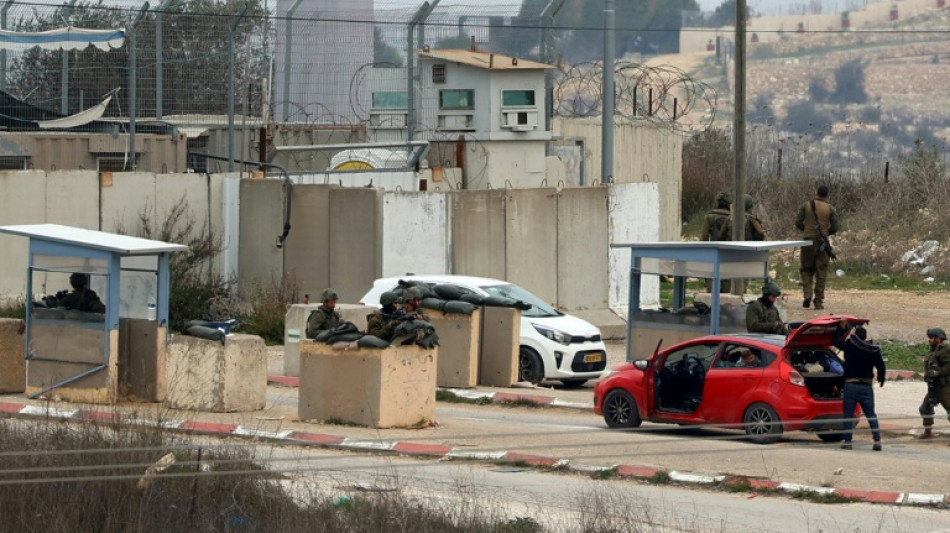
'Living in a cage': West Bank checkpoints proliferate after Gaza truce / Photo: © AFP

 US Open under the influence: content creators spark debate

 NBA hammers Clippers over Leonard salary cap violations
 NBA strips five first-round draft picks from Clippers for Leonard salary cap violations
 Kane brace helps Bayern win German Cup opener
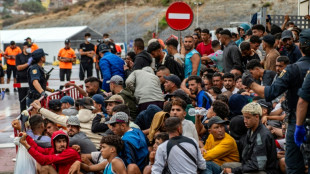 Migrant plight, local anger divide Ceuta one month after influx
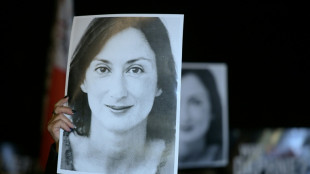 Outrage as Maltese tycoon acquitted of reporter's murder

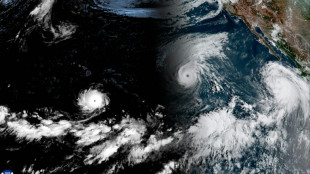 Rare train of Pacific cyclones fueled by historic El Nino
 Macron, King Charles hail UK-France ties after viewing Bayeux Tapestry

 Fury hits out at 'coward' Joshua as 'Battle of Britain' talks go on
 Maltese tycoon acquitted of masterminding reporter's murder

 George Clooney: a Hollywood icon and campaigner

 Europe, US closer than they look on tech rules, says EU tech chief

 Clooney honoured as Hollywood-light Venice Film Festival kicks off

 Third-ranked Pegula, Medvedev power into US Open third round
 Davis-Woodhall a doubt for Ultimate Championship after car crash

 Third-ranked Pegula powers into US Open third round

 Uber says laying off 'about 10%' of workforce worldwide

 US judge rejects bid to break up Google's ad business
 Rupert Murdoch 'very happy' to be played by Guy Pearce in new film

 Wall Street stocks rise despite bond yields, oil rising

 Brennan claims third Vuelta victory in stage 11 sprint

 Nepal flood survivors cling to zipline to cross treacherous river

 US Treasury issues $1 coin with Trump's face on it
 Fernandez 'didn't hesitate' over record Man City move
 Dutch shift 86 tonnes of gold from US, Canada to UK

Father Bashar Basiel moved freely in and out of his parish in the occupied West Bank until Israeli troops installed gates at the entrance of his village Taybeh overnight, just hours after a ceasefire began in Gaza.
"We woke up and we were surprised to see that we have the iron gates in our entrance of Taybeh, on the roads that are going to Jericho, to Jerusalem, to Nablus," said Basiel, a Catholic priest in the Christian village north of Ramallah.
All over the West Bank, commuters have been finding that their journey to work takes much longer since the Gaza ceasefire started.
"We have not lived such a difficult situation (in terms of movement) since the Second Intifada," Basiel told AFP in reference to a Palestinian uprising in the early 2000s.
He said he was used to the checkpoints, which are dotted along the separation barrier that cuts through much of the West Bank and at the entrances to Palestinian towns and cities.
But while waiting times got longer in the aftermath of the October 2023 Hamas attack that sparked the Gaza war, now it has become almost impossible to move between cities and villages in the West Bank.
- Concrete blocks, metal gates -
Left-leaning Israeli newspaper Haaretz reported that Israeli authorities ordered the military to operate dozens of checkpoints around the West Bank during the first 42 days of the ceasefire.
According to the Palestinian Wall Resistance Commission, 146 iron gates were erected around the West Bank after the Gaza war began, 17 of them in January alone, bringing the total number of roadblocks in the Palestinian territory to 898.
"Checkpoints are still checkpoints, but the difference now is that they've enclosed us with gates. That's the big change," said Anas Ahmad, who found himself stuck in traffic for hours on his way home after a usually open road near the university town of Birzeit was closed.
Hundreds of drivers were left idling on the road out of the city as they waited for the Israeli soldiers to allow them through.
The orange metal gates Ahmad was referring to are a lighter version of full checkpoints, which usually feature a gate and concrete shelters for soldiers checking drivers' IDs or searching their vehicles.
"The moment the truce was signed, everything changed 180 degrees. The Israeli government is making the Palestinian people pay the price," said Ahmad, a policeman who works in Ramallah.
Israeli military spokesman Nadav Shoshani did not comment on whether there had been an increase in the number of checkpoints but said the military used them to arrest wanted Palestinian militants.
"We make sure that the terrorists do not get away but the civilians have a chance to get out or go wherever they want and have their freedom of movement," he said in a media briefing on Wednesday.
- 'Like rabbits in a cage' -
Basiel said that now, when the gates are closed, "I have to wait, or I have to take another way" into Taybeh, a quiet village known for its brewery.
He said that on Monday people waited in their cars from 4:00 pm to 2:00 am while each vehicle entering the village was meticulously checked.
Another Ramallah area resident, who preferred not to be named for security reasons, compared his new environment to that of a caged animal.
"It's like rabbits living in a cage. In the morning they can go out, do things, then in the evening they have to go home to the cage," he said.
Shadi Zahod, a government employee who commutes daily between Salfit and Ramallah, felt similarly constrained.
"It's as if they're sending us a message: stay trapped in your town, don't go anywhere", he told AFP.
"Since the truce, we've been paying the price in every Palestinian city," he said, as his wait at a checkpoint in Birzeit dragged into a third hour.
- Impossible to make plans -
Before approving the Gaza ceasefire, Israel's security cabinet reportedly added to its war goals the "strengthening of security" in the West Bank.
Israeli human rights group B'Tselem said in a statement on Tuesday that Israel "is merely shifting its focus from Gaza to other areas it controls in the West Bank".
A 2019 academic paper by Jerusalem's Applied Research Institute estimated that at the time Palestinians lost 60 million work hours per year to restrictions.
But for Basiel, the worst impact is an inability to plan even a day ahead.
"The worst thing that we are facing now, is that we don't have any vision for the near future, even tomorrow."
A.Kunz--VB