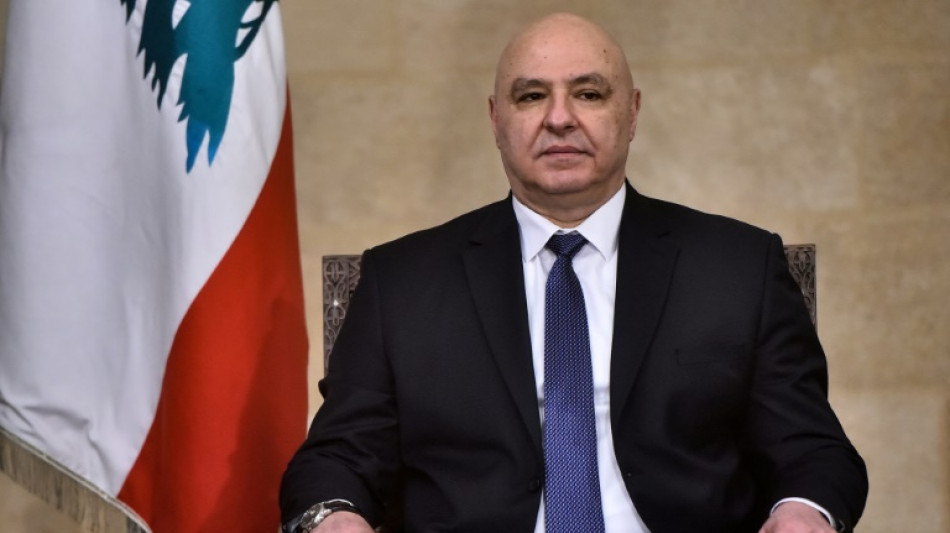
Weakening of Hezbollah allowed Lebanon to fill vacant presidency / Photo: © AFP

 Thousands bid farewell to Bosnian Serb war criminal in Belgrade

 EU chief announces 200-mn-euro investment package for Greenland
 Lebanon says Israel conducts wave of deadly strikes
 Cipheras Group - Apex AI Fund Deploys 290-Billion-Parameter Proprietary Large Language Model
 Germany's Merz 'shocked' by far-right state win but vows to stay course
 UK finance minister Healey pledges strict fiscal discipline as budget looms
 Mbappe embraces Ballon d'Or talk after historic World Cup exploits
 Tech firms rally, with eyes on US inflation update
 Jaguar Land Rover to cut 4,000 jobs as European car sector hits skids
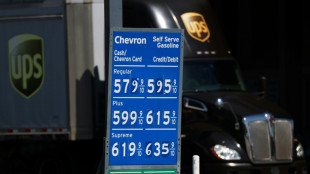 US average diesel price rises to record $5.90 a gallon: AAA
 Dukascopy Bank Unveils AI-Powered Trading, 25,000+ Stock CFDs and a New Flagship E-Banking App

 Tech firms rally but Asian markets mixed, with eyes on US inflation
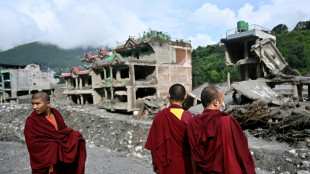 Nepal holds day of mourning as families pray missing still alive

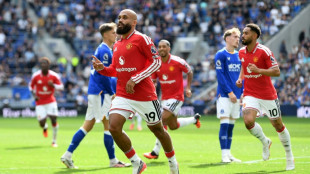 African players in Europe: Mbeumo fires solo goal as United draw
 Malaysia cancels haze emergency, but warns problems remain
 Philippine sensation Eala looks forward to Asian Games 'fun'
 Jakarta airport extends closure after volcano eruption
 Lonely woman director in Venice sees industry backsliding on gender
 Tech firms rally on mixed day for Asian markets, with eyes on US inflation
 World number one An sends Asian Games warning with China hat-trick
 PSG go for three in a row as Champions League returns
 "Super-human' Alcaraz books US Open quarter-final clash with Shelton
 ECB set to hike interest rates as Iran war flares anew
 AI data centers are less thirsty now, tech giants say
 North Korea vows nuclear-armed navy as US ally drills open
The weakening of Hezbollah in last year's war with Israel allowed Lebanon's long deadlocked parliament to reach consensus around a president who has the confidence of the international community.
Army chief Joseph Aoun, who was elected on Thursday ending a more than two-year vacancy, signalled a readjustment of Lebanon's foreign policy as the country works with international creditors to forge a way out of six years of deepening financial crisis.
Deadlock in parliament between pro- and anti-Hezbollah blocs had stalemated a dozen previous attempts to elect a president, leaving the country largely rudderless in its efforts to secure an emergency bailout.
But two months of full-fledged war with Israel last autumn dealt heavy blows to the Shiite Muslim militant group, with its longtime leader Hassan Nasrallah killed in a September air strike.
Hezbollah also lost a strategic ally last month when Islamist-led rebels ousted longtime Syrian ruler Bashar al-Assad.
Hezbollah's "political defeat follows its devastating military defeat", said Hilal Khashan, professor of political science at the American University of Beirut.
Lina Khatib, of Britain's Chatham House think tank, said it was "the first time since the end of the Lebanese civil war (in 1990) that a Lebanese president is elected without prior approval by Iran and by the ousted Syrian regime".
"Hezbollah's acceptance of Aoun's election underlines that it no longer dictates the political agenda," she told AFP.
"The significant shift in the political status quo... is the direct result of the larger geopolitical changes in the Middle East in which Iran's influence in the region is ending."
- Foreign backing -
The United States, France, Qatar, Saudi Arabia and Egypt, had all lobbied heavily for the election of Aoun to fill the presidential vacancy.
"The role of the quintet was decisive, particularly the last-minute support of Saudi Arabia," a French diplomatic source told AFP on condition of anonymity.
The kingdom had appeared to lose interest in Lebanon in recent years as the influence of Hezbollah and its Iranian sponsor grew.
Aoun committed to "a policy of positive neutrality" and better relations with Arab countries in his inaugural speech.
He also pledged a state monopoly on bearing arms, signalling difficult discussions on disarming Hezbollah, which kept its weapons after the civil war ended in 1990 to fight Israel's occupation of the south, which largely ended with a 2000 withdrawal.
A source close to Hezbollah and its ally the Amal movement of parliament speaker Nabih Berri told AFP that the two parties only voted for Aoun after obtaining reassurances on the reinforcement of the ceasefire with Israel "and the name of the next army chief".
- 'Right leader for this time' -
In the first round of voting on Thursday, Aoun failed to secure the required two-thirds majority, but after meeting with representatives of Hezbollah and Amal, he achieved that in the second round with 99 of the 128 votes cast.
Analysts say the army's central role in implementing the November 27 ceasefire was a key factor in Aoun's rise to the presidency.
US President Joe Biden said on Thursday that Aoun was "the right leader for this time" and would provide "critical leadership" in overseeing the truce.
Under the terms of the ceasefire, the army is deploying in the south as Israeli troops withdraw.
Hezbollah is required to dismantle its remaining military infrastructure in the area and pull its forces back north of the Litani River, around 30 kilometres (20 miles) from the border.
Khashan said it was now down to Aoun with his military background to persuade Hezbollah to lay down its remaining weapons.
"Only a president hailing from the army can disarm Hezbollah, especially after Israel destroyed more than 80 percent of its military hardware," he said.
At this stage, "Hezbollah has no option but to transform itself into a political party without a military component."
J.Sauter--VB