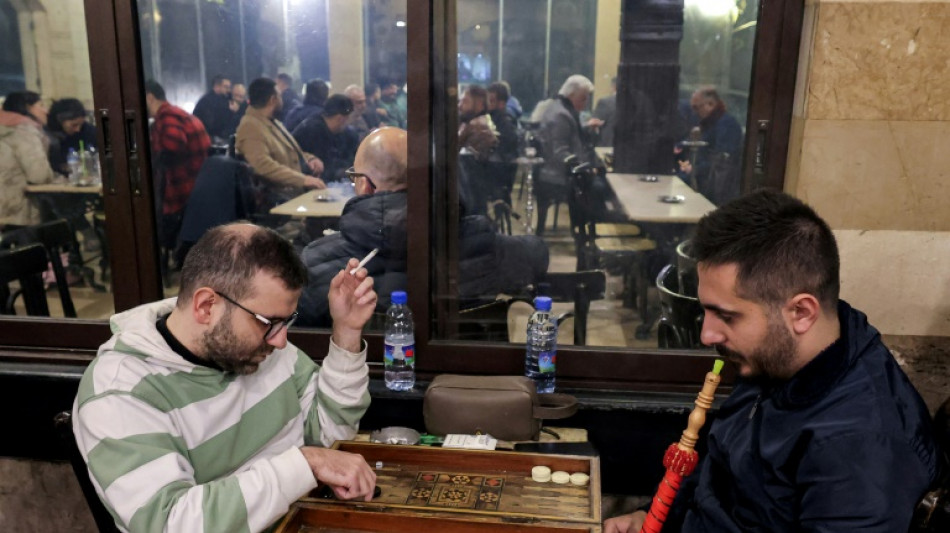
For the first time, Syrians 'not afraid' to talk politics / Photo: © AFP

 Putin and Trump discuss Ukraine in 'extremely frank' call
 French police hunt Renoir thieves after lightning museum heist
 World Cup final scorer Torres leads Ballon d'Or nominees
 Carney touts Canada 'pivot' away from US as tariffs rise
 Spanish stars Cruz, Bardem play strained on-screen couple in new film
 The "Everlasting Battery" Inside Your Joints:UConn Professor's Self-Powered Healing Material just Got Acquired

 Visionary or conman? Elon Musk enigmatic star of Venice documentary
 Trial opens in France over deadliest Channel migrant crossing disaster
 England skipper Root says it's wrong to accuse Pakistan of lacking fight
 Owen Wilson leaves tough action work to Alan Ritchson in 'Runner'

 France's BIC sees high potential in US pot smokers

 WHO says needs 5,000 more healthworkers to tackle Ebola in DRC
 Napoli's McTominay has successful heart procedure

 Two Renoir paintings missing after break-in at France museum
 Oil prices jump, stocks drop as Mideast war flares
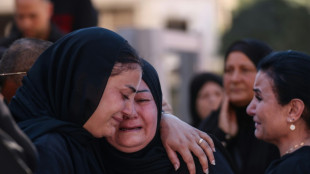 South Lebanon town buries its dead after Israeli strike
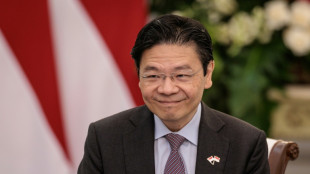 Singapore to bump cabinet wages, already world's highest
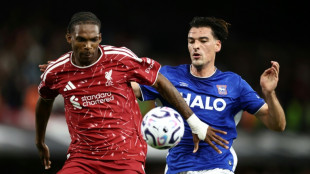
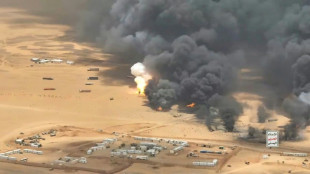 Saudi vows response as Houthis hit oil sites in worst attack in years
 Thieves steal Renoir paintings from France museum

 Nicaragua accuses Germany of multiple violations of law in Gaza genocide case
 Dutch peanut butter artwork proves a sticky attraction
 Forex Expo Dubai to Take Place as Scheduled on 22–23 September 2026
 Russia pounds Kyiv, ending three-day halt for US talks
 Flights resume gradually in Indonesia after volcanic eruption
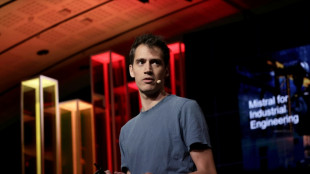 French AI firm Mistral valued at 21 bn euros after latest funding
For decades, any Syrian daring to broach political topics got used to speaking in hushed tones and with a watchful eye trained for a listener among the crowd.
"There were spies everywhere," Mohannad al-Katee said in Al-Rawda cafe in Damascus, adding almost in disbelief: "It's the first time that I sit in a cafe and I can talk about politics.
"It was a dream for Syrians," said Katee, 42, a researcher in political and social history.
Until now, he like thousands of others had grown accustomed to watching for the proverbial flies on the walls of Damascus's renowned cafes.
Today, those same cafes are alive and buzzing with the voices of patrons speaking freely about their country for the first time.
Such discussions "were banned under the previous regime, then there was a relative opening during the Damascus Spring", Katee said.
He was referring to the year 2000, when Bashar al-Assad took over from his late father Hafez and slightly loosened the reins on political life in Syria.
Initially, the young Assad had opened up an unprecedented space, allowing for political salons to flourish alongside calls for reform in a country that had long grown accustomed to fear and silence.
"But it didn't last," said Katee.
A few months after his succession, Assad rolled back those gains, putting an end to the short-lived "Damascus Spring".
In the subsequent years, according to Katee, informants were ubiquitous, from "the hookah waiter to the man at the till, it could have been anyone".
- 'The walls have ears' -
Politically active since 1998, he fled to Saudi Arabia in 2012, a year after the outbreak of Arab Spring protests whose violent repression led to the eruption of the nearly 14-year civil war.
"Political life consisted of secret meetings," he said. "We were always taught that the walls have ears."
Today, "Syrians can never go back to obscurantism and dictatorship, to accepting single-party rule," he said.
A little further on, in the Havana cafe once known as a meeting point for intellectuals and activists in a distant past, Fuad Obeid is chatting with a friend.
Himself a former owner of a cafe he had to shut down, the 64-year-old said: "The intelligence services spent their time at my place. They drank for free as though they owned the place."
For over 50 years, the Assads maintained their vice grip on society, in large part through the countless informants that walked among the population.
On Saturday, Syria's new intelligence chief, Anas Khattab, announced that the service's various branches would be dissolved.
Obeid said: "I used to keep a low profile so they wouldn't know I was the owner. I told customers not to talk politics for fear of reprisals."
Now, he noted, in Havana cafe as in others, the difference is like "night and day".
- 'Truly free' -
Back in Al-Rawda, discussions are in full swing over hookahs and games of backgammon.
The owner Ahmad Kozorosh still can't believe his eyes, having himself witnessed numerous arrests in his own cafe over the years.
"I am now seeing almost exclusively new faces," he said. "People who had been sentenced to death, imprisoned."
To celebrate the new era, he is holding weekly symposiums in the cafe, and will even launch a new political party to be named after it.
Real estate agent Nesrine Shouban, 42, had spent three years in prison for carrying US dollars, a punishable offence in Assad's Syria.
Alongside thousands of others who found freedom when the doors of prisons were flung open, she was released on December 8 from the notorious Adra prison.
"They had dangled in front of us the possibility of an amnesty" from Assad's administration, she said. "Thankfully, the amnesty came from God."
"At cafes, we didn't dare say anything. We were even afraid that our phones were bugged," she said.
Now, for the first time, she said she felt "truly free".
Despite concerns over the radical Islamist background of Syria's new rulers, a breath of freedom has washed over the country for the first time, with public demonstrations being organised -- an unthinkable prospect just one month earlier.
"We are not afraid anymore," said Shouban. "If Jolani makes mistakes, we will denounce them," she added, referring to Syria's new leader Ahmed al-Sharaa, known by his nom de guerre Abu Mohammad al-Jolani.
"In all cases, it can't be worse than Bashar al-Assad."
M.Betschart--VB