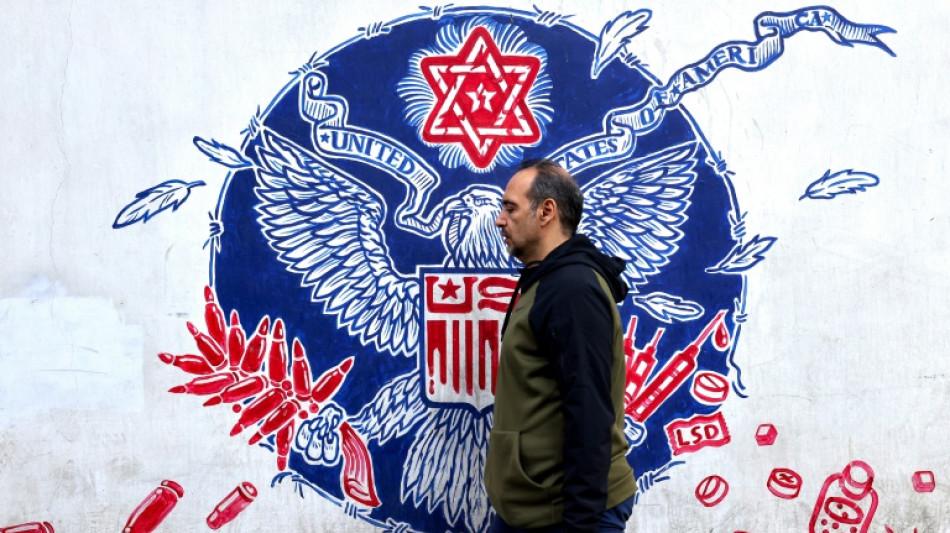
In Iran, late Jimmy Carter remembered as 'architect of sanctions' / Photo: © AFP

 Putin and Trump discuss Ukraine in 'extremely frank' call
 French police hunt Renoir thieves after lightning museum heist
 World Cup final scorer Torres leads Ballon d'Or nominees
 Carney touts Canada 'pivot' away from US as tariffs rise
 Spanish stars Cruz, Bardem play strained on-screen couple in new film
 The "Everlasting Battery" Inside Your Joints:UConn Professor's Self-Powered Healing Material just Got Acquired

 Visionary or conman? Elon Musk enigmatic star of Venice documentary
 Trial opens in France over deadliest Channel migrant crossing disaster

 England skipper Root says it's wrong to accuse Pakistan of lacking fight
 Owen Wilson leaves tough action work to Alan Ritchson in 'Runner'
 France's BIC sees high potential in US pot smokers
 WHO says needs 5,000 more healthworkers to tackle Ebola in DRC
 Napoli's McTominay has successful heart procedure

 Two Renoir paintings missing after break-in at France museum
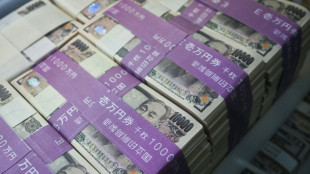 Oil prices jump, stocks drop as Mideast war flares
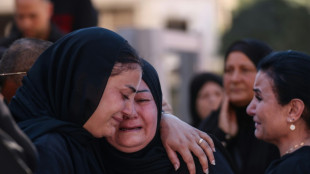 South Lebanon town buries its dead after Israeli strike
 Singapore to bump cabinet wages, already world's highest
 Saudi vows response as Houthis hit oil sites in worst attack in years
 Thieves steal Renoir paintings from France museum
 Nicaragua accuses Germany of multiple violations of law in Gaza genocide case

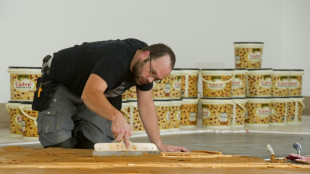 Dutch peanut butter artwork proves a sticky attraction
 Forex Expo Dubai to Take Place as Scheduled on 22–23 September 2026
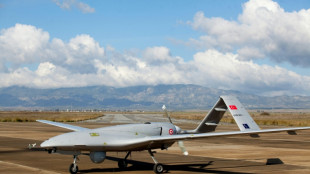
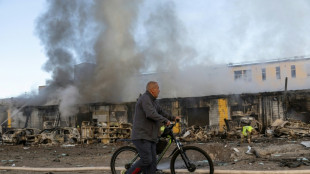 Russia pounds Kyiv, ending three-day halt for US talks
 Flights resume gradually in Indonesia after volcanic eruption
 French AI firm Mistral valued at 21 bn euros after latest funding
Iran played a central role in Jimmy Carter's presidency, but in Tehran, where state television branded him the "architect of economic sanctions", many have far from fond memories of the late US president.
The former US president and Nobel Peace Prize laureate, who passed away on Monday at the age of 100, left behind a legacy of punitive measures whose impact on Iran has endured since the 1979 Islamic Revolution.
"Carter had a bad character," said Hassan Taherifar who works at a Tehran bazaar outside the former US embassy in Tehran, known locally as the "Den of Spies".
"Instead of supporting our nascent revolution, he opened a spy centre in our country," Taherifar added.
Others expressed stronger emotions. "He will rot in hell," one man in his 50s who did not give his name said outside the building.
Iran's state TV announced Carter's death by describing him as the "architect of economic sanctions" on the Islamic republic.
"Carter's failure... to properly deal with Iran, made his presidency short, only one term," said the reporter.
Under Iran's last shah, Mohammad Reza Pahlavi, Iran and the United States enjoyed close relations. During a 1977 visit by Carter to Iran, he called it "an island of stability in one of the more troubled areas of the world."
However, relations dramatically soured after the 1979 Islamic Revolution led by Ayatollah Ruhollah Khomeini.
On November 4, 1979, students loyal to Khomeini stormed the US embassy in Tehran, taking 52 staff hostage, an event that has shaped Iran-US relations for decades.
They demanded Washington hand over the recently toppled shah, who was being treated in the United States for cancer.
The hostages were held for 444 days, a period including the 1980 US presidential elections that Carter went on to lose.
The hostage-taking placed immense pressure on Carter, who authorised in April 1980 a top-secret military rescue mission that ended in disaster with the killing of eight US servicemen.
Washington officially broke off relations with Tehran in 1980, midway through the crisis, and they have never been restored.
The hostages were finally freed on January 20, 1981, on the day Carter's successor, Ronald Reagan, was sworn in as president.
Today, the former US embassy building serves as a museum, with a portrait of Carter still hanging on the wall of what was once the ambassador's office.
"Carter wasn't good to us," said 60-year-old Alireza, who runs an insurance company.
"This incident (the hostage crisis) had a great impact on relations between Iran and America and Carter's role was negative," he added.
While US sanctions on Tehran outlasted Carter, the late president backed a landmark nuclear deal with Iran in 2015 which provided sanctions relief in exchange for limits on Iran's nuclear programme.
The deal fell apart after then-president Donald Trump unilaterally withdrew the United States in 2018 and reimposed heavy sanctions on Iran.
In a 2014 interview with CNBC, Carter said he could have been re-elected to a second term if he had taken military action against Iran during the hostage crisis.
"It would have shown that I was strong and resolute and manly," the former president said.
"I could have wiped Iran off the map with the weapons that we had."
"But in the process, a lot of innocent people would have been killed, probably including the hostages."
F.Stadler--VB