
-
 Real Madrid win Champions League opener as Haaland stars for Man City
-
Pounding waves open up sinkhole in swanky Malibu
-
 Gambian leader vows power boost after violent blackout protests
-
LIV Golf files for bankruptcy protection

-
 Newcastle battle past Millwall to reach League Cup fourth round
-
Argentina launches legal action against oil firms for Falklands drilling
-
 Mourinho's Real Madrid make winning start against Inter Milan
-
Haaland double powers Man City to victory over Porto

-
 Villa take 'big step forward' with win over Brugge
-
Sabalenka survives Noskova to return to US Open semi-finals

-
 Yaya Toure hails 'new era' for African coaches ahead of Champions League bow
-
'South Park' changes name in dig at Trump

-
 Lawes and Marchant told to prove themselves in quest for England recalls
-
OpenAI says AI solved one of math's hardest problems in days

-
 Smithsonian secretary to retire as Trump exerts control over institution
-
Nearly 1,100 flights cancelled after UK air traffic control glitch
-
 Atletico have work to do to reach home Champions League final: Simeone
-
Sabalenka holds off Noskova to keep US Open three-peat bid alive

-
 Villa end goal drought to beat Brugge in Champions League opener
-
Rein in social media not children, say over 130 groups, experts

-
 McIlroy says 'we'll keep our heads down and play' in event of Trump golf visit
-
Hong Kong's first post-colonial leader Tung Chee-hwa dies aged 89
-
 Sabalenka holds of Noskova to reach US Open semi-finals
-
Rangers captain Shankland sidelined for up to four months

-
 Netanyahu under fire over report UAE warned of October 7 attack
-
NY failed to disclose what it knew on 'toxic air' after 9/11
-
 Wasim Akram urges 'fair treatment' for jailed Imran Khan
-
What we learned from 'lacerating' four-hour Musk documentary

-
 No. 1 in reach as Rybakina battles for US Open semi-final spot
-
UK, France, Canada to ban imports from Israeli settlements
-
 Putin and Trump discuss Ukraine in 'extremely frank' call
-
Pakistan's drastic squad upheaval 'news' to skipper Babar Azam

-
 French police hunt Renoir thieves after lightning museum heist
-
Hurricane Lowell lashes Hawaii's western islands

-
 World Cup final scorer Torres leads Ballon d'Or nominees
-
Argentina files lawsuit against oil firms operating off Falklands
-
 Carney touts Canada 'pivot' away from US as tariffs rise
-
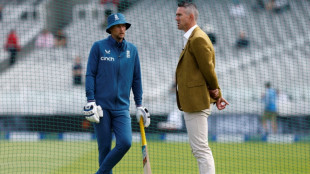
Root wants Pietersen to pull no punches on England return
-
 Spanish stars Cruz, Bardem play strained on-screen couple in new film
-
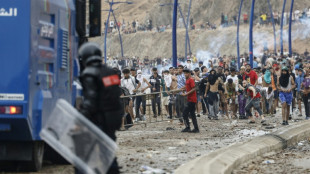
Spain declassifies intelligence reports into Ceuta migrant rush
-
 The "Everlasting Battery" Inside Your Joints:UConn Professor's Self-Powered Healing Material just Got Acquired
-
Octrado introduces its proprietary trading offering: "Your Skill. Our Capital"

-
 Visionary or conman? Elon Musk enigmatic star of Venice documentary
-
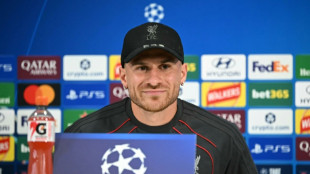
Mac Allister 'very sad' at lack of new Liverpool deal
-
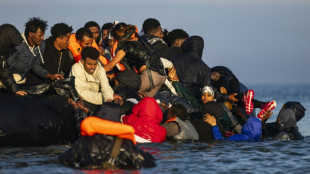 Trial opens in France over deadliest Channel migrant crossing disaster
-
Barca star Yamal says will not beg for Ballon d'Or

-
 England skipper Root says it's wrong to accuse Pakistan of lacking fight
-
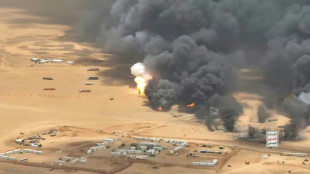
Houthis report Saudi reprisals after oil sites set ablaze in wave of strikes
-
 Owen Wilson leaves tough action work to Alan Ritchson in 'Runner'
-
Could gas prices return to 2022 highs on US-Iran war?
Syria authorities arrest official behind Saydnaya death penalties
Syria's new authorities have arrested a military justice official who under ousted president Bashar al-Assad issued death sentences for detainees in the notorious Saydnaya prison, a war monitor said Thursday.
The confirmation by the Syrian Observatory for Human Rights of his detention came a day after deadly clashes erupted in the coastal province of Tartus, an Assad stronghold, when gunmen sought to protect him.
Mohammed Kanjo Hassan is the highest-ranking officer whose arrest has been announced since Assad's ousting on December 8.
Assad fled for Russia after an Islamist-led offensive wrested from his control city after city until Damascus fell, ending his clan's five-decade rule and sparking celebrations in Syria and beyond.
The offensive caught Assad and his inner circle by surprise and while fleeing the country he took with him only a handful of confidants.
Many others were left behind, including his brother Maher al-Assad, who according to a Syrian military source fled to Iraq before heading to Russia.
Other collaborators were believed to have taken refuge in their hometowns in Alawite regions that were once a stronghold of the Assad clan.
- Thousands of death sentences -
According to the Association of Detainees and Missing Persons of Saydnaya Prison, Kanjo Hassan headed Syria's military field court from 2011 to 2014, the first three years of the war that began with Assad's crackdown on Arab Spring-inspired democracy protests.
He was later promoted to chief of military justice nationwide, the group's co-founder Diab Serriya said, adding that he sentenced "thousands of people" to death.
The Saydnaya complex, the site of extrajudicial executions, torture and forced disappearances, epitomised the atrocities committed against Assad's opponents.
The fate of tens of thousands of prisoners and missing people remains one of the most harrowing legacies of his rule.
After 13 years of civil war, Syria's new leaders from Islamist group Hayat Tahrir al-Sham (HTS) face the monumental task of safeguarding the multi-confessional, multi-ethnic country from further collapse.
With its roots in Syria's branch of Al-Qaeda, a Sunni Muslim jihadist group, HTS has moderated its rhetoric and vowed to ensure protection for minorities, including the Alawite community from which Assad hails.
With 500,000 killed in the war and more than 100,000 still missing, the new authorities have also pledged justice for the victims of abuses under the deposed ruler.
They also face the substantial task of restoring security to a country ravaged by war and where arms have become ubiquitous.
- Hate or revenge -
During the offensive that precipitated Assad's ousting, rebels flung open the doors of prisons and detention centres around the country, letting out thousands of people.
In central Damascus, relatives of some of the missing have hung up posters of their loved ones in the hope that with Assad gone, they may one day learn what happened to them.
World powers and international organisations have called for the urgent establishment of mechanisms for accountability.
With the judiciary not yet reorganised since Assad's toppling, it is unclear how detainees suspected of crimes linked to the former authorities will be tried.
Some members of the Alawite community fear that with Assad gone, they will be at risk of attacks from groups hungry for revenge or driven by sectarian hate.
On Wednesday, angry protests erupted in several areas around Syria, including Assad's hometown of Qardaha, over a video showing an attack on an Alawite shrine that circulated online.
The Observatory said that one demonstrator was killed and five others wounded "after security forces... opened fire to disperse" a crowd in the central city of Homs.
- 'We want peace' -
The transitional authorities appointed by HTS said in a statement that the shrine attack took place early this month, with the interior ministry saying it was carried out by "unknown groups" and that republishing the video served to "stir up strife".
On Thursday, the information ministry introduced a ban on publishing or distributing "any content or information with a sectarian nature aimed at spreading division and discrimination".
In one of Wednesday's protests over the video, large crowds chanted slogans including "Alawite, Sunni, we want peace".
Assad long presented himself as a protector of minority groups in Sunni-majority Syria, though critics said he played on sectarian divisions to stay in power.
In Homs, where the authorities imposed a nighttime curfew, 42-year-old resident Hadi reported "a vast deployment of HTS men in areas where there were protests".
"There is a lot of fear," he said.
In coastal Latakia, protester Ghidak Mayya, 30, said that for now, Alawites were "listening to calls for calm", but putting too much pressure on the community "risks an explosion".
Noting the anxieties, Sam Heller of the Century Foundation think tank told AFP that Syria's new rulers had to balance dealing with sectarian tensions while promising that those responsible for abuses under Assad would be held accountable.
"But they're obviously also contending with what seems like a real desire on the part of some of their constituents for what they would say is accountability, maybe also revenge, it depends on how you want to characterise it," he said.
T.Germann--VB