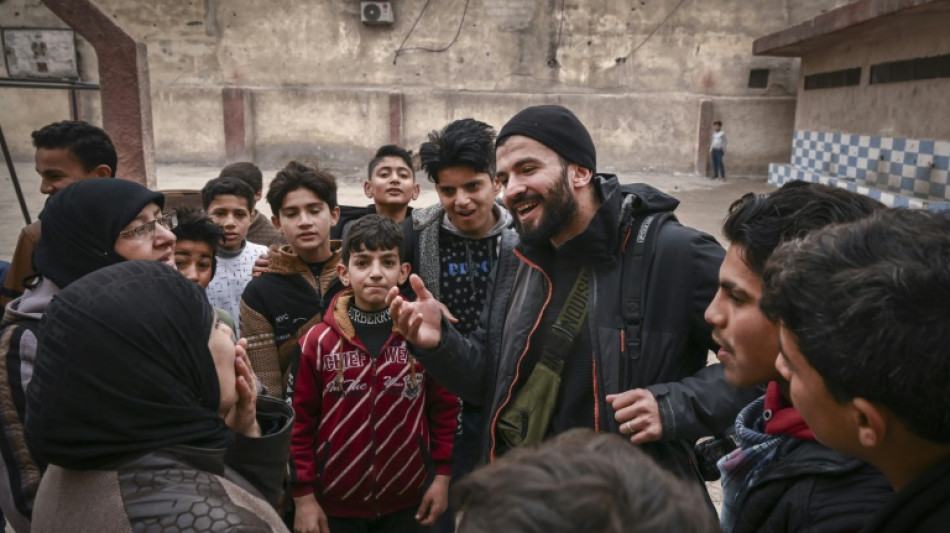
'Like a dream': AFP photographer's return to Syria / Photo: © AFP

 Sabalenka edges Noskova, keeps US Open treble bid alive
 Real Madrid win Champions League opener as Haaland stars for Man City
 Gambian leader vows power boost after violent blackout protests
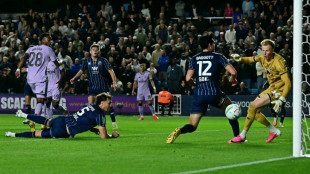 Newcastle battle past Millwall to reach League Cup fourth round
 Mourinho's Real Madrid make winning start against Inter Milan
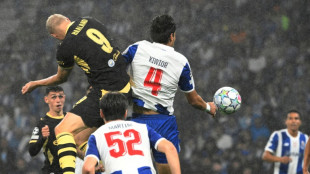
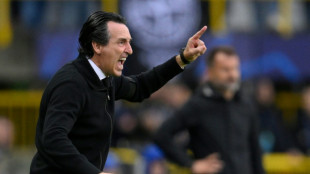 Villa take 'big step forward' with win over Brugge
 Yaya Toure hails 'new era' for African coaches ahead of Champions League bow
 Lawes and Marchant told to prove themselves in quest for England recalls

 Smithsonian secretary to retire as Trump exerts control over institution
 Atletico have work to do to reach home Champions League final: Simeone
 Villa end goal drought to beat Brugge in Champions League opener
 McIlroy says 'we'll keep our heads down and play' in event of Trump golf visit
 Sabalenka holds of Noskova to reach US Open semi-finals

 Netanyahu under fire over report UAE warned of October 7 attack
 Wasim Akram urges 'fair treatment' for jailed Imran Khan
 No. 1 in reach as Rybakina battles for US Open semi-final spot
 Putin and Trump discuss Ukraine in 'extremely frank' call
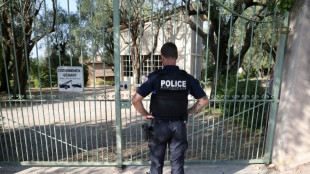 French police hunt Renoir thieves after lightning museum heist
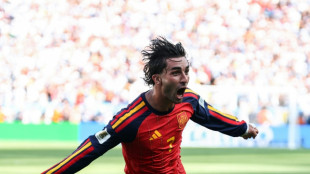 World Cup final scorer Torres leads Ballon d'Or nominees
 Carney touts Canada 'pivot' away from US as tariffs rise
 Spanish stars Cruz, Bardem play strained on-screen couple in new film
 The "Everlasting Battery" Inside Your Joints:UConn Professor's Self-Powered Healing Material just Got Acquired

 Visionary or conman? Elon Musk enigmatic star of Venice documentary
 Trial opens in France over deadliest Channel migrant crossing disaster
 England skipper Root says it's wrong to accuse Pakistan of lacking fight
AFP photographer Sameer al-Doumy never dreamed he would be able to return to the hometown in Syria that he escaped through a tunnel seven years ago after it was besieged by Bashar al-Assad's forces.
Douma, once a rebel stronghold near Damascus, suffered terribly for its defiance of the former regime, and was the victim of a particularly horrific chemical weapons attack in 2018.
"It is like a dream for me today to find myself back here," he said.
"The revolution was a dream, getting out of a besieged town and of Syria was a dream, as it is now being able to go back.
"We didn't dare to imagine that Assad could fall because his presence was so anchored in us," said the 26-year-old.
"My biggest dream was to return to Syria at a moment like this after 13 years of war, just as it was my biggest dream in 2017 to leave for a new life," said the award-winning photographer who has spent the last few years covering the migrant crisis for AFP's Lille bureau in northern France.
"I left when I was 19," said Sameer, all of whose immediate family are in exile, apart from his sister.
- Friends 'killed or disappeared' -
"This is my home, all my memories are here, my childhood, my adolescence. I spent my life in Douma in this house my family had to flee and where my cousin now lives.
"The house hasn't changed, although the top floor was destroyed in the bombardments.
"The sitting room is still the same, my father's beloved library hasn't changed. He would settle down there every morning to read the books that he had collected over the years -- it was more important to him than his children.
"I went looking for my childhood stuff that my mother kept for me but I could not find it. I don't know if it exists anymore.
"I haven't found any comfort here, perhaps because I haven't found anyone from my family or people I was close to. Some have left the country and others were killed or have disappeared.
"People have been through so much over the last 13 years, from the peaceful protests of the revolution, to the war and the siege and then being forced into exile.
"My memories are here but they are associated with the war which started when I was 13. What I lived through was hard, and what got me through was my family and friends, and they are no longer here.
"The town has changed. I remember the bombed buildings, the rubble. Today life has gone back to a kind of normal as the town waits for people to return."
- Teenage reporter -
Douma was besieged by Assad's forces from the end of 2012, with Washington blaming his forces for a chemical attack in the region that left more than 1,400 people dead the following year.
Sameer's career as a photojournalist began when he and his brothers began taking photos of what was happening around them.
"After the schools closed I started to go out filming the protests with my brothers here in front of the main mosque, where the first demonstration in Douma was held after Friday prayers, and where the first funerals of the victims were also held.
"I set up my camera on the first floor of a building which overlooks the mosque and then changed my clothes afterwards so I would not be recognised and arrested. Filming the protests was banned.
"When the security forces attacked, I would take the SIM card out of my phone and the memory card out of my camera and put them in my mouth."
That way he could swallow them if he was caught.
In May 2017, Sameer fled through a tunnel dug by the rebels and eventually found himself in the northern rebel enclave of Idlib with former fighters and their families.
- Belonging -
"I took the name Sameer al-Doumy (Sameer from Douma) to affirm that I belonged somewhere," even though he was exiled, he said. "I stopped using my first name, Motassem, to protect my family living in Damascus.
"In France I have a happy and stable life. I have a family, friends and a job. But I am not rooted to any particular place. When I went back to Syria, I felt I had a country.
"When you are abroad, you get used to the word 'refugee' and you get on with your life and make a big effort to integrate in a new society. But your country remains the place that accepts you as you are. You don't have to prove anything.
"When I left Syria, I never thought one day I would be able to return. When the news broke, I couldn't believe it. It was impossible Assad could fall. Lots of people are still in shock and are afraid. It is hard to get your head around how a regime that filled people with so much fear could collapse.
"When I returned to the Al-Midan district of Damascus (which had long resisted the regime), I could not stop myself crying.
"I am sad not to be with my loved ones. But I know they will return, even if it takes a while.
"My dream now is that one day we will all come together again in Syria."
P.Keller--VB