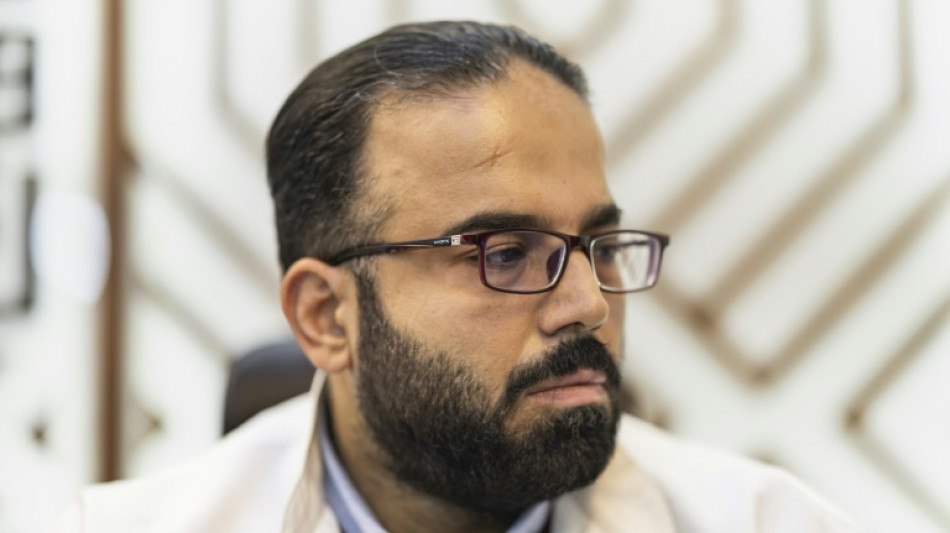
Syrian medics say were coerced into false chemical attack testimony / Photo: © AFP

 Norway bids farewell to King Harald V, 'grandfather' of the nation
 NFL breaks new ground as 100,000 set to pack MCG in Australia
 EU faces revolt over social media ban for children
 Canada eyes researchers looking to leave 'hostile' US
 Tiafoe escapes Michelsen to reach US Open semi-finals
 Carney touts Canada 'pivot' away from US as Trump levels new threat

 Pounding waves open up sinkhole in swanky Malibu
 LIV Golf files for bankruptcy protection
 Argentina launches legal action against oil firms for Falklands drilling

 Haaland double powers Man City to victory over Porto

 Sabalenka survives Noskova to return to US Open semi-finals
 'South Park' changes name in dig at Trump
 OpenAI says AI solved one of math's hardest problems in days
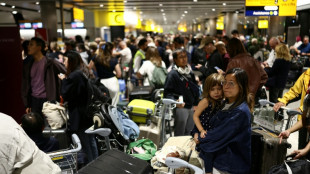 Nearly 1,100 flights cancelled after UK air traffic control glitch
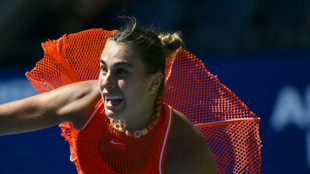 Sabalenka holds off Noskova to keep US Open three-peat bid alive

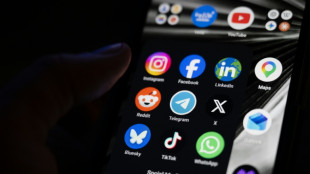 Rein in social media not children, say over 130 groups, experts
 Hong Kong's first post-colonial leader Tung Chee-hwa dies aged 89
 Rangers captain Shankland sidelined for up to four months
 NY failed to disclose what it knew on 'toxic air' after 9/11
 What we learned from 'lacerating' four-hour Musk documentary

 UK, France, Canada to ban imports from Israeli settlements
 Pakistan's drastic squad upheaval 'news' to skipper Babar Azam
 Hurricane Lowell lashes Hawaii's western islands

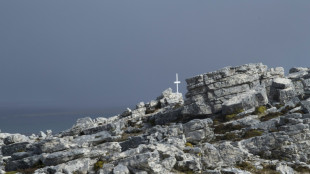 Argentina files lawsuit against oil firms operating off Falklands
 Root wants Pietersen to pull no punches on England return
Two Syrian doctors and a nurse told AFP in a series of interviews over the weekend that Bashar al-Assad's government coerced them into providing false testimony to international investigators after a deadly 2018 chlorine attack.
The three, who treated the wounded at a field hospital in the rebel-held town of Douma near Damascus after the April 7, 2018 attack, said they were summoned to national security headquarters.
"I was told... that they knew where my family is in Damascus," said orthopaedic surgeon Mohammed al-Hanash, giving public testimony which would have been impossible before the fall of Assad's government on December 8.
Emergency and intensive care specialist Hassan Oyoun said that "when I arrived before the investigator... his gun was on the table pointing towards me."
Muwafaq Nisrin, 30, who worked as an emergency responder and nurse in 2018, said: "I was under pressure because my family lives in Douma -- like most of the medical personnel's families".
The attack targeted a building near a field hospital where the wounded were taken, and where the three personnel were among the medical teams at work.
A short time later, a video began circulating online showing chaos at the facility, with medics treating the wounded including children, and a man using a hose to spray people with water.
Assad's government called the images "fake", and security services questioned those who appeared in the video, including the medical staff who AFP met.
In January last year, the Organisation for the Prohibition of Chemical Weapons (OPCW) blamed the Damascus government for the attack, which killed 43 people.
Investigators said there were "reasonable grounds to believe" that at least one Syrian air force helicopter had dropped two cylinders of the toxic gas on Douma.
Damascus and Moscow said the attack was staged by rescue workers at the behest of the United States, which afterward launched air strikes on Syria, as did Britain and France.
- Broadcast on TV -
"A team of us doctors who were at the hospital went to the national security building and met an investigator, and we tried as much as possible to give vague answers," Hanash said.
"I was asked, for example, what happened that day, where I was, what I saw and what was wrong with the people... I told them that I was in the operating room," where chemical attack victims would not have been taken, he added.
He said he tried to explain away mild cases of suffocation "by the presence of dirt barriers" around the hospital, erected to protect it, with Douma under siege.
Nisrin, seen in the video helping a girl in extreme distress, said the authorities "told us that no chemical attack happened" and that they "wanted to end this story and deny it so that Douma could turn a new page".
The OPCW watchdog said an "elite" Syrian unit known as the Tiger Force had launched the attack during a military offensive to reclaim Douma, and that Islamist rebels had agreed to withdraw the day afterwards.
All three said that after the first round of questioning, they were asked to repeat their responses in front of a camera.
The point, they were told, was to provide their testimony to an investigating committee working with the OPCW.
Hanash said the following day they found their testimony broadcast on state television.
The footage was "edited and some passages where deleted or taken out of context to serve the point of view" of the authorities, he said.
The trio found themselves turned into false witnesses for the very government whose overthrow they had hoped for.
K.Hofmann--VB