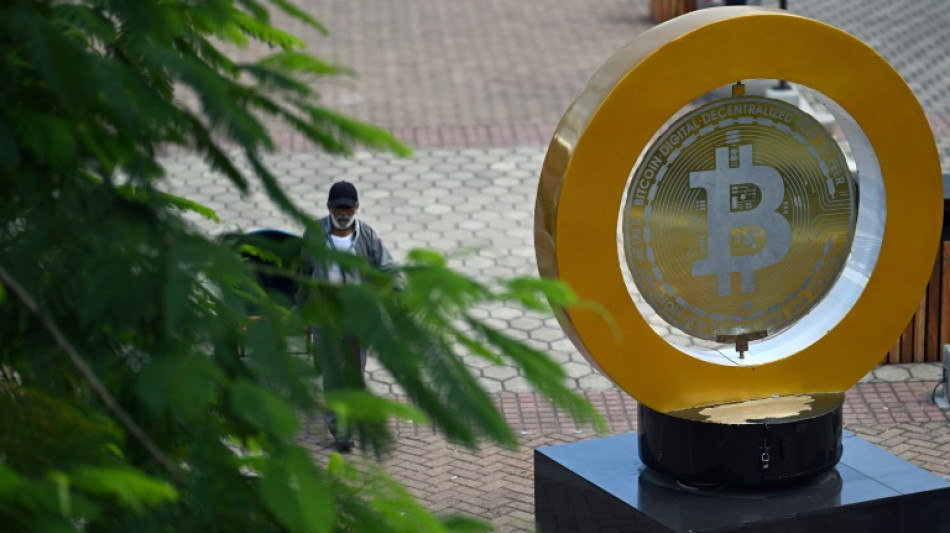
El Salvador plans to sell or shut its crypto wallet / Photo: © AFP/File

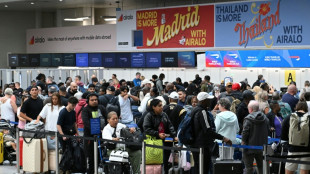 Cyberattack ruled out in UK air traffic glitch as more flights axed
 Ekiden Launches Canton Network’s First Order Book-Based Derivatives Exchange

 Germany's Merz accuses AfD of promoting 'ethnic cleansing'

 Japanese director Kore-eda's manga film charms critics in Venice

 As African space race heats up, Senegal pursues homemade satellites

 UK's little-known Bayeux Tapestry replica steps into spotlight
 Shelton stuns Alcaraz in 3:34 am US Open finish, Sabalenka battles on

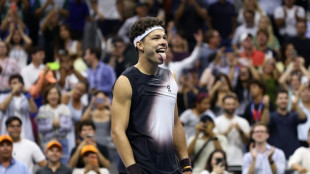 Alcaraz falls to Shelton in epic latest-ever US Open finish

 Tradition Announces Partnership With Affin Moneybrokers to Support Malaysian Market Data
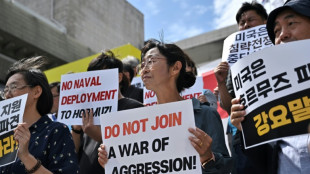 Protesters urge South Korea to stay out of Iran war
 Africa's informal economy: a burden and lifeline
 Kenyan start-up makes robotic limbs to sign for deaf kids
 Iran, US trade blows as Hormuz impasse deepens

 The round-the-clock monitors protecting Bhutan from glacier risk

 'Hell': Father of surfers killed in Mexico testifies at trial

 Travellers in UK face more chaos after air traffic control glitch

 Crude pushes towards $100 on Mideast flare-up, fanning inflation fears

 Record rain forces Asian Games athletes to evacuate accommodation
 Amusing or addictive? The algorithms powering our social feeds
 Norway bids farewell to King Harald V, 'grandfather' of the nation
 NFL breaks new ground as 100,000 set to pack MCG in Australia

 EU faces revolt over social media ban for children

 Canada eyes researchers looking to leave 'hostile' US
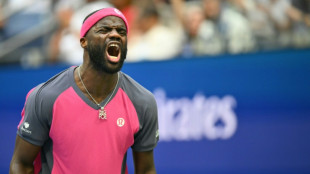 Tiafoe escapes Michelsen to reach US Open semi-finals

 Carney touts Canada 'pivot' away from US as Trump levels new threat

El Salvador will privatize or close the cryptocurrency wallet "Chivo" created by President Nayib Bukele when he made bitcoin legal tender in 2021, an official said Thursday.
The announcement came after the Central American nation's government reached a $1.4 billion loan deal with the International Monetary Fund that addressed its controversial embrace of bitcoin.
While bitcoin remains legal tender in El Salvador, Chivo "will be sold or wound down," Stacy Herbert, director of Bukele's National Bitcoin Office, wrote on social media platform X.
She did not say how many people used the digital wallet, which was created by the government in September 2021 for Salvadorans to make payments in bitcoin.
"El Salvador will continue buying bitcoin (at possibly an accelerated pace) for its Strategic Bitcoin Reserve," Herbert added.
The IMF said Wednesday that under the loan agreement, acceptance of bitcoin by the Salvadoran private sector would be voluntary, adding that bitcoin-related risks "are being mitigated."
"For the public sector, engagement in bitcoin-related economic activities and transactions in and purchases of bitcoin will be confined," it added.
In 2021, El Salvador became the world's first country to establish bitcoin as legal tender in a bid by Bukele to revitalize a dollarized, remittance-reliant economy.
On December 1, the gang-busting leader acknowledged in a speech that the introduction of bitcoin had been "the most unpopular measure that this government has taken."
Around 88 percent of Salvadorans did not use bitcoin in 2023, according to a survey by the Central American University.
According to the National Bitcoin Office, El Salvador owns 5,969 bitcoins worth around $582 million.
E.Gasser--VB