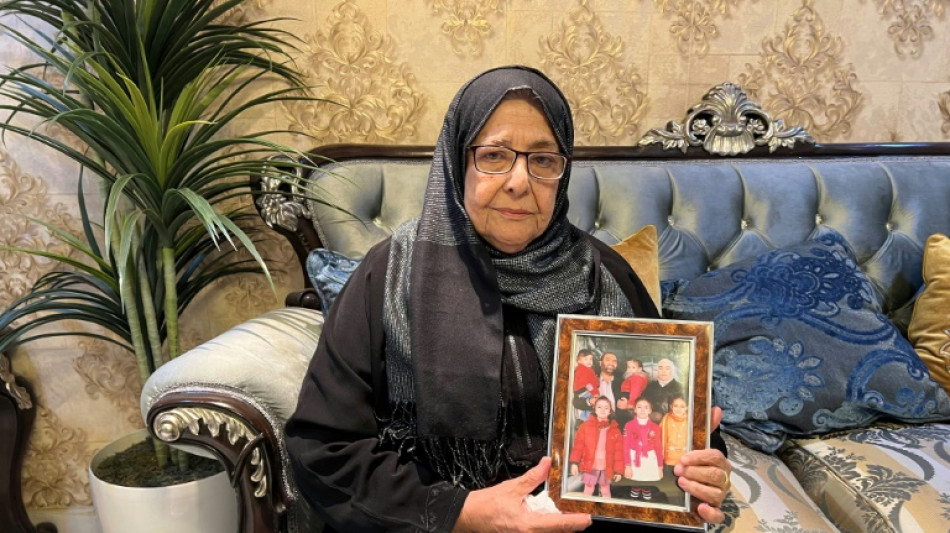
Painful wait in Saudi for family of detained Syrian chess champion / Photo: © AFP

 IC Markets Australia Wins People's Choice Forex Broker Innovation Award at the 2026 Finder Innovation Awards
 Brent oil tops $100 on Mideast flare-up, fanning inflation fears
 EU wants to edge out China in public contracts

 Google unveils 13 bn euro AI expansion in Finland

 Singapore's hefty ministerial pay hikes draw mixed feelings

 Cyberattack ruled out in UK air traffic glitch as more flights axed

 Ekiden Launches Canton Network’s First Order Book-Based Derivatives Exchange

 Germany's Merz accuses AfD of promoting 'ethnic cleansing'
 Japanese director Kore-eda's manga film charms critics in Venice

 As African space race heats up, Senegal pursues homemade satellites

 UK's little-known Bayeux Tapestry replica steps into spotlight

 Shelton stuns Alcaraz in 3:34 am US Open finish, Sabalenka battles on

 Alcaraz falls to Shelton in epic latest-ever US Open finish

 Tradition Announces Partnership With Affin Moneybrokers to Support Malaysian Market Data

 Protesters urge South Korea to stay out of Iran war

 Africa's informal economy: a burden and lifeline

 Kenyan start-up makes robotic limbs to sign for deaf kids

 Iran, US trade blows as Hormuz impasse deepens

 The round-the-clock monitors protecting Bhutan from glacier risk

 'Hell': Father of surfers killed in Mexico testifies at trial

 Travellers in UK face more chaos after air traffic control glitch

 Crude pushes towards $100 on Mideast flare-up, fanning inflation fears

 Record rain forces Asian Games athletes to evacuate accommodation
 Amusing or addictive? The algorithms powering our social feeds

 Norway bids farewell to King Harald V, 'grandfather' of the nation
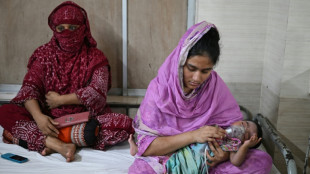
As Syrians pour out of prisons that Bashar al-Assad used to cement his grip on power, the Saudi-based family of one detainee is desperate for any news, even if it confirms their worst fears.
Rania al-Abassi, a Syrian dentist and former national chess champion, disappeared into Assad's lethal network of detention facilities in 2013 along with her husband and their six children.
She had declined relatives' invitations to seek safety in Saudi Arabia, where she herself once lived for more than a decade, after the Syrian uprising devolved into civil war, thinking she would be safe because she was not involved in politics.
For more than a week now, ever since a lightning offensive by the Islamist Hayat Tahrir al-Sham (HTS) rebels drove Assad from Damascus, Rania's sister Naila has been glued to television news reports.
"In the past few days, our hope has returned strongly. We thought that the rebels would enter Damascus, open the prisons and release Rania and her children," Naila al-Abbasi, a gynaecologist, told AFP from her home in Riyadh.
Footage of the infamous dungeons and torture chambers of Saydnaya prison was especially distressing.
"We stopped the broadcast several times to examine a face, but to no avail," she said.
Relatives in Damascus and elsewhere in Syria have visited the prisons of various security branches, sifting through left-behind files in search of clues.
But for Naila and the rest of the family in Riyadh, there is nothing to do but endure the painful wait.
"The more time passes, the less hope there is," Naila said, lowering her voice so her mother, clad in black, would not hear her.
She denounced "an unprecedentedly brutal regime that arrests children and infants and kills them or hides them for years."
- 'I have hope' -
Rania al-Abassi had a comfortable life as a dentist in Saudi Arabia but decided to return in 2008 to help people in the country where she grew up.
Members of military intelligence descended on her family's home in a Damascus suburb in March 2013, taking her husband Abdul Rahman Yasin into custody first, according to Amnesty International.
The following night they returned "and looted money, jewellery, the family cars, and the paperwork for their properties and Rania's clinic," Amnesty said.
A day later they came for Rania, Rania's secretary and Rania's six children, aged 14, 13, 11, eight, six and two.
Such stories have haunted Syrians for years.
"Countless children, women and men are still held arbitrarily in detention facilities under various authorities," UN special envoy for Syria Geir Pedersen said in a statement last week.
"They must be immediately released."
The Abassi family was not politically active and did not publicly oppose Assad.
But her family suspects Rania's decision to give food baskets to families displaced by fighting put her and her husband Abdul Rahman on the radar of security forces.
Abdul Rahman was among those confirmed dead after a former Syrian army photographer known by the codename "Caesar" fled the country in 2013, taking with him some 55,000 graphic images showing corpses tortured and starved to death in Syrian prisons.
Before Assad fell, Rania's family paid thousands of dollars for information from people who claimed to know what happened to her, but the leads were fruitless.
In January of last year Rania's story was included in the US State Department's "Without Just Cause" campaign highlighting political prisoners around the world.
The attention did not shed any more light on her fate.
According to the Syrian Observatory for Human Rights war monitor, more than 100,000 people died in detention from 2011 onwards, many of them under torture.
With prisons finally opening, Naila has taken a week off work to follow reports out of Syria, though she knows it is likely Rania is long dead.
"We want a grave for them," she said of Rania and her family.
"We have the right to at least know where their grave is."
Their mother, 81-year-old Najah Mardini, is hoping for a better outcome.
"No matter how long it takes," she said, "I have hope that they are alive and I will embrace them in my arms soon."
M.Vogt--VB