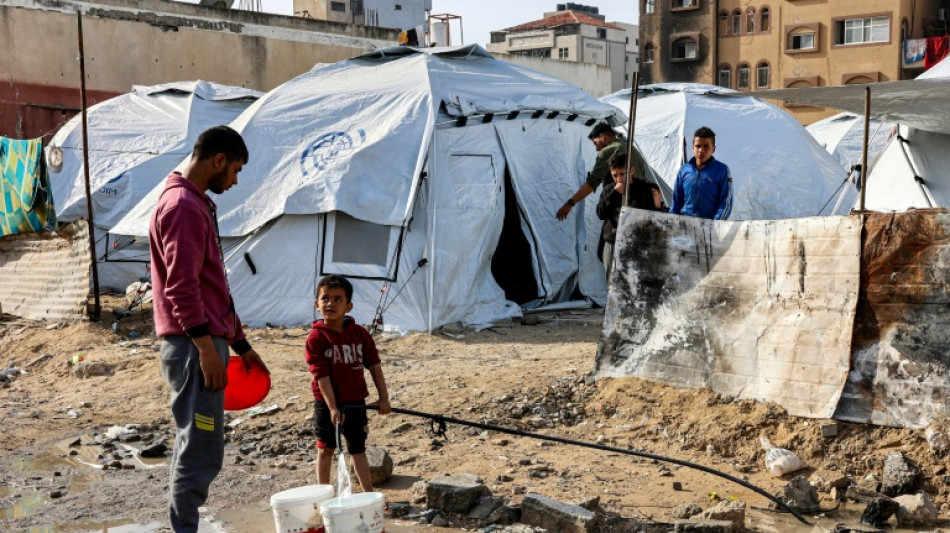
HRW accuses Israel of 'acts of genocide' for restricting Gaza water access / Photo: © AFP/File

 France far right expels policeman member over racist remarks

 Pakistan collapse to 133 all out against England in 3rd Test

 Heat forces French champagne makers to stiffen their drink
 Iran war drives oil prices to $100 per barrel as Tehran strikes ships

 Pakistan collapse to 100-7 against England in 3rd Test

 Workers, migrants focus of documentaries by Oscar winners at Venice

 Nepal seeks survivors two weeks after deadly floods

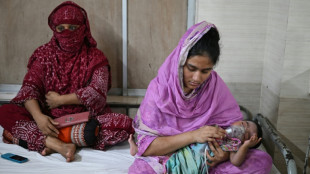 Bangladesh measles crisis kills more than 1,000 children
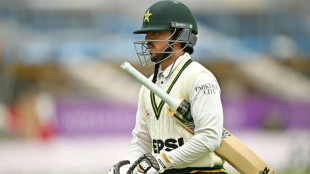 Pakistan collapse to 26-4 against England in 3rd Test

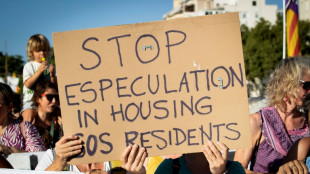 EU helps cities tighten screws on Airbnb, holiday rentals

 Courtois to put Belgium career on hold
 RavenDB Launches Quill to Bring Production AI Agents to Enterprise SQL Systems, No Migration Required

 Affleck family affair at Venice for Casey's latest film 'Company'

 Yemen rebels report fresh Saudi strikes as conflict deepens

 'They're playing with our lives': AI researcher quits Anthropic

 Series finale of 'Babylon Berlin' offers dark mirror for today's Germany
 Zara owner Inditex boosts profits as sales grow across board

 Alcaraz out in latest US Open finish, Sabalenka through on marathon day

 Brent breaks $100 on Mideast flare-up, fanning inflation fears

 South Korea video game tycoon to pay record $1.5 bn in divorce
 'Long live Chairman Mao': Supporters pay respects to founder of Communist China
 Sweden immigration restrictions spark healthcare concerns

 EU to help cities tighten screws on Airbnb, holiday rentals
 'Our year': Kane and Bayern primed for Champions League tilt
 Australian World Cup star Volpato fined over positive cocaine test
Human Rights Watch on Thursday accused Israel of committing "acts of genocide" in the Gaza Strip by damaging water infrastructure and cutting off supplies to civilians, calling on the international community to impose targeted sanctions.
In a new report, which focused specifically on water, the New York-based rights group detailed what it said were deliberate efforts by Israeli authorities "of a systematic nature" to deprive Gazans of water, which had "likely caused thousands of deaths... and will likely continue to cause deaths".
"Since October 2023, Israeli authorities have deliberately obstructed Palestinians' access to the adequate amount of water required for survival in the Gaza Strip," the report said.
Israel has steadfastly rejected previous similar accusations from rights groups, saying its actions in Gaza are legitimate military operations.
The HRW report detailed what the group said was the intentional damaging of water and sanitation infrastructure, including solar panels powering treatment plants, a reservoir and a spare parts warehouse, as well as the blocking of fuel for generators.
Israel also cut electricity supplies, attacked repair workers and blocked the importation of repair materials, it said.
The report concluded that in doing so, "Israeli authorities intentionally inflicted on the Palestinian population in Gaza 'conditions of life calculated to bring about its physical destruction in whole or in part.'"
This, it said, amounted to the war crime of "extermination" and to "acts of genocide".
However, HRW stopped short of saying Israel was committing outright "genocide".
Under international law, proving genocide requires evidence of specific intent, which experts say is very difficult.
HRW said only that: "The pattern of conduct set out in this report together with statements suggesting some Israeli officials wished to destroy the Palestinians in Gaza may indicate such intent."
Speaking at a briefing on the report, Lama Faqih, director of HRW's Middle East and North Africa division, said that in the absence of "a clear articulated plan" to commit genocide, the International Court of Justice (ICJ) might find that the evidence meets the "very strict threshold" of reasonable inference of genocidal intent.
HRW pointed to a statement by then-defence minister Yoav Gallant in October 2023, when he declared a "complete siege" and said: "No electricity, no food, no water, no gas -- it's all closed."
Israel is facing a case brought by South Africa at the ICJ last December, arguing that the war in Gaza breached the 1948 United Nations Genocide Convention, an accusation Israel has strongly denied.
On December 5, Amnesty International accused Israel of committing genocide in the Gaza Strip, drawing a furious reaction from the government.
Israel denies intentional destruction of the population in Gaza, saying that it facilitates aid to the besieged territory.
- 'Malnourished and dehydrated' -
The HRW report, drawn up over nearly a year, is based on interviews with dozens of Gazans, staff at water and sanitation facilities, medics and aid workers, as well as satellite imagery, photographs, videos and data analysis.
It said Israeli authorities did not reply to requests for information.
The lack of water left Gazans vulnerable to water-borne diseases and complications, such as infected wounds and the inability to heal due to dehydration, HRW said.
Medical facilities were also struggling to maintain basic hygiene practices.
Deaths from such cases "are likely vastly underreported", the report said.
Doctors and nurses told HRW "that many of their patients have died from preventable diseases and infections, and healable wounds, due to dehydration and the unavailability of water".
One emergency room nurse cited in the report said they were forced to decide "not to resuscitate children who were severely malnourished and dehydrated".
The rights group called on Israel to take numerous actions, including to "immediately ensure" sufficient water, fuel and electricity in Gaza.
It also said the international community must "take all measures within their power to prevent genocide by Israeli authorities in Gaza".
That included "discontinuing any military assistance and arms sales or transfers, imposing targeted sanctions, and reviewing bilateral deals and diplomatic relations".
The war in Gaza was sparked by Hamas's October 7, 2023 attack on Israel that resulted in the deaths of 1,208 people, mostly civilians, according to an AFP tally of Israeli official figures.
Since then, Israel's retaliatory offensive has killed at least 45,097 people in Gaza, a majority of them civilians, according to figures from the Hamas-run territory's health ministry that the United Nations considers reliable.
C.Bruderer--VB