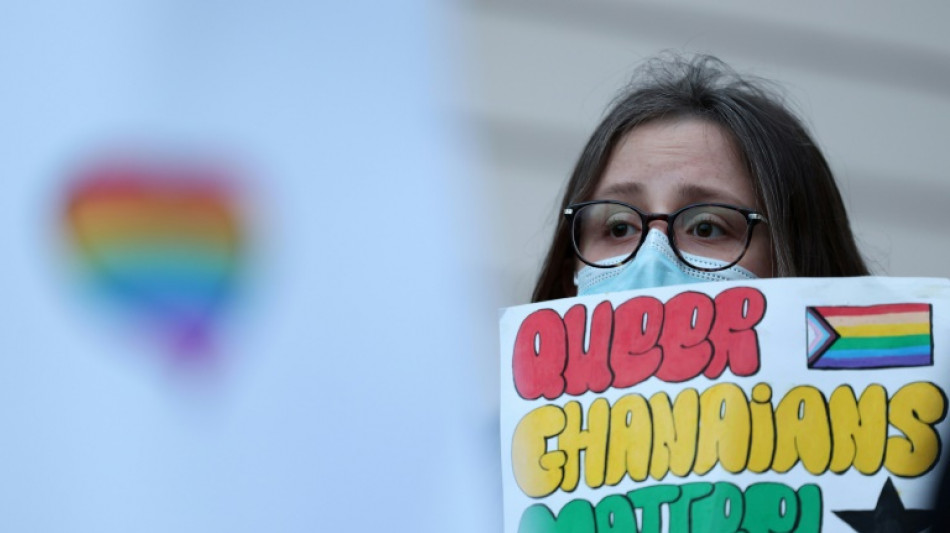
Ghana's Supreme Court paves way for anti-LGBTQ law / Photo: © AFP/File

 France far right expels policeman member over racist remarks

 Pakistan collapse to 133 all out against England in 3rd Test

 Heat forces French champagne makers to stiffen their drink
 Iran war drives oil prices to $100 per barrel as Tehran strikes ships
 Pakistan collapse to 100-7 against England in 3rd Test

 Workers, migrants focus of documentaries by Oscar winners at Venice

 Nepal seeks survivors two weeks after deadly floods

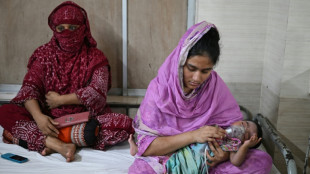 Bangladesh measles crisis kills more than 1,000 children
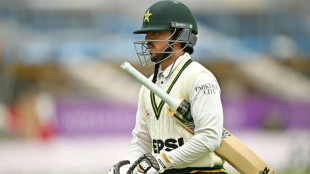 Pakistan collapse to 26-4 against England in 3rd Test

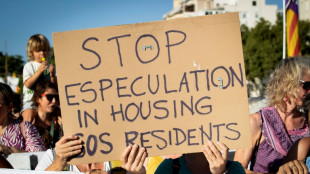 EU helps cities tighten screws on Airbnb, holiday rentals
 Courtois to put Belgium career on hold
 RavenDB Launches Quill to Bring Production AI Agents to Enterprise SQL Systems, No Migration Required

 Affleck family affair at Venice for Casey's latest film 'Company'
 Yemen rebels report fresh Saudi strikes as conflict deepens

 'They're playing with our lives': AI researcher quits Anthropic

 Series finale of 'Babylon Berlin' offers dark mirror for today's Germany
 Zara owner Inditex boosts profits as sales grow across board

 Alcaraz out in latest US Open finish, Sabalenka through on marathon day

 Brent breaks $100 on Mideast flare-up, fanning inflation fears
 South Korea video game tycoon to pay record $1.5 bn in divorce
 'Long live Chairman Mao': Supporters pay respects to founder of Communist China
 Sweden immigration restrictions spark healthcare concerns
 EU to help cities tighten screws on Airbnb, holiday rentals

 'Our year': Kane and Bayern primed for Champions League tilt

 Australian World Cup star Volpato fined over positive cocaine test

Ghana's Supreme Court on Wednesday paved the way for a contested bill severely curtailing LGBTQ rights to become law after rejecting two bids to overturn it.
Lawmakers approved the Sexual Rights and Family Values Bill in February, drawing international condemnation despite gaining wide public support in the conservative West African country.
The proposed anti-LGBTQ legislation is considered among the most stringent in Africa, stipulating jail terms of up to three years for engaging in same-sex relations and up to five years for promoting or sponsoring LGBTQ activities.
The bill will only become law after being ratified by the outgoing president Nana Akufo-Addo or his successor John Mahama.
Akufo-Addo, who officially steps down on January 7 after two terms in office, has not yet announced his decision.
He had said he would first await the Supreme Court's ruling on the bill's constitutionality.
Opposition leader, Mahama, who won the December 7 elections, voiced support for the anti-LGBTQ bill during the electoral campaign.
Gay sex is already illegal in the religious, mostly Christian nation, but while discrimination against LGBTQ people is common, no one has ever been prosecuted under the colonial-era law.
"The Supreme Court's decision is a victory for Ghanaian values and cultural sovereignty," Yaw Biney, a lawyer and supporter of the bill, told AFP.
LGBTQ rights campaigners voiced fear and disappointment.
- 'Chilling message' -
The court ruling followed cases filed by Ghanaian broadcaster Richard Dela-Sky, who challenged the constitutionality of the bill, and university researcher Amanda Odoi.
Odoi had sought to block the sending of the bill to the president for ratification.
But the court said it would be "premature" of it to make a judgement on the bill.
"Consequently, the action fails," judge Avril Lovelace-Johnson, head of the court's seven-member panel said, reading its judgement.
"Until there is presidential assent to the bill, there is no act of which the Supreme Court will use its supervisory jurisdiction to overturn," she added.
Takyiwaa Manuh, African Studies professor at the University of Ghana and an advocate for the LGBTQ community, called it a "disappointing day for human rights in Ghana".
"The Supreme Court had an opportunity to affirm the dignity and freedom of all citizens, regardless of their sexual orientation, but this decision risks deepening discrimination and marginalisation against the LGBTQ community," Manuh told AFP.
Esi Bonsu, an activist with the Ghana Coalition for Equality, said it sent "a chilling message to LGBTQ Ghanaians that their lives and rights are not valued".
- Fears for finances -
The bill was initially introduced into parliament in 2021 but the vote faced delays.
It sparked criticism from the United Nations and several countries, including the United States, as well as concern from Ghana's finance ministry, which warned of a risk of losing billions of dollars in World Bank funding.
The United States reiterated its misgivings over the proposed law.
"We have previously stated our concerns about this bill, and we remain in close contact with Ghanaian government officials and the incoming administration of President-elect Mahama across a range of issues," State Department spokesman Vedant Patel told reporters in Washington.
"Our primary concern is the safety and well-being of vulnerable populations and individuals. Nobody should be targeted, threatened harm or marginalised (for) who they are," he said.
Ghana fears it could face the same fate as Uganda, which last year passed one of the harshest anti-gay laws in the world.
The World Bank froze lending to Uganda in the wake of the law, which imposes penalties of up to life in prison for consensual same-sex relations and contains provisions that make "aggravated homosexuality" an offence punishable by death.
Ghana, emerging from its worst economic crisis in decades, is also under a $3-billion loan programme from the International Monetary Fund.
United Nations rights chief Volker Turk condemned the passing of the bill in February, saying that consensual same-sex conduct should never be criminalised.
Around 60 countries in the world ban same-sex relations, about half of them are in Africa, according to the International Lesbian, Gay, Bisexual, Trans and Intersex Association (ILGA).
T.Egger--VB