Activist tells Saudi-hosted UN forum of 'silencing' of dissent / Photo: © AFP

 Belgium raids illicit cigarette factory in push to stub out growing trade

 Vuelta debutant Brennan claims fifth victory on stage 17

 US had warmest summer on record: climate agency

 Meta tests fact-check replacement in Latin America

 Soviet brutality, ideology backdrop of controversial Venice film

 McIlroy predicts player exodus after LIV files for bankruptcy protection

 Global Multi-Asset Broker FP Markets Secures UAE CMA Category 5 Licence

 Brent oil passes $100 on Mideast flare-up, stoking inflation worries
 'Nothing left': thousands in Yemen flee deadly Houthi clashes
 Spain endured hottest summer on record: weather agency

 'A celebration': Amsterdam museum unveils Kusama show weeks after death

 IC Markets Australia Wins People's Choice Forex Broker Innovation Award at the 2026 Finder Innovation Awards
 Brent oil tops $100 on Mideast flare-up, fanning inflation fears
 EU wants to edge out China in public contracts

 Google unveils 13 bn euro AI expansion in Finland
 Singapore's hefty ministerial pay hikes draw mixed feelings
 Cyberattack ruled out in UK air traffic glitch as more flights axed
 Ekiden Launches Canton Network’s First Order Book-Based Derivatives Exchange

 Germany's Merz accuses AfD of promoting 'ethnic cleansing'
 Japanese director Kore-eda's manga film charms critics in Venice

 As African space race heats up, Senegal pursues homemade satellites
 UK's little-known Bayeux Tapestry replica steps into spotlight
 Shelton stuns Alcaraz in 3:34 am US Open finish, Sabalenka battles on

 Alcaraz falls to Shelton in epic latest-ever US Open finish

 Tradition Announces Partnership With Affin Moneybrokers to Support Malaysian Market Data
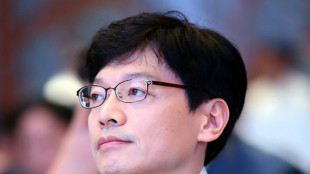
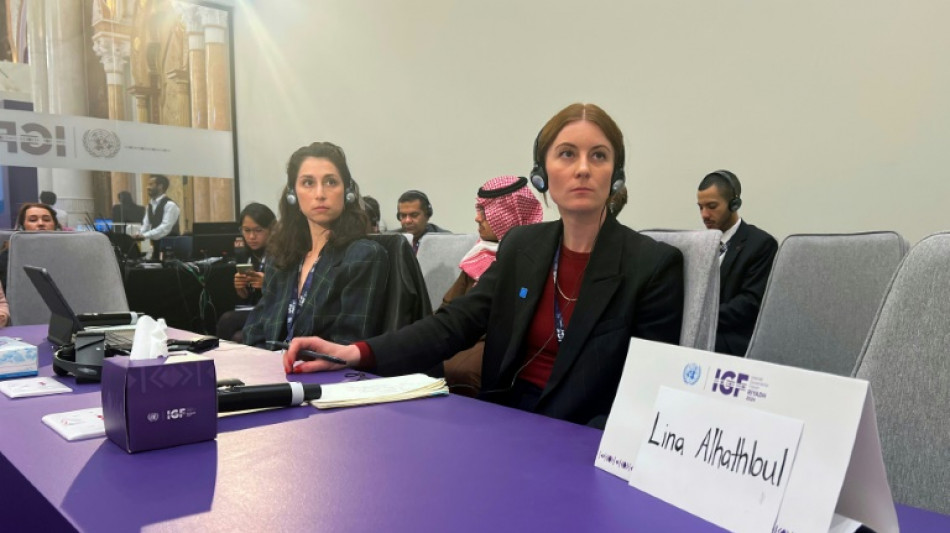
A Saudi human rights activist appeared via a video link Wednesday at a UN forum in the kingdom to denounce the "silencing" of dissent under Crown Prince Mohammed bin Salman.
Lina al-Hathloul's appearance at the Internet Governance Forum was a rare instance of an outspoken critic of Prince Mohammed, the de facto ruler, addressing a gathering on Saudi soil.
Human Rights Watch researcher Joey Shea described the panel and Hathloul's speech as "historic".
The session opened with a moment of silence for government critics "arbitrarily detained" in Saudi Arabia and elsewhere in the Middle East.
An empty chair beside the moderator bore a nametag with Hathloul's name.
"For today, an empty chair will have to represent my voice -- a stark symbol of the silencing faced by so many of us," said Hathloul, head of communications for the London-based ALQST human rights organisation which tracks Saudi Arabia's prolific use of the death penalty and prosecutions related to online speech.
In Saudi Arabia "no one is safe online, and even what one considers mild criticism can become a crime," said Hathloul.
Her sister, Loujain al-Hathloul, is an activist who campaigned for women to be able to drive and for an end to Saudi Arabia's notorious guardianship system, which requires women to get permission from male relatives for many decisions.
Authorities arrested Loujain al-Hathloul in the United Arab Emirates in March 2018 and forced her back to Saudi Arabia, where she spent more than two years behind bars.
Loujain al-Hathloul was released on probation in February 2021 but has been banned from leaving the Gulf kingdom for five years.
Lina al-Hathloul referred to the travel ban in her comments on Wednesday as an explanation for why she appeared remotely.
"I had hoped to join you directly, but due to safety concerns and the illegal travel bans imposed on my family since 2018, that remains impossible for now," she said.
Saudi Arabia is trying to soften its forbidding image through social reforms including allowing women to drive and reintroducing cinemas.
But Human Rights Watch said last week that "dozens of people remain imprisoned for peaceful online speech" in Saudi Arabia, many charged under a counterterrorism law adopted in 2017.
- 'Surveillance apparatus' -
The Saudi monarchy does not tolerate political opposition and restricts the activities of local and foreign human rights groups.
However as part of Prince Mohammed's bid to raise the kingdom's global profile, Riyadh has now hosted two large-scale UN gatherings in quick succession that saw civil society involvement.
Earlier this month negotiators gathered for a meeting of the UN Convention to Combat Desertification, which brings together 196 countries and the European Union.
Like this week's Internet Governance Forum, the UNCCD drew the participation of activists who might not otherwise have travelled to Saudi Arabia.
The Human Rights Watch delegation in Riyadh this week is the first sent by the New York-based organisation in nearly a decade.
Amnesty International, another frequent government critic, sent its first ever delegation to Saudi Arabia for the event and even had a booth at the venue branded with its iconic candle logo.
But Lina al-Hathloul stressed in her speech that activists cannot operate freely in the kingdom.
"Over the past few years, our monitoring and research have revealed the disturbing extent of Saudi Arabia's surveillance apparatus, both online and offline," she said.
"Civil society can no longer speak independently, and those who dare to express what the authorities consider dissent are often silenced through imprisonment or worse."
- Cybercrime -
Wednesday's panel focused on a UN treaty targeting cybercrime, the body's first such text, which member states approved in August despite fierce opposition from human rights activists who have warned of potential surveillance dangers.
The treaty's detractors -- an unusual alliance of human rights activists and big tech companies -- say it is far too broad in scope, claiming it could amount to a global "surveillance" treaty and be used for repression.
Lina al-Hathloul highlighted those arguments in her speech, saying Saudi Arabia was "a cautionary tale" for how the treaty could fuel suppression of dissent.
Saudi authorities say the prosecutions decried by human rights groups concern crimes related to terrorism and attempts to disrupt public order.
R.Buehler--VB