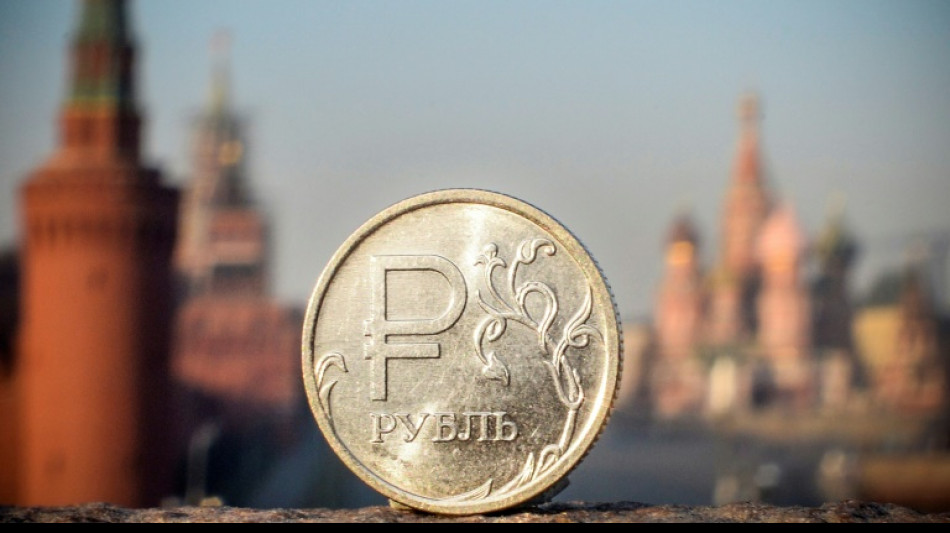
Economic woes mount for Russia's war machine / Photo: © AFP/File

 Belgium raids illicit cigarette factory in push to stub out growing trade

 Vuelta debutant Brennan claims fifth victory on stage 17

 US had warmest summer on record: climate agency

 Meta tests fact-check replacement in Latin America

 Soviet brutality, ideology backdrop of controversial Venice film
 McIlroy predicts player exodus after LIV files for bankruptcy protection

 Global Multi-Asset Broker FP Markets Secures UAE CMA Category 5 Licence
 Brent oil passes $100 on Mideast flare-up, stoking inflation worries

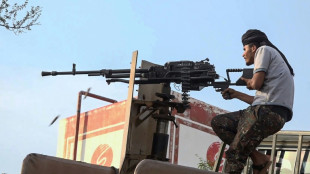
 'Nothing left': thousands in Yemen flee deadly Houthi clashes
 Spain endured hottest summer on record: weather agency
 'A celebration': Amsterdam museum unveils Kusama show weeks after death

 IC Markets Australia Wins People's Choice Forex Broker Innovation Award at the 2026 Finder Innovation Awards
 Brent oil tops $100 on Mideast flare-up, fanning inflation fears

 EU wants to edge out China in public contracts
 Google unveils 13 bn euro AI expansion in Finland

 Singapore's hefty ministerial pay hikes draw mixed feelings
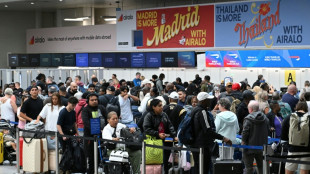 Cyberattack ruled out in UK air traffic glitch as more flights axed

 Ekiden Launches Canton Network’s First Order Book-Based Derivatives Exchange

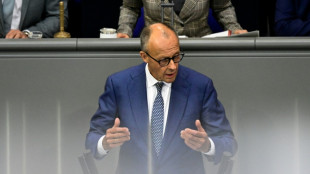 Germany's Merz accuses AfD of promoting 'ethnic cleansing'
 Japanese director Kore-eda's manga film charms critics in Venice

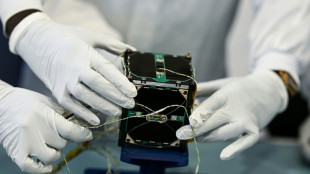 As African space race heats up, Senegal pursues homemade satellites
 UK's little-known Bayeux Tapestry replica steps into spotlight
 Shelton stuns Alcaraz in 3:34 am US Open finish, Sabalenka battles on

 Alcaraz falls to Shelton in epic latest-ever US Open finish

 Tradition Announces Partnership With Affin Moneybrokers to Support Malaysian Market Data
Stubborn inflation, exorbitant borrowing costs, bankruptcy risks and a growth slowdown: the Russian economy is facing a slew of negative headlines, as the costs of the Ukraine war and Western sanctions mount.
Since ordering an invasion in February 2022, Russian President Vladimir Putin has repeatedly touted the "failure" of sanctions and hailed strong growth in the face of unprecedented uncertainty.
But going into 2025, that three-year run of mostly good economic news looks in serious doubt.
The latest setback for the Kremlin came last week, when inflation accelerated to 8.9 percent in November, according to official statistics.
Prices have been rising despite the central bank having hiked interest rates to a two-decade high of 21 percent.
Russian media, usually reluctant to report on any sign of social discontent, are turning increasing attention to hard-pressed families.
The price of butter, up a third since the start of the year, has become emblematic, with a slew of reports on rising thefts from supermarkets.
- 'Root cause' -
Most independent analysts say the invasion is to blame.
"The root cause of the economy's problems is labour starvation and sanctions ... the symptom is an inflationary surge," said Anton Tabakh, chief economist at the Russian ratings agency Expert RA.
Both those factors are directly related to the war.
Labour shortages, already pressing due to Russia's demographic problems, have been exacerbated by hundreds of thousands of men joining the army, being employed by arms manufacturers or fleeing the country, as well as a tightening of migration rules.
"This is holding back GDP growth," said economist Yevgeny Nadorshin, a former advisor to the economic development ministry.
He estimates Russia lacks around one million workers.
That has contributed to rising wages, pushing up prices set by businesses.
So too has the Kremlin's massive increase in military spending.
State expenditure is set to be 67.5 percent higher in 2025 compared to 2021, before Russia's military offensive.
Up against those huge sums, interest rate rises have so far had only a limited effect.
Central Bank Governor Elvira Nabiullina -- who has stressed the need to stop the "disease" of inflation "becoming chronic" -- has signalled she will hike rates again on Friday.
High rates have triggered outcry from bosses, including at state-run companies, with market borrowing costs running at 25-30 percent.
"The economy can't survive like this for long," German Gref, CEO of Russia's largest lender, state-run Sberbank, said this month.
Russian Railways said it will cut investment by 40 percent next year.
Even Putin's closest allies have complained.
Sergei Chemezov, head of the Rostec military-industrial conglomerate and a close friend of the president, described interest rates of more than 20 percent as "madness".
Analysts expect many firms, unable to refinance, will go under.
"The number of bankruptcies is about to rise sharply, especially among small and medium businesses. But there will be some among large businesses as well," said Nadorshin.
- Growth slowdown -
Faced with such an onslaught, the central bank predicts a sharp slowdown in growth next year -- to below 1.5 percent, from over 3.5 percent this year.
It has ruled out the prospect of stagflation -- low growth and high inflation -- yet the word is being used more and more frequently in Moscow.
Adding to those worries has been fresh volatility for the Russian currency, which slid to its weakest against the dollar since March 2022.
The ruble tumbled after the United States introduced sanctions on key financial institution Gazprombank, which had been handling all payments for Russian gas exports.
For the Kremlin, however, there are still some bright spots.
Chinese companies have filled many of the gaps left by Western firms that fled the market and Moscow has obtained sanctioned goods using friendly intermediaries.
The budget deficit is low by international standards and tax revenues from sources other than energy exports are rising.
"There are certainly no reasons to panic," Putin said last month amid the currency crisis.
R.Braegger--VB