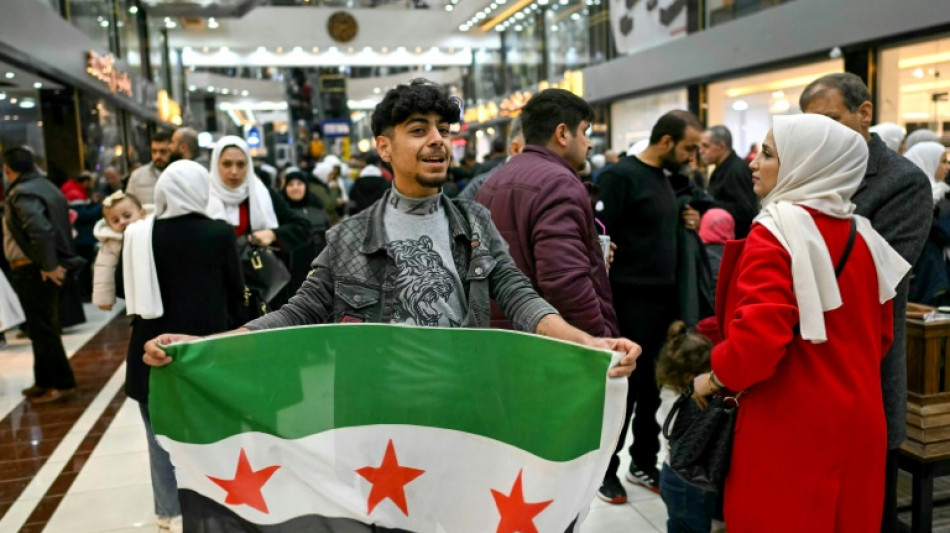
Shopping spree in Syria's former rebel heartland / Photo: © AFP

 Asian Games begin with Qatar basketball win, nine days before opening ceremony

 Stocks sink as oil rally fans inflation and rate hike fears
 Argentine industry reels from Milei's free-market revolution

 Women quit South Korea's grind for diving tradition
 Bayeux Tapestry 'mania' sweeps UK as sold-out exhibition opens
 August hottest month ever recorded globally: EU monitor

 Duplantis leads creme de la creme at 'game-changing' Ultimate Championship

 Sjobo, cradle of Sweden's now-mainstream anti-migrant sentiment

 Israeli-made film about Gaza civilian deaths to debut in Venice
 Stars ready for busy Toronto International Film Festival

 Rubio defends anti-drug boat strikes, warns of cartel 'cancer'

 Rybakina books US Open semi against Gauff, secures No.1 ranking

 Pegula aiming to thwart Sabalenka three-peat in US Open semis

 'Not normal' US Open scheduling under-fire after late-night finishes

 Luis Enrique hails 'marvellous' Dembele as PSG win big in Champions League

 Liverpool's Iraola 'lucky' after first taste of Champions League

 Resurgent Zheng takes positives from storming US Open run

 Odegaard gives Arsenal winning Champions League start at Napoli

 Bond yields jump despite $6 bn US government intervention

 Mac Allister caps Liverpool comeback to beat Atletico Madrid

 Ferran Torres hits hat-trick as PSG wallop Slovan in Champions League

 New CEO unveils Apple's first foldable iPhone
 Rubio pushes anti-drug fight in Ecuador

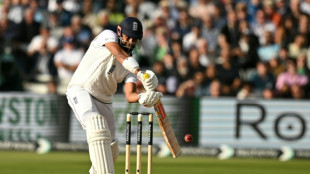 England on top in third Test after historic Pakistan collapse

 Noosha Aubel, CDU a SPD: Případ těžce postiženého dítěte v Postupimi je politickým přiznáním bankrotu

Crowds of visitors wander brilliantly lit shopping aisles, stunned by the abundance of goods on offer in the heart of the former rebel stronghold in northwest Syria.
Dana, near Sarmada in Idlib province, is less than 40 kilometres (25 miles) east of second city Aleppo, but had been cut off from the rest of the country until the fall of president Bashar al-Assad less than a week ago.
It is a major shopping centre because of its proximity to the border with Turkey.
You can pay for your purchases in Turkish lira or in US dollars, and all the big names are available, brought in from Syria's powerful neighbour.
Everything from clothes to electrical goods to furniture is on display in main street stores and four shopping malls with gleaming windows.
"It's a long time since I have seen so many things," said 54-year-old mother Aisha Darkalt, visiting from Aleppo with her family.
"The kids, they don't know where to look... It's hard to imagine all this was so close. We never left Aleppo any more."
Aleppo, the first city to be taken by the rebels in their lightning offensive that ended decades of rule by the Assad clan, still has just three hours of electricity a day.
But bright lights, pink fabric flowers and flashy garlands adorn the shopping malls of nearby Dana after 13 years of deprivation in the rest of the country, which has been ravaged by a civil war that broke out in 2011.
- Close to Turkey -
The Sarmada region was relatively well off while Aleppo and much of the rest of Syria was engulfed in conflict and poverty under Assad rule, squeezed for taxes and rife with corruption.
Unlike Idlib, the rebel "capital" that was subject to Russian bombardment until the start of the month, Sarmada was generally spared because it is so close to neighbouring Turkey.
In 2021, the Carnegie Middle East Center said the region's prosperity dated to the outbreak of the war in 2011 and the rupture between Damascus and Ankara, when Assad stopped the importation of goods from Turkey.
Local businessmen were well used to cross-border dealings, and benefited from an influx of displaced people into an area where just 15,000 inhabitants lived previously.
A flourishing commercial hub was born, one that the Islamists of the Hayat Tahrir al-Sham (HTS) rebel group was careful not to oppose.
But it still remained out of bounds to the rest of the country -- until now. In recent days, people have been flocking to the area to shop, arriving from Aleppo, Hama, Homs and even the capital Damascus.
Maher al-Ahmad, 42, runs a store selling household goods and carpets.
"People are surprised," he said amid a shopping frenzy worthy of sales time at department stores in the West.
"They thought we lived in a dangerous place full of criminals, and then they come here! We have electricity, we have everything they need."
- Return to normal -
Imad Fares, 40, has lived in Dana for the past three years after leaving his home town of Maaret al-Numan, which was devastated by the conflict.
"The people from Aleppo look miserable and tired. You can tell from their faces that they lived in a prison," he said.
"They're shocked at how we live here."
It is the beginning of a return to normal.
Ahmad loaded two flat-screen televisions and toys he had bought into the boot of his ancient car.
"You can find anything," the 42-year-old said.
"But the most important thing is knowing you can get back home without being robbed by Assad's people on the way."
His vehicle was a stark contrast to the shiny new cars and SUVs with Idlib plates that popped up in the streets of Aleppo this week.
Because bringing cars in from Turkey was banned, Syrians often pushed their own ageing vehicles to the limit.
A doctor from Aleppo said he got his car in 2013, and 11 years later it was still considered new.
"A week ago I got $50,000 for it," he said. "But now you can buy a new one in Sarmada, it wouldn't be worth more than $8,000."
He looked on at friends who had come to do their shopping in the former rebel bastion, where prices were up to three times lower than in the city.
"We just didn't understand that we were the unfortunate ones," he laughed.
E.Burkhard--VB