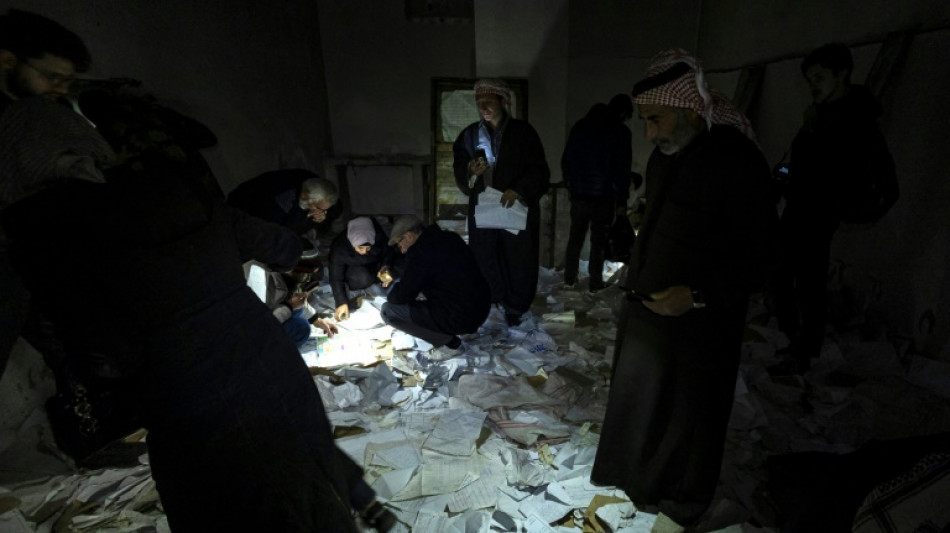
How an ex-inmate of brutal Syria jail overcame trauma by helping others / Photo: © AFP

 Macron urges Europe to develop 'crewed spaceflight' programme
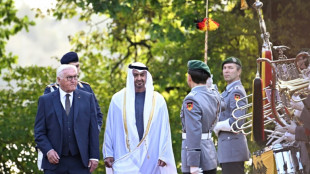 Deals worth billions to be signed as UAE leader visits Germany

 Zamanat Targets GCC’s $250 Billion SME Financing Gap With Up to $100 Million Tokenized Private Credit Fund

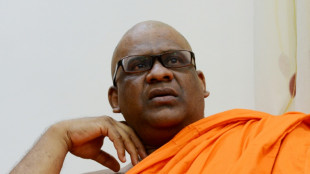 Sri Lanka court revokes monk's pardon, orders return to prison

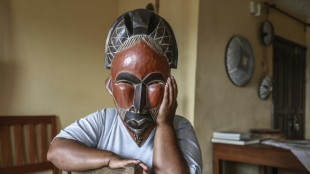 'Hopeless, stuck, afraid': US deportees in limbo in Cameroon

 Mount Fuji ends hiking season with landslide, two rescues
 Seahawks beat Patriots again in NFL opener
 Asian Games begin with Qatar basketball win, nine days before opening ceremony

 Stocks sink as oil rally fans inflation and rate hike fears
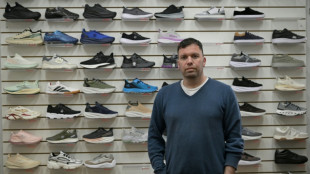 Argentine industry reels from Milei's free-market revolution

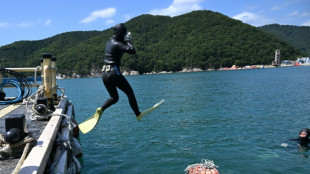 Women quit South Korea's grind for diving tradition
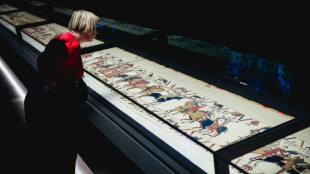 Bayeux Tapestry 'mania' sweeps UK as sold-out exhibition opens
 August hottest month ever recorded globally: EU monitor

 Duplantis leads creme de la creme at 'game-changing' Ultimate Championship

 Sjobo, cradle of Sweden's now-mainstream anti-migrant sentiment

 Israeli-made film about Gaza civilian deaths to debut in Venice
 Stars ready for busy Toronto International Film Festival

 Rubio defends anti-drug boat strikes, warns of cartel 'cancer'

 Rybakina books US Open semi against Gauff, secures No.1 ranking

 Pegula aiming to thwart Sabalenka three-peat in US Open semis

 'Not normal' US Open scheduling under-fire after late-night finishes

 Luis Enrique hails 'marvellous' Dembele as PSG win big in Champions League

 Liverpool's Iraola 'lucky' after first taste of Champions League

 Resurgent Zheng takes positives from storming US Open run

 Odegaard gives Arsenal winning Champions League start at Napoli

Riyad Avlar spent 20 years languishing in Syria's jails, including a decade in the infamous Saydnaya prison, the scene of some of the Bashar al-Assad government's most brutal abuses.
Those long years behind bars have left him with one obsession: documenting and healing the atrocities committed inside the prison where he himself was locked up.
"I am sure we'll see Bashar al-Assad in court one day," predicted Avlar, who is Turkish.
In 2017, just months after he was freed, he co-founded the Association of Detainees and Missing Persons of Saydnaya Prison (ADMSP), which advocates for those jailed for daring to defy Assad's rule.
"We don't want revenge, we want justice," he told AFP at the organisation's headquarters in Gaziantep, southeastern Turkey.
It is here that Avlar and others who survived the brutalities of Saydnaya collect and compile documentation and testimonies relating the horrors that occurred inside an institution Amnesty International has described as a "human abattoir".
Thousands of inmates in the prison just north of Damascus, some held since the 1980s, were freed on Sunday by Syrian rebels who seized the capital in a lightning advance.
Images of the former captives walking free, haggard and emaciated, some needing help even to stand, were beamed around the world as a symbol of Assad's fall.
"It made me so happy to see them (freed) but when I saw images of the walls and the cells, it took me straight back there," said Avlar, who was arrested in 1996 while studying in Damascus over a letter sent to relatives relating the government's abuses in Syrian prisons.
"I can still feel the trauma."
- 'So many people died' -
Even today, he sometimes jolts awake at night believing himself to still be behind bars -- he was once held inside a cell in pitch darkness for two months.
"I saw people die in front of my eyes, many from starvation," said the activist with fine-rimmed black glasses, whose salt-and-pepper beard hides a scar from the torture he was subjected to 25 years ago.
The guards, he said, would often throw scraps of food into the toilet in front of starving prisoners.
"The prisoners ate it because they had to stay alive," he said.
Part of his recovery was through theatre and learning the saz, a long-necked lute popular in Turkey -- which for him was "art therapy".
But it has also helped being part of the association's work, through which he has been able to help countless families acquire proof of life for loved ones held inside Saydnaya.
That was thanks to "insiders", prison employees who secretly passed internal documents to the organisation, he said, without giving further details.
- 'No more' -
Saydnaya, where hundreds of Syrians rushed this week in the desperate hope of finding their loved ones, now stands empty.
More than 4,000 inmates were freed by the Islamist-led rebels, the ADMSP said.
The group estimates that more than 30,000 people were either executed or died as a result of torture, starvation or lack of medical care between 2011 and 2018.
And with so many bodies, the authorities were forced to use rooms lined with salt as makeshift morgues to make up for the lack of cold storage.
Haunted by his grisly memories, Avlar has no interest in going back there but acknowledges he has long dreamed of the day when "Saydnaya would be turned into a place of remembrance".
"I am so happy there is not a single prisoner left in there," Avlar said.
"And I just hope there won't ever be any again."
L.Meier--VB