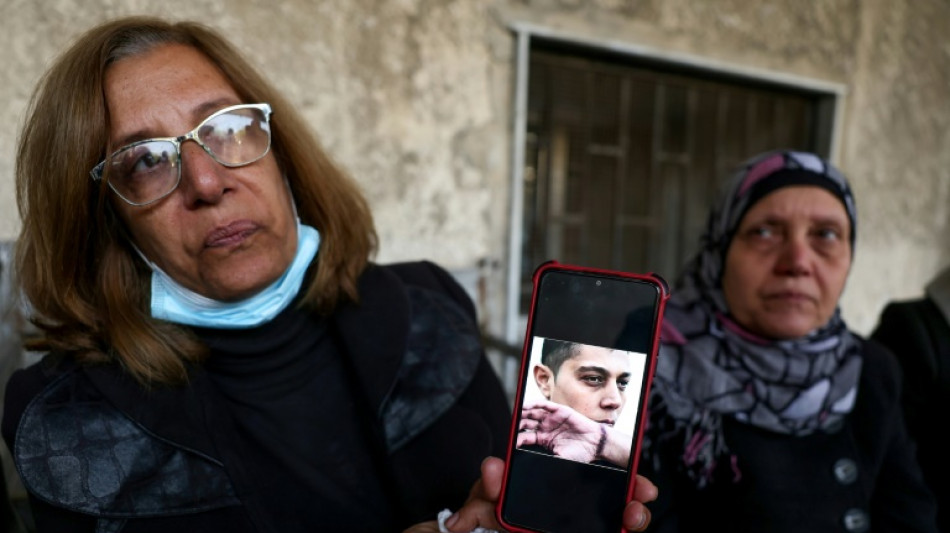
Relatives of Syria's disappeared seek closure in Damascus morgues / Photo: © AFP

 Yemen's Houthis seize key city on Red Sea: military source

 Oil prices extend gains as markets await ECB rate outlook
 Wars pose a test as India hosts BRICS summit with China, Russia, Iran leaders

 Messi to buy second Spanish lower league club
 Pochettino calls for Chelsea to lose 2016-17 Premier League title
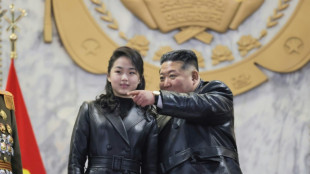 North Korea leader's daughter believed to have younger sibling: Seoul
 Wars pose a test as India hosts BRICS summit with Russia, Iran leaders

 Alessio Vinassa Unveils an Emerging Technology Investment Approach Shaped by Financial Challenges
 Stocks drop as oil spike fans inflation and interest rate fears
 Portugal harvests grapes at night to beat the heat
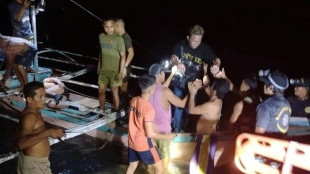 Philippine ferry fire kills 5, dozens missing

 Oil prices flare as Iran tightens grip on Hormuz
 Japan gymnasts under injury cloud for home Asian Games
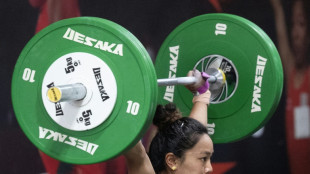 India trailblazer won't 'let go' of chance for Asian weightlifting glory
 Zverev cruises past van de Zandschulp into US Open semis
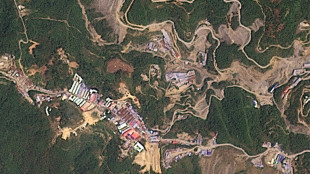 Myanmar tin mega-mine restarts operations: think tank
 Online and undercover: saving trafficked wildlife in Thailand
 Antonelli faces new challenge after stirring triumph in Monza

 Korda leads US bid to win first away Solheim Cup since 2015
 Eurozone rate-setters to hike borrowing costs as energy prices jump

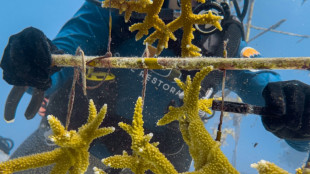 As oceans warm, Florida scientists hunt for heat-resistant coral

 Trump takes center stage as Republicans fight midterm tide
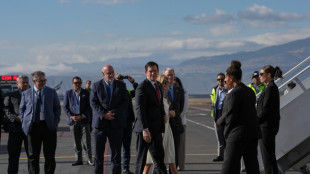
 Gauff takes inspiration from Tiafoe in US Open fightback win

 Ralph Lauren opens fur-free New York Fashion Week

 Arteta lauds in-form Odegaard as 'remarkable' Arsenal edge Napoli

In the corridors of Damascus's main hospitals, thousands of families have gathered for the foreboding mission of trying to find the bodies of loved ones captured years ago by the Syrian authorities.
"Where are our children?" women cried out as they grasped at the walls, desperate for closure after their years-long ordeal.
But no such closure was within reach for Yasmine Shabib, 37, who still could not locate her brother or father, both arrested in 2013.
Having travelled for more than four hours from the northwestern city of Idlib, the victorious rebels' wartime base, she had little hope of finding them alive.
But at very least, she hoped she would not leave without their bodies.
"Just open the prison vaults for us, we will search ourselves among the corpses," she said in tears.
"They buried the people everywhere, not just in Saydnaya. There are Saydnayas everywhere under our feet in Syria," she added, referring to Syria's most notoriously brutal prison, dubbed a "slaughterhouse" by human rights groups.
Outside the hospital, voices echo.
"Does anyone recognise body number nine?" a doctor calls out to a group of families as a phone is passed around between them, the picture of a corpse lighting up the screen.
Every once in a while, someone recognises a loved one, and the body is summarily brought out of the morgue to be taken to another mortuary freezer, where the family can finally confirm whether it is one of their own.
Having failed to locate her son, a mother comes out, her hand bloodstained from the bodies she inspected.
"Their blood is still fresh," she said trying to catch her breath.
- 'Drowning' -
Pathologist Yasser al-Qassem confirms: "We still don't know the dates or causes of death for the bodies arriving from Harasta," a suburb of Damascus where another morgue is located.
"But one thing is certain, these deaths are recent."
As soon as he heard that Bashar al-Assad had fled, Nabil Hariri rushed to Damascus from his southern hometown Daraa to search for his brother.
Arrested in 2014 when he was just 13, Hariri had had no news of his brother since.
"When you're drowning, you cling to anything," Hariri, 39, told AFP.
"So we search everywhere".
He was among the thousands of desperate relatives who gathered outside Saydnaya on Tuesday, hoping that his brother was among the thousands of prisoners freed after Assad's fall.
"I didn't find my brother there," he said.
At dawn on Wednesday, there was a brief resurgence of hope when he heard that 35 bodies were arriving from Harasta. The hospital morgue there was used as a staging post for the bodies of prisoners who died of maltreatment, hunger or illness before they were buried in mass graves.
But that hope was swiftly dashed.
"In all the photos, the bodies were old," he said. "My brother is young."
- 'Alive or dead?' -
Syria's new rebel authorities announced that they had found bodies in the Harasta morgue.
After opening the white body bags, rebel official Mohammed al-Hajj took video that he later showed to AFP.
The footage showed bodies bearing signs of torture -- one without an eye, another without any teeth, a third covered in dried blood.
Another body bag simply contained bones, while yet another held the remains of a flayed corpse, its ribcage poking out from the flesh.
Harasta "is one of the main centres where bodies from Saydnaya or Tishrin", another notorious prison, "were gathered before being buried in mass graves", said Diab Seria, a member of the Association of Detainees and Missing Persons of Sednaya Prison.
Khaled Hamza found no traces of his son at Harasta, Saydnaya or the Damascus hospital.
But he has no intention of giving up, having stumbled across documents at the prison containing information about the detainees, which he then gathered and handed over to the new police authorities.
"We are millions searching for our children," the taxi driver said. "We ask just one thing: are they alive or dead?"
E.Gasser--VB