Israel assuming 'worst-case scenario' with Syria bombing: analysts / Photo: © AFP

 'Bragging rights' up for grabs at game-changing Ultimate Championship, says Coe

 ECB hikes borrowing costs to combat Mideast energy shock

 England turn screw in 3rd Test against Pakistan

 France will not support Infantino in FIFA election: federation chief

 In their words: Israeli forces describe AI-backed Gaza killing in new film
 Yemen's Houthis seize key city on Red Sea: military source

 Oil prices extend gains as markets await ECB rate outlook
 Wars pose a test as India hosts BRICS summit with China, Russia, Iran leaders

 Messi to buy second Spanish lower league club

 Pochettino calls for Chelsea to lose 2016-17 Premier League title

 North Korea leader's daughter believed to have younger sibling: Seoul
 Wars pose a test as India hosts BRICS summit with Russia, Iran leaders

 Alessio Vinassa Unveils an Emerging Technology Investment Approach Shaped by Financial Challenges
 Stocks drop as oil spike fans inflation and interest rate fears
 Portugal harvests grapes at night to beat the heat

 Philippine ferry fire kills 5, dozens missing

 Oil prices flare as Iran tightens grip on Hormuz

 Japan gymnasts under injury cloud for home Asian Games

 India trailblazer won't 'let go' of chance for Asian weightlifting glory

 Zverev cruises past van de Zandschulp into US Open semis

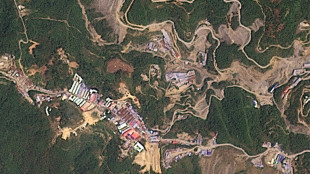 Myanmar tin mega-mine restarts operations: think tank
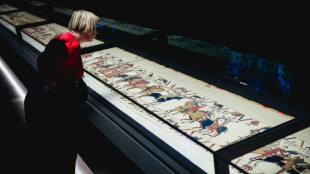
 Online and undercover: saving trafficked wildlife in Thailand

 Antonelli faces new challenge after stirring triumph in Monza

 Korda leads US bid to win first away Solheim Cup since 2015
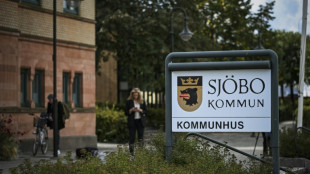
 Eurozone rate-setters to hike borrowing costs as energy prices jump

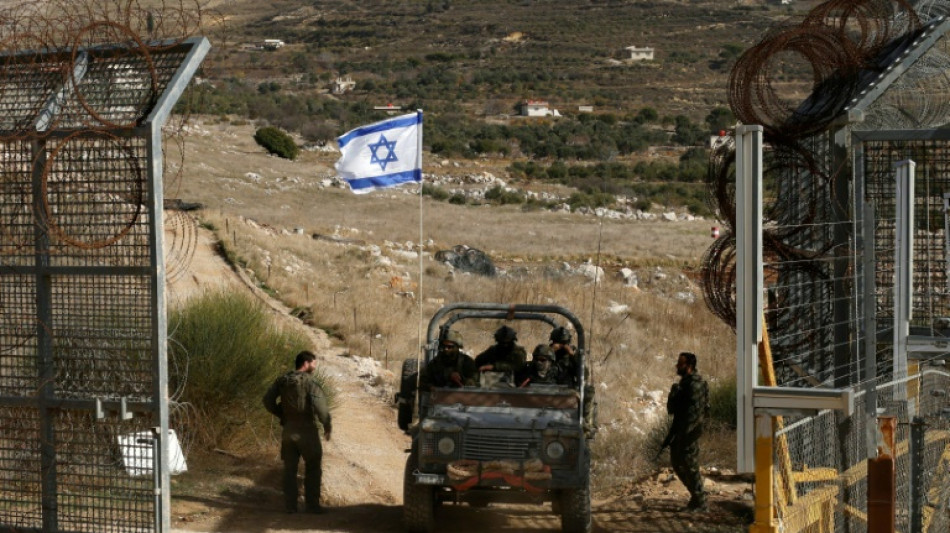
Israel's bombing of Syrian military assets and its entry into the UN-patrolled buffer zone on the Golan Heights show it fears the worst from the end of the Assad clan's rule, analysts told AFP.
"The Israeli government... is operating on a worst-case scenario with little to no nuance," said Yossi Mekelberg, a Middle East specialist at Chatham House in London.
Analysts noted that Israeli Prime Minister Benjamin Netanyahu had long appeared to regard ousted president Bashar al-Assad's continued rule as the least bad option for Syria, despite his alliance with Israel's arch foes Iran and Lebanese militant group Hezbollah, for fear his overthrow would lead to chaos.
Now, Israeli leaders seem to fear that chaos has already arrived.
Netanyahu declared a 1974 armistice agreement with Syria void at the weekend and ordered troops into the UN-patrolled buffer zone along the armistice line.
Key backer the United States said the incursion must be "temporary", after the United Nations said Israel was violating the 1974 armistice.
The Israeli military has since launched hundreds of air and naval strikes against Syrian military assets, targeting everything from chemical weapons stores to air defences to keep them out of rebel hands.
UN Syria envoy Geir Pedersen called for an immediate halt to the bombardment.
Analyst Danny Citrinowicz said he expected Israel to bomb Syrian targets extensively.
"Everything strategic in Syria that can fly, missiles, aeroplanes, also the (military's) scientific research centre, everything will be bombed", said Citrinowicz of the INSS think tank in Tel Aviv.
"We don't know who will counter us from the Syrian side, whether it is Al-Qaeda, (the Islamic State group), whatever, so we have to be ready to protect our civilians."
Israeli Defence Minister Israel Katz said the military had orders to establish a "sterile defence zone free of weapons and terrorist threats in southern Syria".
The key short-term concern for Israel, said Aviv Oreg an analyst at the Meir Amit Center and former military intelligence officer, is any remaining stocks of chemical and other strategic weapons.
He pointed to the jihadist past of some Syrian rebel groups and said "if such weapons fall into their hands, who knows what they will do with them".
But Mekelberg questioned the intensity and breadth of the strikes, saying "it is not exactly the best way to build bridges with the new government".
- The Kurds and the Druze -
While there is optimism in Syria about its future, some Israeli analysts forsee a fragmented country.
Eyal Pinko, a retired naval officer and security expert, said he expected Syria to break up into ethno-religious units.
"I don't think there will be a Syria ever again," he said. In this vision of the country's future, Israel might choose to work with some ethnicities over others.
On Monday, Foreign Minister Gideon Saar said Syria's Kurds, whom he called a "stabilising force", must be protected by the international community while he has previously spoken of working with the Kurds in the northeast and the Druze in the south.
"I don't think they will rule Syria... but Israel will try to go into peace with whoever would like to," said Pinko.
Mekelberg counselled against such a move, insisting that the military action in the Golan and efforts to favour specific ethnicities was an error that would undermine any future relationship.
"I think it's likely, but would be a mistake. Don't feed the division, it won't help."
- Nuclear talks -
For decades Syria was a close ally of Iran and the keystone in the land bridge through which Iranian weapons reached Lebanese militant group Hezbollah.
Hammered by Israel in their recent war, Hezbollah could now find it very hard to rearm without the Syria connection.
"Syria is so crucial. I would dare to say that without Syria under the influence of Iran, there's actually no axis of resistance," said Citrinowicz.
Pinko echoed his comments. "The risk from the (Shiite) axis -- Hezbollah, Syria and Iran, the Iraqi militias as well, is much, much lower," he said.
The question for Israeli strategists is how Iran might react to its weakened position.
Citrinowicz said Tehran might "rush for a (nuclear) bomb".
That sentiment was echoed by Oreg, who said it was Israel's key strategic concern "because, when you deal with a nuclear Iran, it's a whole different ballgame".
Last week, a report by the UN nuclear watchdog said Iran planned a major increase in its production of highly enriched uranium, which is only a few steps away from weapons grade.
Were Iran to make a dash for a warhead, Israel might choose to take military action, but several of the analysts presented an alternative -- that a weakened Iran might be persuaded to negotiate.
Mekelberg said: "Send a clear message -- your axis of resistance has been degraded severely, you lost Syria, can we open talks?"
L.Maurer--VB