Assad's feared dungeons give up their secrets / Photo: © AFP

 'Bragging rights' up for grabs at game-changing Ultimate Championship, says Coe

 ECB hikes borrowing costs to combat Mideast energy shock

 England turn screw in 3rd Test against Pakistan

 France will not support Infantino in FIFA election: federation chief

 In their words: Israeli forces describe AI-backed Gaza killing in new film

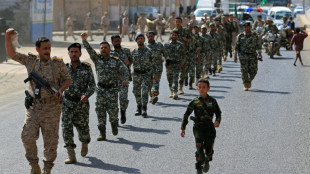
 Yemen's Houthis seize key city on Red Sea: military source

 Oil prices extend gains as markets await ECB rate outlook
 Wars pose a test as India hosts BRICS summit with China, Russia, Iran leaders

 Messi to buy second Spanish lower league club
 Pochettino calls for Chelsea to lose 2016-17 Premier League title
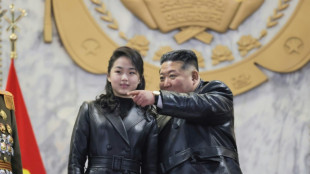 North Korea leader's daughter believed to have younger sibling: Seoul
 Wars pose a test as India hosts BRICS summit with Russia, Iran leaders

 Alessio Vinassa Unveils an Emerging Technology Investment Approach Shaped by Financial Challenges
 Stocks drop as oil spike fans inflation and interest rate fears
 Portugal harvests grapes at night to beat the heat
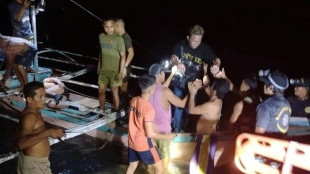 Philippine ferry fire kills 5, dozens missing

 Oil prices flare as Iran tightens grip on Hormuz
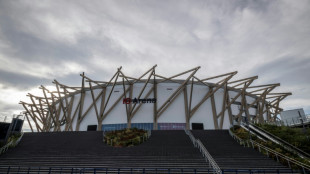
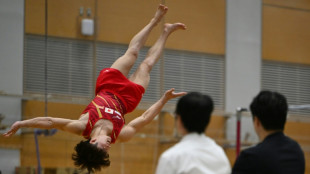 Japan gymnasts under injury cloud for home Asian Games
 India trailblazer won't 'let go' of chance for Asian weightlifting glory
 Zverev cruises past van de Zandschulp into US Open semis
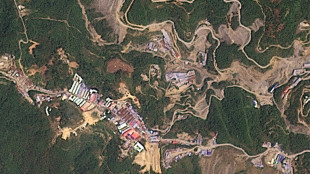 Myanmar tin mega-mine restarts operations: think tank
 Online and undercover: saving trafficked wildlife in Thailand
 Antonelli faces new challenge after stirring triumph in Monza

 Korda leads US bid to win first away Solheim Cup since 2015
 Eurozone rate-setters to hike borrowing costs as energy prices jump

Syrians lived in terror for decades of what went on behind the concrete walls of Damascus's security compound. Now the Assad dynasty has been toppled, its dungeons and torture chambers are giving up their secrets.
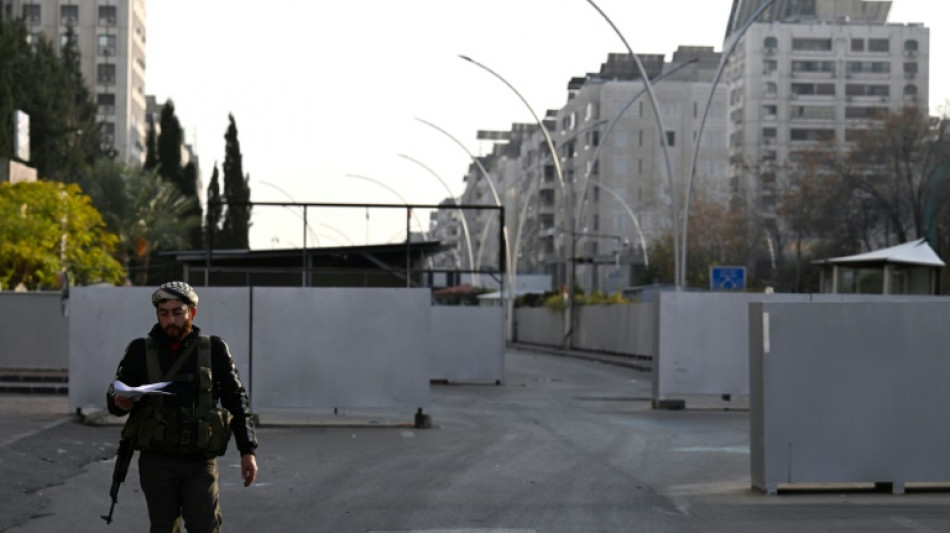
Rebel fighters stand guard at the entrances to the forbidden city in the capital's Kafr Sousa district, where the feared security services had their headquarters alongside government offices.
The myriad of different agencies which kept tabs on the lives of ordinary Syrians each operated their own underground prisons and interrogation chambers inside the walled defence ministry compound.
Syrians lived in fear of being summoned for a round of questioning from which they might never return.
AFP found first responder Sleiman Kahwaji wandering around the complex this week trying to locate the building where he was questioned and then detained.
He said he was still at secondary school when he was arrested in 2014 on suspicion of "terrorism", a frequent allegation under the rule of now toppled president Bashar al-Assad, who brooked no dissent.
- 'My dear mother' -
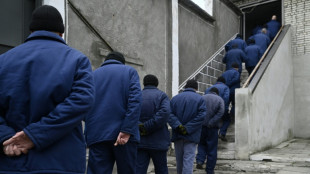
"I spent 55 days underground," he said. "There were 55 of us in that dungeon. Two died, one from diabetes."
Scribbled graffiti left by the prisoners are barely legible on the walls amid the darkness.
"My dear mother," one had scribbled, probably in his own blood.
The cells that were used for solitary confinement are so small there isn't even space to lie down.
As many as 80 prisoners per cell were crammed into the larger ones, forcing inmates to take turns to sleep, recalls another former detainee Thaer Mustafa, who was arrested for alleged desertion.
All remaining prisoners were freed on Sunday after their captors fled as the rebels swept into Damascus capping the lightning offensive they launched late last month.
A large crowd broke into the security zone and ransacked the sprawling offices on the upper floors of the complex.
Thousands of intelligence files lay abandoned, many of them scattered on the floor, detailing the activities of ordinary citizens subjected to draconian surveillance by security service agents.
One handwritten document lists more than 10,000 prisoners held on suspicion of membership of the Muslim Brotherhood.
The Sunni Islamist group was anathema to the Assad clan who are members of Syria's Alawite minority, followers of an offshoot of Shiite Islam.
Brotherhood membership became punishable by death since 1980 two years before Assad's father and predecessor Hafez ordered the army to crush its insurgency with an assault on the central city of Hama which killed between 10,000 and 40,000 people.
Alongside each prisoner's name and date of birth, the security services noted the details of their detention and interrogation, and whether and when they had died.
Another abandoned file details the detention of a Briton of Syrian origin, who was subjected to a lie detector test over allegations he was working for British intelligence.
- Paid informers -
Another, dated this January, details the investigation into a bomb attack on the Mazzeh neighbourhood of Damascus, in which an Iraqi was wounded.
Nothing was considered too trivial to escape the security services' attention. There are files recording the activities of ordinary citizens as well as journalists and religious leaders.
Not even government ministers were immune. On a list of members of Assad's government, a security service agent has carefully noted the confession of each minister -- Sunni or Alawite, Christian or Druze.
The security services operated vast networks of paid informers, who provided the tiniest details of people's daily lives.
Families have been arriving at the gates of the Damascus security zone since Saturday, desperately seeking word on the fate of their missing loved ones.
Many come after first visiting Saydnaya Prison, a vast detention complex on the outskirts of Damascus where many of those who survived interrogation at security headquarters were taken for long-term incarceration.
"We heard that there were secret dungeons. I'm looking for my son Obada Amini, who was arrested in 2013," said Khouloud Amini, 53, her husband and daughter by her side.
"He was in his fourth year at the engineering faculty, I went to Saydnaya but I didn't find him.
"I was told there were underground dungeons here. I hope that all Syrian prisoners are freed."
E.Gasser--VB