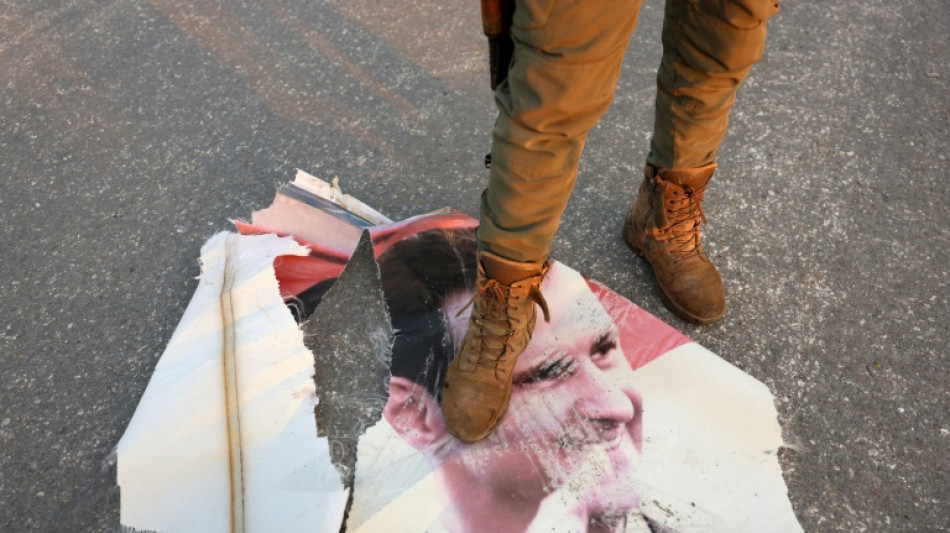
Is the 'writing on the wall' for Syria's Assad? / Photo: © AFP

 Man United, Bayern cruise as Como make dream Champions League start
 Musiala returns to help Bayern sink Bodo in Champions League

 Surging oil prices, higher bond yields weigh on stocks
 Russell admits he needs luck as Antonelli focuses on the job

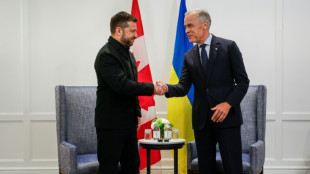 Canada pledges support for Ukraine air defense as Zelensky visits
 Latin America fact-check group asks Meta not to replace verification practice
 Seahawks' Darnold gets good news on hip injury: coach

 Evasive Alonso teases reporters on his F1 future
 What to know about Trump's $5,000 'dividend' pledge
 Leclerc concedes he 'went too far' in Hamilton Monza incident
 Shelton, Tiafoe in spotlight as Zverev aims to build on Grand Slam success
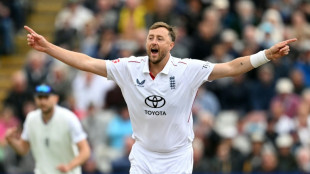 England close in on Test series sweep against sorry Pakistan
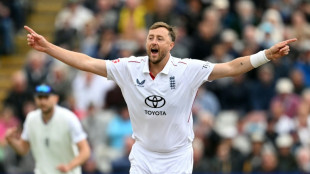 England dominate sorry Pakistan, close in on Test series sweep
 Kung wins Vuelta time-trial as Mas retains lead

 DR Congo school fire leaves at least 14 children dead

 USA and France ease into women's Basketball World Cup semis

 ECB lifts borrowing costs amid energy shock, opens door for more hikes
 France defeat China to reach women's basketball World Cup semis
 Tribal Launches Campfire, Letting Business and Technical Teams Build on Salesforce Together

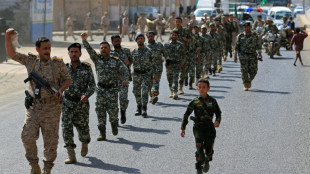 Yemen's Houthis seize key city on Red Sea
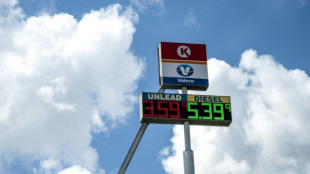 US producer inflation tops expectations as diesel costs jump
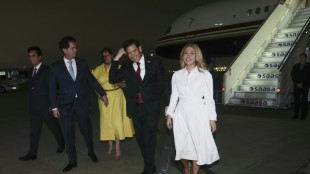 Rubio ends South America swing with Peru security talks

 Defiant Iran seeks to bruise Trump ahead of midterms

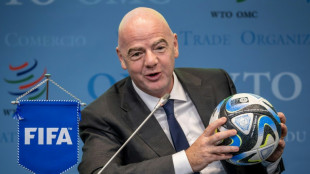 France withdraws support for Infantino in FIFA presidential election
 Evolution Metals & Technologies Provides Initial Revenue Guidance of $400-460mm for Fiscal Year 2027
More than 13 years since Bashar al-Assad's security forces opened fire on protesters demanding democratic reforms, the Syrian president's grip on power may finally be weakening.
The 59-year-old son and heir of late dictator Hafez al-Assad has faced several setbacks during the long civil war triggered by his brutal crackdown in March 2011, but has so far managed to cling on to power.
Now, with his Lebanese ally Hezbollah reeling from an Israeli onslaught and his great power backer Russia distracted by its invasion of Ukraine, Assad is running short of friends on the battlefield.
Key cities in the north, including Aleppo and Hama have fallen to opposition fighters in just a matter of days.
And on Saturday the rebels said they are now encircling the capital where Assad has ruled since the death of his father in 2000.
Turkey's President Recep Tayyip Erdogan has welcomed the rebel advance; Israel is reinforcing its forces in the occupied Golan; and Syria's southern neighbour Jordan is organising an evacuation of its citizens.
In a further sign of Assad's isolation, the Kurdish-led Syrian Democratic Forces (SDF) group, which controls much of northeast Syria, said it was ready to speak to its foes among the Turkish-backed rebels.
But international observers have repeatedly predicted the isolated former ophthalmologist's fall since the earliest months of the uprising, and they have repeatedly been incorrect.
The 2011 protests against Assad's rule began after a teenager was arrested for allegedly scrawling anti-government graffiti in the southern town of Daraa.
- Stunning advance -
Now, for Assad's rule, the "writing is on the wall", Joshua Landis, of the Center for Middle East Studies at the University of Oklahoma told AFP. "Things are folding very quickly."
The rebel advance has been stunning.
After Aleppo and Hama fell in quick succession, the rebels and government forces were clashing Saturday near the major city of Homs.
Its capture would effectively cut Assad's capital off from his support base in the Alawite minority community in the coastal highlands.
"The Alawite minority has lost faith in Assad," Landis said. "There are serious questions about whether the Syrian army has any fight left."
But some caution is merited. After all, haven't world leaders underestimated Assad before?
As early as November 2011, Turkey's Erdogan urged Assad to hold free elections and warned that his "office is only temporary".
In October 2012, during a re-election campaign debate, US president Barack Obama also warned Assad that his "days are numbered".
The next month, Nabil Elaraby, then the head of the Arab League, declared "everyone knows that the regime in Syria will not remain for long".
The Syrian strongman defied them all, even as international lawyers drew up arrest warrants for war crimes and rights groups denounced Syria's use of chemical weapons and aerial bombardment in civilian areas.
As the civil war spiralled into overlapping regional conflicts -- government versus rebels, Turkey versus Kurdish fighters, US-backed militias against Islamic State group jihadists -- Assad retained his grip.
At first he was ostracised by many fellow Arab leaders, leaning instead on Iranian and Russian support, but as it became clear he was not leaving the stage diplomatic ties quietly resumed.
- Rebel victories -
And meanwhile, Russia and Iran had Assad's back. Lebanon's pro-Iran Hezbollah sent thousands of fighters, backed by Iranian advisers, to bolster Syrian government forces. Russia carried out air strikes.
But the speed of this week's rebel victories seems to suggest that without his powerful foreign friends, Assad's Syrian army is a hollow shell.
Russia has such little confidence in its ally that its embassy has acknowledged a "difficult military and political situation".
Before the recent ceasefire in its conflict with Israel, Hezbollah lost thousands of fighters and weapons and its long-standing chief Hassan Nasrallah.
It appears to be in no position to help, despite a Hezbollah source saying Saturday it had sent 2,000 fighters into Syria's Qusayr area "to defend its positions".
"The Assad government is in its most precarious position since the summer of 2012," Nick Heras, an analyst at the New Lines Institute, told AFP.
"There is a real risk that the Assad government could lose power in Damascus, either through battles or through a negotiated retreat.
"Ultimately, the Assad government's ability to survive will depend on the extent to which Iran and Russia see Assad as useful to their strategies in the region."
Heras said that Russia, which has a naval base in the Syrian port of Tartus, would be loath to withdraw its military personnel and assets from the country, and Iran would be similarly reluctant to abandon Assad.
"If either or both of those allies decide they can advance their interests without Assad, then his days in power are numbered," Heras said.
The winners would be Assad's main regional opponents: Israel's Prime Minister Benjamin Netanyahu and Turkey's Erdogan, who both faced periods of intense domestic criticism only to emerge victorious in war.
Turkey-backed rebels are now spearheading the opposition advance on Homs, and Israeli air strikes against Hezbollah and Iranian targets in Syria have effectively neutralised Assad's most potent backer.
dc-burs/co/srm
C.Stoecklin--VB