-
 Hong Kong's Robert Wun: the bold Millennial conquering Haute Couture
-
Uber Eats, Deliveroo say will give France drivers break when too hot

-
 IMF cuts 2026 world growth forecast, flags risks from new Mideast fighting
-
Trump tempers fury to end NATO summit on high note
-
 Kostyuk sets up Wimbledon semi-final against Noskova
-
Oil shoots back up, stocks slide as Trump says Iran ceasefire over
-
 Noskova reaches first Wimbledon semi-final
-
Kostyuk powers into second straight Slam semi-final at Wimbledon
-
 Air Canada taps new CEO to replace chief who couldn't speak French
-
Israeli jails a 'graveyard,' says freed Palestinian journalist
-
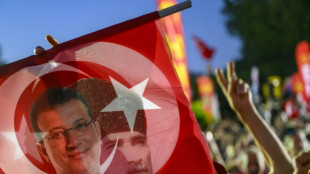 Istanbul mayor ejected from court in corruption case
-
Family of last woman executed in UK wins posthumous pardon
-
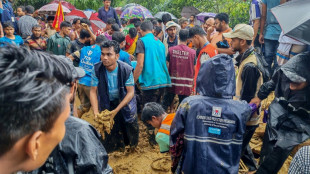 Landslide kills eight at refugee school in Bangladesh
-
'Serial killer' German doctor given life sentence for 15 murders
-
 Cleary leads NSW past Queensland to regain State of Origin crown
-
What is going on with Farage's UK election gambit?

-
 MEXC Adds Nine Ondo Tokenized Stock and ETF Trading Pairs Tied to AI Infrastructure Demand
-
Dalic quits after 'incredible era' as Croatia coach

-
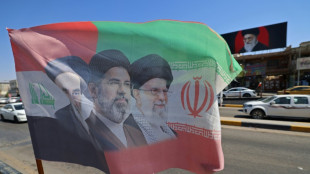 Oil prices surge, stocks slide as Trump says Iran ceasefire over
-
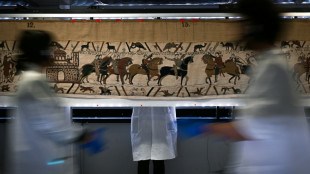
Bayeux tapestry to arrive in London in secret, high-stakes operation
-
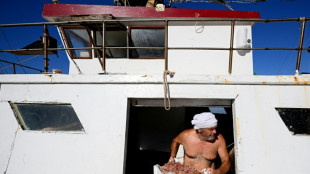 Sunken wrecks, hot seas threaten fishermen on Italian isle
-
Messi World Cup magic masks familiar penalty frailty

-
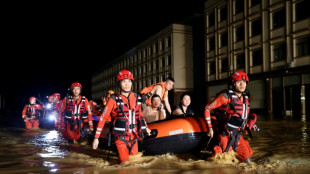 Rescuers search for survivors of China storms as super typhoon nears
-
Trump lashes out at allies as key NATO summit begins

-
 Egypt file complaint against referee after controversial World Cup exit
-
Swiss party into the night after reaching World Cup quarter-finals

-
 Apple loses challenge against EU digital competition rules
-
Trump says Iran ceasefire 'over' after fighting flares
-
 Trump says Iran ceasefire 'is over'
-
Thai beer dynasty mother drops 'ungrateful child' case against son

-
 Rescuers search for missing in China storms after 100,000 flee
-
France v Morocco rematch as World Cup quarter-finals get under way

-
 OpenAI to launch new model after US freeze
-
Modi visits Australia for minerals talks and rockstar welcome
-
 UK museums at 'sharp end' of climate change challenge
-
Sensors, early starts: how Spain keeps working when heat hits
-
 In Mauritania, Imraguen people's desert-ocean paradise under threat
-
Kenya Rastafarians hope for freedom to smoke
-
 Iraq's holy cities host funeral processions for Khamenei
-
Pacific nation of Tuvalu condemns Chinese missile launch into Pacific
-
 Rescuers search for missing in China storms after 100,000 evacuated
-
How a viral post sparked India's Gen-Z protest

-
 Ex-Australia cricketer MacGill loses appeal against cocaine conviction
-
Cambodia wants to bring tigers back, but should it?
-
 Oil prices extend rally as US strikes on Iran revive geopolitical fears
-
Chinese repairwomen smash stereotypes with power tools
-
 Iraq's holy cities to host funeral processions for Khamenei
-
Ecuador's Death Canal: watery grave for victims of gang violence
-
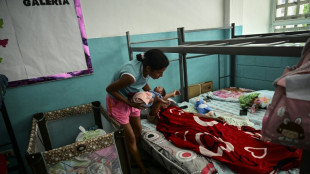 In Venezuela's quake ruins, a baby is born
-
'Unique event': Solar eclipse fever fills empty Spain

Strikes on key bridge linking Syria's Homs, Hama: war monitor
Air strikes targeted a bridge on the highway linking the Syrian cities of Homs and Hama, a war monitor said Friday, as government forces scramble to secure Homs after Islamist-led rebels captured Hama and commercial hub Aleppo.
"Fighter jets executed several airstrikes, targeting Al-Rastan bridge on (the) Homs-Hama highway... as well as attacking positions around the bridge, attempting to cut off the road between Hama and Homs and secure Homs," the Britain-based Syrian Observatory for Human Rights said.
The rebels led by Islamist group Hayat Tahrir al-Sham (HTS) launched their offensive a little more than a week ago, just as a ceasefire in neighbouring Lebanon took hold between Israel and Syrian President Bashar al-Assad's ally Hezbollah.
To slow the rebel advance, the Observatory said Assad's forces erected soil barriers on the highway north of Homs, Syria's third-largest city which lies just 40 kilometres (25 miles) south of Hama.
Tens of thousands of members of Assad's Alawite minority community were fleeing Homs on Thursday, for fear that the rebels would keep up their advance, the Observatory said earlier.
The rebels captured Hama on Thursday following street battles with government forces, announcing "the complete liberation of the city" in a message on their Telegram channel.
Rebel fighters kissed the ground and let off volleys of celebratory gunfire as they entered Syria's fourth-largest city.
Many residents turned out to welcome the rebel fighters. An AFP photographer saw some residents set fire to a giant poster of Assad on the facade of city hall.
The army admitted losing control of the city, strategically located between Aleppo and Assad's seat of power in Damascus.
Defence Minister Ali Abbas insisted that the army's withdrawal was a "temporary tactical measure".
"Our forces are still in the vicinity," he said in a statement carried by the official SANA news agency.
- 'Massive blow' -
Aron Lund, a fellow of the Century International think tank, called the loss of Hama "a massive, massive blow to the Syrian government" because the army should have had an advantage there to reverse rebel gains "and they couldn't do it".
He said HTS would now try to push on towards Homs, where many residents were already leaving on Thursday.
Observatory director Rami Abdel Rahman reported a mass exodus from the city of members of Assad's Alawite minority community.
He said tens of thousands were heading towards areas along Syria's Mediterranean coast, where the Alawites, followers of an offshoot of Shiite Islam, form the majority.
"We are afraid and worried that what happened in Hama will be repeated in Homs," said a civil servant, who gave his name only as Abbas.
"We fear they (the rebels) will take revenge on us," the 33-year-old said.
Until last week, the war in Syria had been mostly dormant for years, but analysts have said it was bound to resume as it was never truly resolved.
In a video posted online, HTS leader Abu Mohammed al-Jolani said his fighters had entered Hama to "cleanse the wound that has endured in Syria for 40 years", referring to a crackdown on the Muslim Brotherhood in 1982, which led to thousands of deaths.
In a later message on Telegram congratulating "the people of Hama on their victory," he used his real name, Ahmed al-Sharaa, instead of his nom de guerre for the first time.
- Fierce fighting -
The Observatory, which relies on a network of sources in Syria, said 826 people, mostly combatants but also including 111 civilians, have been killed in the country since the violence erupted last week.
It marks the most intense fighting since 2020 in the civil war sparked by the repression of pro-democracy protests in 2011.
Key to the rebels' successes since the start of the offensive last week was the takeover of Aleppo, which in more than a decade of war had never entirely fallen out of government hands.
While the advancing rebels met little resistance earlier in their offensive, the fighting around Hama has been especially fierce.
Assad ordered a 50-percent raise in career soldiers' pay, state news agency SANA reported Wednesday, as he seeks to bolster his forces for a counteroffensive.
Rebels drove back the Syrian armed forces despite the fact that the government sent in "large military convoys", the Observatory said.
The rebels launched their offensive in northern Syria on November 27, the same day a ceasefire took effect in the war between Israel and Hezbollah in neighbouring Lebanon.
Both Hezbollah and Russia have been crucial backers of Assad's government, but have been mired in their own conflicts in recent years.
HTS is rooted in Syria's Al-Qaeda branch.
The group has sought to moderate its image in recent years, but experts say it faces a challenge convincing Western governments it has fully renounced hardline jihadism.
The United States maintains hundreds of troops in eastern Syria as part of a coalition formed against Islamic State group jihadists.
B.Baumann--VB