
Presidential vote seen as referendum on Romania's European future / Photo: © AFP

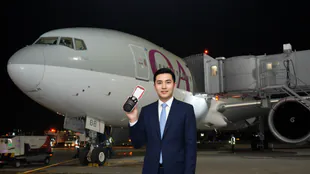 Qatar Airways Launches Bogotá-Caracas-Doha Route Linking Energy Markets
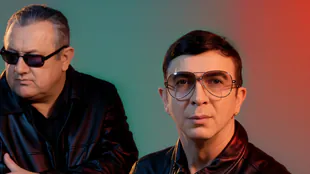 Marc Almond to Close Soft Cell Era After Final 'Danceteria' Tour

 London Museum Granted 24/7 License Ahead of November Opening

 Dana White Confirms Flight to Washington for Trump Meeting on Press Secretary Role

 Dengue Fever Expands Into High Himalayas as Climate Change Warms Nepal

 IoT Refrigerator Hacks Disrupt Blood Labs and Supermarkets Across Europe and US
Romania could elect its first far-right president on Sunday in a key vote for the EU and NATO member bordering Ukraine.
Far-right politician Calin Georgescu, a former senior civil servant, shocked the eastern European nation when he topped the first round of the presidential elections on November 24.
In Sunday's run-off, he will face Elena Lasconi, a centrist mayor.
Fears are rife that under Georgescu the country -- whose strategic importance has increased since Russia invaded Ukraine -- would join the EU's far-right bloc and undermine European unity in the face of Russia, at which Bucharest pointed the finger amid claims of interference in the first round vote.
"The outcome of the second round of the presidential elections is being framed as a referendum on the future foreign policy orientation of the country," Marius Ghincea, a political scientist at ETH Zurich, told AFP.
- 'Existential battle' -
Lasconi underscores the high stakes of the vote in one of the EU's larger countries with a population of 19 million.
The journalist-turned-politician, 52, has warned that the country faces "an existential battle", "a historic confrontation" between those who wish to "preserve Romania's young democracy" and those who want to "return to the Russian sphere of influence".
Outgoing social-democrat Prime Minister Marcel Ciolacu gave his support to Lasconi, who also has the backing of the liberals.
Polls -- which during the first round failed to predict Georgescu's success -- put him at 58 percent and Lasconi at 42 percent.
Having praised Russian President Vladimir Putin in the past, Georgescu, 62, now avoids answering questions about him being pro-Russian.
A critic of the EU and NATO, he says he does not want to leave either grouping but wants to put Romania "on the world map".
Like his idol US president-elect Donald Trump, he is opposed to any military aid to Ukraine.
His nationalist discourse imbued with mysticism has hit the mark on social networks, particularly on TikTok, where his videos have been viewed millions of times.
If Romania is today "a reliable, predictable country aligned with the liberal West", a victory of Georgescu would "increasingly align the country with Hungary and Slovakia... which seek to limit the supranational influence of the European Union," according to Ghincea.
In neighbouring Moldova, pro-European President Maia Sandu -- who holds a Romanian passport -- in a video message called for a vote for "a strong European and free Romania".
Georgia's pro-Western President Salome Zurabishvili sent her wishes for victory to Lasconi.
- 'Reject extremism' -
While the president's post is largely ceremonial, the head of state has considerable moral authority and influence on Romania's foreign policy.
The president also designates the next prime minister -- a key role especially since legislative elections last weekend returned a fragmented parliament.
The ruling pro-European Social Democrats won the vote, but far-right parties made strong gains, in total securing a third of the ballots.
In a joint appeal on Wednesday, four pro-EU parties with an absolute majority in parliament signed an agreement to form a coalition, promising "stability" and calling on voters on Sunday to "reject isolationism, extremism and populism".
Since the fall of Communism in 1989, Romania has never seen such a breakthrough by the far-right, fuelled by mounting anger over soaring inflation and fears over Russia's war in neighbouring Ukraine.
Romania's constitutional court on Monday validated the results of the first round of the presidential elections.
This followed tense days with Romanian authorities alleging Russian interference and "preferential treatment" by TikTok of Georgescu -- a claim the social network has denied.
Several documents pertaining to the alleged influence on the first round were declassified on Wednesday.
G.Schmid--VB


