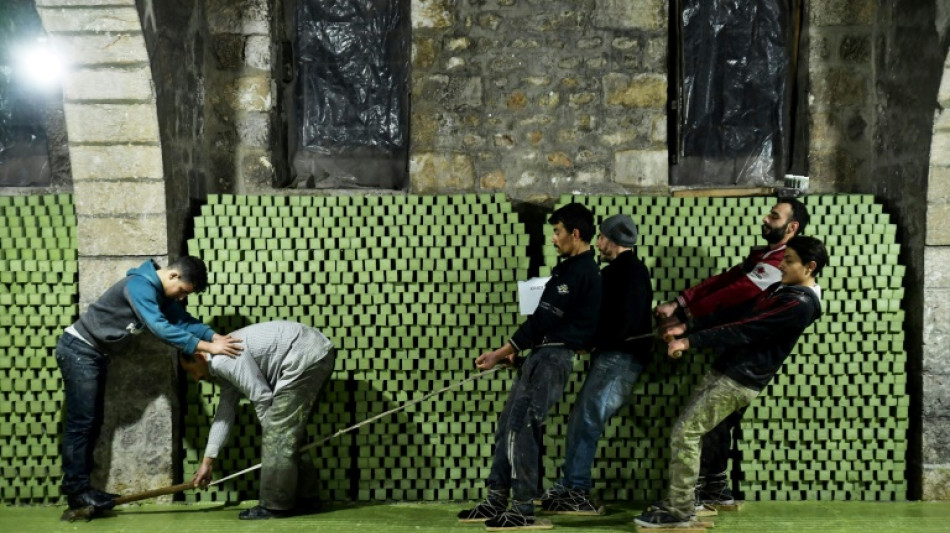
UNESCO grants heritage status to Aleppo soap as Syria war flares / Photo: © AFP/File

 Qatar Airways Launches Bogotá-Caracas-Doha Route Linking Energy Markets

 Marc Almond to Close Soft Cell Era After Final 'Danceteria' Tour

 London Museum Granted 24/7 License Ahead of November Opening

 Dana White Confirms Flight to Washington for Trump Meeting on Press Secretary Role

 Dengue Fever Expands Into High Himalayas as Climate Change Warms Nepal

 IoT Refrigerator Hacks Disrupt Blood Labs and Supermarkets Across Europe and US
The UN's cultural organisation added Aleppo's famous soap to its intangible cultural heritage list Tuesday with Syria's second city again wracked by war.
Artisans have brewed olive and laurel oil in large pots for some 3,000 years in the city -- which fell to Islamist-led rebels last week -- allowing the mixture to cool before cutting it into blocks, and stamping them by hand.
Aleppo soap joins the city's traditional music, Al-Qudoud al-Halabiya, on UNESCO's list of intangible cultural heritage, while the city itself -- declared a world heritage site in 1986 -- was added to the organisation's endangered list in 2013 amid the country's civil war.
Makers craft the product using "traditional knowledge and skills", said UNESCO, adding they rely on a mix of natural, locally produced ingredients and a drying process that can take up to nine months.
Aleppo had been slowly recovering from the wounds inflicted by more than a decade of civil war when Islamist-led rebels captured the city last week in a shock offensive that put forces loyal to Syria's President Bashar al-Assad to flight.
Of the 100 soap factories in the city only about 10 remain, with many having relocated to Damascus or neighbouring Turkey.
But the soap remains essential to the families and communities involved in the trade.
"The collaborative production process promotes community and family unity," said UNESCO.
F.Mueller--VB


