Ghana's illegal mining boom seeps into presidential election / Photo: © AFP

 McIlroy hoping for 'home' comforts at Scottish, British Opens
 Noskova aims to emulate Kvitova after reaching first Wimbledon semi

 Britain's Fery becomes first wildcard to reach Wimbledon semis in 25 years
 Korda chases third major as Kim revisits Evian-winning chip

 Kooij wins Tour de France 5th stage in chaotic sprint finish

 Trump says Ukraine can make Patriot missiles

 Teenager arrested after two girls wounded in Germany school attack

 Farage vs Count Binface: hard-right leader's UK poll gambit

 Hong Kong's Robert Wun: the bold Millennial conquering Haute Couture
 IMF cuts 2026 world growth forecast, flags risks from new Mideast fighting
 Kostyuk sets up Wimbledon semi-final against Noskova
 Noskova reaches first Wimbledon semi-final
 Air Canada taps new CEO to replace chief who couldn't speak French
 Istanbul mayor ejected from court in corruption case

 Landslide kills eight at refugee school in Bangladesh
 Cleary leads NSW past Queensland to regain State of Origin crown
 MEXC Adds Nine Ondo Tokenized Stock and ETF Trading Pairs Tied to AI Infrastructure Demand

 Oil prices surge, stocks slide as Trump says Iran ceasefire over
 Sunken wrecks, hot seas threaten fishermen on Italian isle

 Rescuers search for survivors of China storms as super typhoon nears
 Egypt file complaint against referee after controversial World Cup exit
 Apple loses challenge against EU digital competition rules
 Trump says Iran ceasefire 'is over'

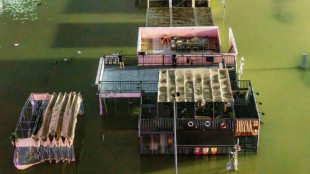 Rescuers search for missing in China storms after 100,000 flee

 OpenAI to launch new model after US freeze
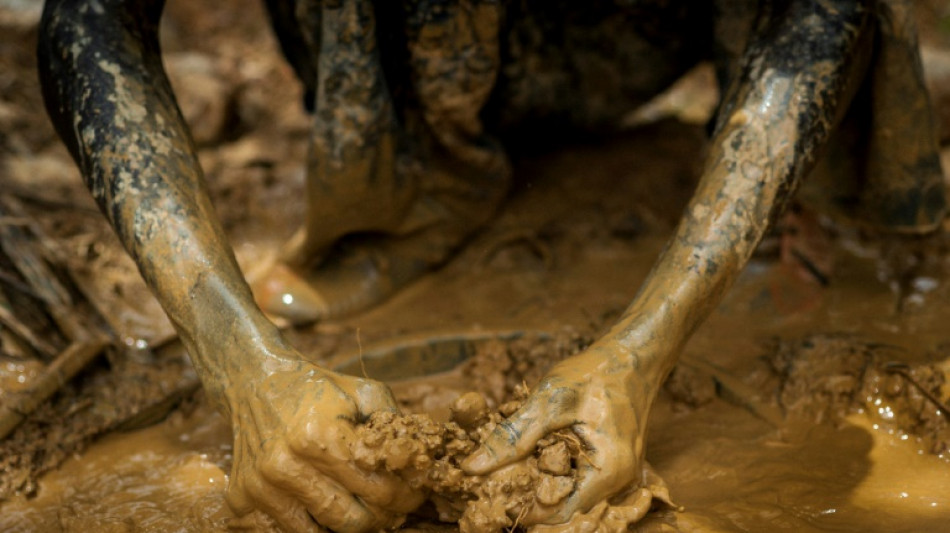
Dressed in a white singlet with a scarf tied around his head, Frank crouched near a muddy pit, preparing to plunge his hands into the soil in search of gold.
Around him, shirtless men, their bodies smeared with dirt and glistening with sweat, worked tirelessly under the blazing sun, near Ghana's capital Accra.
Some shovelled sand into makeshift washing troughs. Others operated excavators roaring through the degraded landscape, a stark reminder of the environmental cost of the country's boom in illegal mining.
Known locally as "galamsey", illegal mining and its ecological and economic impacts have been a flashpoint ahead of Saturday's election, when voters will choose the successor to President Nana Akufo-Addo.
Ruling New Patriotic Party (NPP) candidate Vice President Mahamudu Bawumia is vying against opposition candidate and former president John Mahama of the National Democratic Congress (NDC) party in what looks like a tight race.
"For 16 years, this is what I've done to survive," Frank told AFP, asking for his real name not to be used.
"We know our activities harm the land and pollute the rivers, but what choice do we have? There are no jobs."
Driven by unemployment and poverty, miners risk their lives for survival, earning a weekly income of around $180 that rivals a teacher's monthly salary.
But their activities come at a cost -- degraded farmlands, polluted water bodies, shrinking forests and damage to Ghana's cocoa crops, a major source of export revenue.
- Growing crisis -
Ghana, the world's sixth-largest gold exporter and second-largest cocoa producer, is grappling with the damaging effects of galamsey as the country goes to the ballot box.
Once-thriving cocoa farms in regions like Western and Ashanti have been decimated, with over 19,000 hectares (47,000 acres) lost to mining.
Rivers poisoned by mercury and cyanide runoff from mining operations are now threatening drinking water supplies for millions of Ghanaians, according to the utility provider Ghana Water Company Limited.
In the town of Osino, a three-hour drive from Accra, vast areas of fertile land have been stripped bare and their topsoil washed away.
"The government needs to support us to mine responsibly," Frank said.
"Instead of sending soldiers to destroy our equipment, they should create decent jobs for us. We don't want to turn to crime to survive."
His frustrations echo sentiments among miners who feel targeted by government crackdowns but ignored in national planning.
Akufo-Addo and his NPP promised in 2017 to end galamsey.
Yet the practice has grown, fuelled by rising gold prices and youth unemployment.
Demonstrations have intensified in recent months, with hashtags like #stopgalamseynow trending among Ghana's youth and diaspora.
Protesters have called for immediate action to halt the environmental damage, but scepticism lingers over political promises.
"None of the parties have outlined a clear, enforceable strategy to tackle illegal mining," said Clement Abaidoo, executive director of the Center for Environment, Natural Resources and Sustainability.
"We need deliberate and effective stakeholder engagement, but that has been lacking."
- 'Devastating impact' -
Galamsey has destroyed more than 4,700 hectares (11,700 acres) of land in seven of Ghana's 16 regions, according to Ghana's Forestry Commission.
"The impact on our environment is devastating," Abaidoo told AFP.
Illegal mining contributes 40 percent of Ghana's gold production and employs over one million people, many of them young men like Frank, according to Ghana's natural resources ministry.
But the trade operates outside legal frameworks, enriching criminal syndicates and depleting natural resources.
The authorities have launched operations to halt illegal activities, but enforcement efforts have been criticised as inconsistent and poorly coordinated.
Facing public pressure, Akufo-Addo recently deployed naval boats to protect water bodies from mining operations.
"The use of force won't solve the problem," Frank said, adding that transitioning to responsible mining is key.
For Ghana's younger voters, the issue is also a symbol of government failure.
Many see the ongoing crisis as evidence that politicians prioritise short-term gains over long-term sustainability.
For Frank and others in the trade, the vote represents a chance to demand solutions -- and for environmental advocates like Abaidoo, to protect the West African country's natural heritage.
"We can't be deliberate in solving the problem without engaging all the stakeholders," Abaidoo said.
A.Zbinden--VB