What do we know about Syrian rebels' major offensive on Aleppo? / Photo: © AFP

 UN launches appeal for nearly $300 mn in Venezuela quake relief
 US to remove Syria from terror blacklist, in new boost to Sharaa

 Court rejects Trump request to restore his name to Kennedy Center

 MLB pitching great Verlander to retire after 2026 season

 Artificial cloud brightening could tame El Nino, but with risks: study

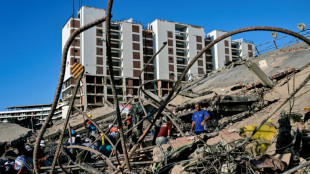 Shocked and shaken, Venezuela quake survivors get psychological help

 France, Morocco kick off blockbuster World Cup quarter-finals
 Amorim hails 'ambitious' AC Milan, promises to learn Italian
 Cancer survivor Traeen takes the long road to Tour yellow
 Easing Russian Olympic restrictions 'terrible', says Wimbledon star Kostyuk

 'Unbelievable' Kooij wins Tour de France 5th stage in chaotic sprint finish
 Britain's Fery to face Zverev in Wimbledon semi-finals

 Zverev sees off Fritz to make first Wimbledon semi-final

 Barcelona sets new heat record at 40.7C: weather agencies

 'The Pitt,' 'Hacks' lead Emmy nominations

 France lose appeal against Olise booking at World Cup
 Putellas joins star cast at London City Lionesses
 Oil back at $80, stocks slide as Trump says Iran ceasefire over
 Vast crowds mourn Khamenei in Iraq's holy cities
 Uber Eats, Deliveroo say will give France drivers break when too hot

 Trump tempers fury to end NATO summit on high note

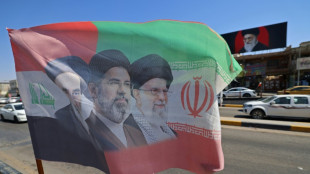 Oil shoots back up, stocks slide as Trump says Iran ceasefire over

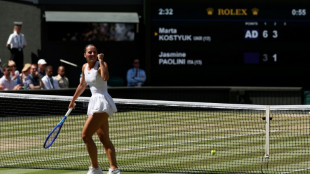 Kostyuk powers into second straight Slam semi-final at Wimbledon
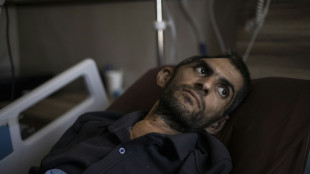 Israeli jails a 'graveyard,' says freed Palestinian journalist
 Family of last woman executed in UK wins posthumous pardon
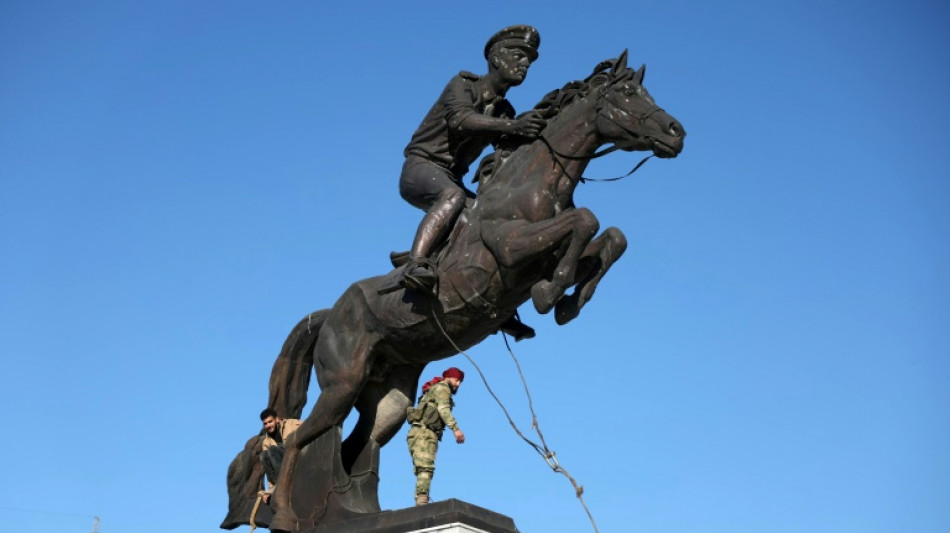
Rebel forces opposing President Bashar al-Assad have launched their biggest offensive in years this week, controlling a majority of Syria's second city of Aleppo according to a monitor.
Government forces offered little resistance, the war monitor said, and the army admitted that rebels had entered "large parts" of the city.
Why have the Syrian rebels and their allies from Turkish-backed factions decided to attack after years of relative calm, and what is at stake?
- Why now? -
On Wednesday, Hayat Tahrir al-Sham (HTS), a jihadist alliance led by Al-Qaeda's former Syria branch, and allied factions attacked government-held areas of the northern province of Aleppo and the northwestern Idlib region.
The Britain-based Syrian Observatory for Human Rights war monitor said the rebels had seized dozens of towns and villages in the north and "took control of most of" Aleppo.
The violence has killed at least 311 people, mostly combatants on both sides, but also including at least 28 civilians, said the Observatory, which relies on a network of sources inside Syria.
Dareen Khalifa, a researcher at the International Crisis Group think tank, said the rebels had prepared months for this offensive.
"They've framed it as a defensive move against regime escalation," Khalifa said, as Syrian government and Russian strikes on the area intensified leading up to the attack.
But HTS and their allies are "also looking at the broader regional and geostrategic shift", she said.
The rebels, working in a joint operations room, launched their attack the same day a Hezbollah-Israel truce came into effect in neighbouring Lebanon.
During more than 13 months of hostilities, Israel also intensified attacks on Iran-backed groups in Syria including Hezbollah, which for years has fought on the side of Damascus in the country's civil conflict.
Along with Iran, Russia is also a close ally of Syrian President Bashar al-Assad, with Moscow intervening in Syria's civil war in 2015, turning the momentum of the conflict in favour of Damascus.
"They're thinking this is a time when the Iranians are weakened, when the regime is cornered and when Turkey is emboldened vis-a-vis Russia," Khalifa said.
Turkey has positioned itself as a possible mediator in the Ukraine war and is a key trade and finance centre for Western-sanctioned Moscow.
- What major powers are at play? -
The main powers backing each side of the conflict have so far refrained from making escalatory remarks.
The Kremlin on Friday said it hoped Syria would quickly "restore order" in Aleppo, while Tehran has blamed the offensive on an American-Israeli plot to destabilise the region.
Turkey has demanded an end to "attacks" on the rebel enclave of Idlib in Syria, where Syrian and Russian warplanes launched air strikes.
"In the next few days, if (rebels) can sustain their gains it will be a test to whether or not Turkey will go all-in," Khalifa told AFP.
The mass offensive comes as a potential rapprochement between Damascus and Ankara has stalled in recent years, though Moscow and Tehran have pushed for a detente.
Turkish forces and Turkey-backed rebel factions control swathes of northern Syria.
Ankara initially sought to topple Assad after the Syrian conflict erupted in 2011, but as government forces regained territory, Turkish President Recep Tayyip Erdogan reversed course.
In a post on X, Caroline Rose, of the Washington-based New Lines Institute, said the Aleppo offensive appears to be "a way to force the regime to negotiate with a weakened hand".
- What about the government? -
The Syrian government has reeled from its biggest loss of territory in years this week.
"Regime lines have crumbled at an incredible pace that has taken everyone by surprise," Khalifa said.
The rebels also cut off the Damascus-Aleppo M5 highway, in addition to controlling the strategic M5-M4 junction that also connects Syria's second city to regime stronghold Latakia, on the Mediterranean coast.
Rami Abdel Rahman, who heads the Syrian Observatory for Human Rights, said the rebels advanced into Aleppo "without any significant pushback from regime forces".
"It is strange to see regime forces being dealt such big blows despite Russian air cover and early signs that HTS was going to launch this operation," Abdel Rahman said.
Damascus has largely relied on Russian air power and Hezbollah fighters on the ground to regain swathes of Syria lost to rebels early in the war.
But the Iran-backed Hezbollah has taken heavy losses in its war with Israel.
Meanwhile, "Russia's presence has thinned out considerably and quick reaction air strikes have limited utility", said Aaron Stein, president of the US-based Foreign Policy Research Institute.
Speedy rebel advances are "a reminder of how weak the regime is and, perhaps, how they have grown complacent in the last couple of years" as battles wound down, he said.
R.Flueckiger--VB