EU grocery shoppers 'fooled' by 'maze' of food labels: audit / Photo: © AFP

 Trump orders new strikes on Iran over attacks on shipping in Hormuz

 PSG's Lee set to join Atletico Madrid
 Iran plays with fire, but calculates Trump will hold back

 Oil surges, stocks slide as Trump says Iran ceasefire over

 Meta to build $9 billion data center in western Canada

 Rogers backs Kane to outshine Haaland in World Cup showdown
 Some US Fed officials considered June rate hike on war fallout

 UN launches appeal for nearly $300 mn in Venezuela quake relief

 US to remove Syria from terror blacklist, in new boost to Sharaa

 Court rejects Trump request to restore his name to Kennedy Center

 MLB pitching great Verlander to retire after 2026 season

 Artificial cloud brightening could tame El Nino, but with risks: study

 Shocked and shaken, Venezuela quake survivors get psychological help

 France, Morocco kick off blockbuster World Cup quarter-finals

 Amorim hails 'ambitious' AC Milan, promises to learn Italian

 Cancer survivor Traeen takes the long road to Tour yellow

 Easing Russian Olympic restrictions 'terrible', says Wimbledon star Kostyuk
 'Unbelievable' Kooij wins Tour de France 5th stage in chaotic sprint finish

 Britain's Fery to face Zverev in Wimbledon semi-finals

 Zverev sees off Fritz to make first Wimbledon semi-final

 Barcelona sets new heat record at 40.7C: weather agencies

 'The Pitt,' 'Hacks' lead Emmy nominations

 France lose appeal against Olise booking at World Cup

 Putellas joins star cast at London City Lionesses

 Oil back at $80, stocks slide as Trump says Iran ceasefire over

European grocery shoppers are at risk of "being fooled" by a proliferation of confusing and sometimes misleading food labels, EU auditors said Monday, calling on the bloc to improve current rules.
Labelling in the EU is meant to give consumers accurate and honest information on the contents of their food so they can make informed decisions about what they are buying.
But due to gaps in EU rules consumers can easily get "lost in a maze" of puzzling claims, according to the European Court of Auditors (ECA).
"Instead of bringing clarity, food labels too often create confusion; there are hundreds of different schemes, logos and claims that people need to decipher," said Keit Pentus-Rosimannus, an ECA auditor.
"Companies can be very creative in what they put on packaging, and EU rules have not caught up with a constantly evolving market, leaving some 450 million European consumers vulnerable to intentionally or unintentionally misleading messages."
EU rules require producers to list ingredients, allergens and other mandatory information on food packages.
Firms can then add voluntary statements including nutrition and health claims -- such as "source of Omega-3 fatty acids" or "calcium is necessary to maintain healthy teeth".
Here the picture gets muddier, according to the 27-nation bloc's spending watchdog, as current rules allow businesses to zoom in on the more flattering features of their products and gloss over other aspects.
An energy bar with lots of sugar can for example be branded simply as "high in protein" and a fatty orange cookie as a "source of fibre", according to the report.
- 'Massive impact' -
Even when such claims are false, checks and penalties are weak and almost non-existent for online food sales, it said.
Health claims related to plant-substances or "botanicals" are not yet regulated at EU level, which leaves consumers potentially exposed to assertions not supported by science, the auditors added.
Similarly, there is no EU definition of what "vegan" and "vegetarian" mean, although private certification schemes exist.
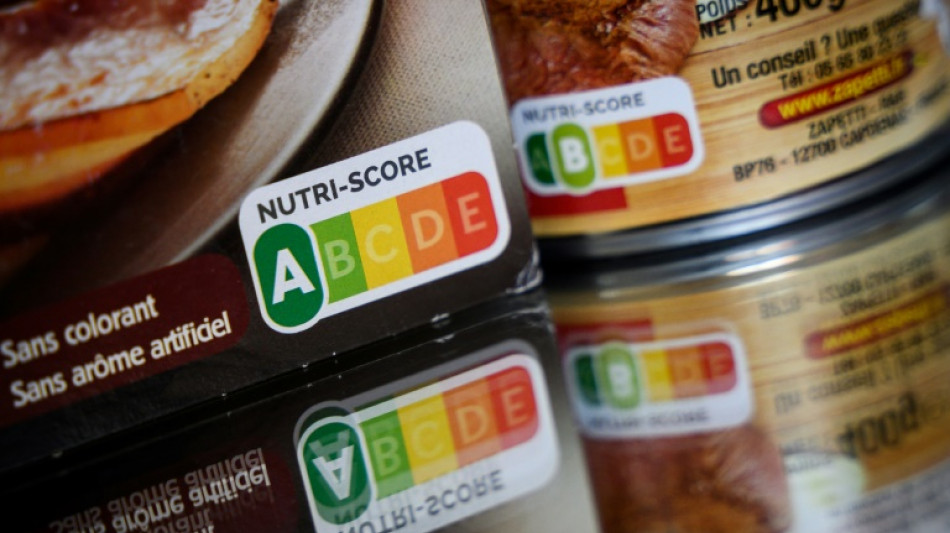
Finally, different "front-of-pack nutrition labelling" schemes such as Nutri-Score and Keyhole, which aim at helping shoppers identify healthier food options, are in use in different countries, adding to the confusion, the ECA said.
European consumer rights group Foodwatch is pushing for Nutri-Score, currently used in France, Germany and a handful other countries, to be adopted across the bloc.
"Food labels may often be small in size, but they are of huge importance: They shape eating habits of millions of people and therefore have a massive impact on the health of European consumers," said Suzy Sumner, who heads the group's Brussels office.
The ECA urged the European Commission to take a number of steps including addressing the gaps in the EU legal framework, and strengthening member states' checks on voluntary labels and online retail.
D.Schlegel--VB