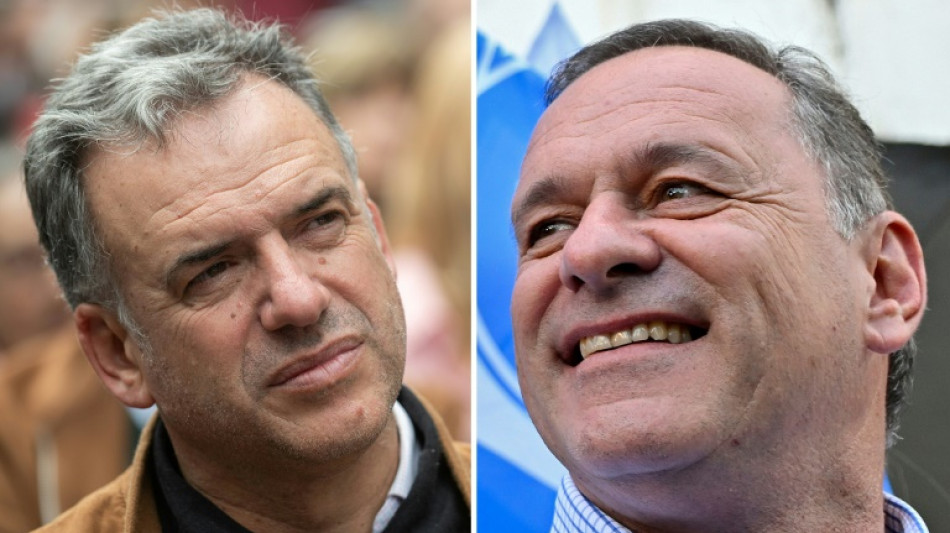
Uruguayans head to polls with left hoping for comeback / Photo: © AFP

 Democrat accused of rape exits key US Senate race

 Japan student Ito keeps place against Ireland as Jones returns

 Belgium bid to crack Spain's ironclad defence in World Cup quarter-final
 US man sentenced after swapping 17th century manuscript

 US launches new strikes on Iran after Trump vows to hit 'hard'

 Taylor Swift fans pay $25 for garbage from outside wedding

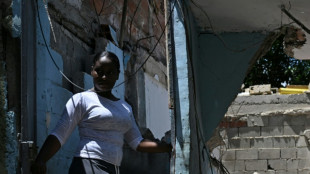 After quakes, Venezuelans fear losing damaged homes

 PSG's Lee set to join Athletico
 Erdogan gave pistols to NATO leaders, Starmer says

 Nocera Expands Diversified Technology Strategy With Binding Agreement to Acquire an Equity Interest in INERGX, an Integrated Energy Storage and Power Platform for AI, Defense and Mission-Critical Demand
 China sends nuclear missile message as US looks elsewhere

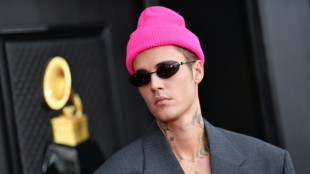 Justin Bieber added to 11-minute World Cup final halftime show

 Fery targets Wimbledon final birthday present after royal seal of approval

 Egypt file complaint against referee after World Cup exit

 Women's semi-finalists in uncharted territory at Wimbledon
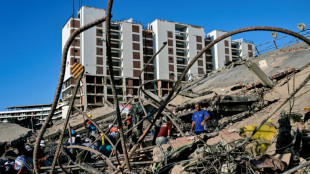
 US man jailed after swapping 17th century manuscript

 UN maritime head urges halt to Hormuz transit to protect seafarers

 Trump skips new Air Force One on return from Turkey NATO summit

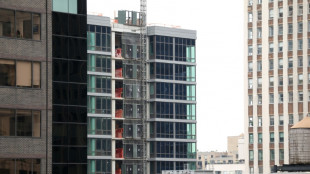 New York building that buckled now 'stable,' says mayor

 UN says pledges for global connectivity project pass $100 bn

 McIlroy hoping for 'home' comforts at Scottish, British Opens

 Noskova aims to emulate Kvitova after reaching first Wimbledon semi

 Britain's Fery becomes first wildcard to reach Wimbledon semis in 25 years
 Korda chases third major as Kim revisits Evian-winning chip

 Kooij wins Tour de France 5th stage in chaotic sprint finish

Uruguayans go to the polls Sunday, with the leftist alliance of celebrated ex-president Jose "Pepe" Mujica hoping to reclaim the country's top job five years after a right-wing victory driven by concerns over crime and taxes.
Former history teacher Yamandu Orsi of the leftist Frente Amplio (Broad Front) will go head-to-head with ex-veterinarian Alvaro Delgado of the National Party, a member of outgoing President Luis Lacalle Pou's center-right Republican Coalition.
Orsi, 57, is seen as the understudy of 89-year-old Mujica, a former guerrilla lionized as "the world's poorest president" during his 2010-2015 rule because of his modest lifestyle.
Orsi had garnered 43.9 percent of the October 27 first-round vote -- short of the 50-percent cutoff to avoid a runoff but ahead of the 26.7 percent of ballots cast for Delgado, 55.
The pair came out on top of a crowded field of 11 candidates seeking to replace Lacalle Pou, who has a high approval rating but is barred constitutionally from seeking a second consecutive term.
Polls point to a tight race Sunday, with Orsi only marginally ahead in stated voter intention in South America's second-smallest country.
Other parties within the Republican Coalition have thrown their support behind Delgado since the first round, boosting his numbers.
"Conditions are in place for us to take charge... to make the changes the country needs," Orsi told a closing campaign rally Wednesday.
Delgado, for his part, told supporters Uruguay was better off today thanks to the Republican Coalition in charge, adding: "I am prepared" to lead.
- Liberal mold-breaker -
A victory for Orsi would see Uruguay swing left again after five years of center-right rule in the country of 3.4 million inhabitants.
The Frente Amplio coalition broke a decades-long conservative stranglehold with an election victory in 2005, and held the presidency for three straight terms.
It was voted out in 2020 on the back of concerns about rising crime blamed on high taxes and a surge in cocaine trafficking through the port of Montevideo.
Polling numbers show perceived insecurity remains Uruguayans' top concern five years later.
"For workers, these past five years have not been good at all. I'm on the street all day, and what worries me the most is insecurity," Orsi voter Gustavo Maya, a 34-year-old vendor of gas cylinders told AFP.
"I see many robberies, more and more homicides, and few police officers. That's what worries me the most."
For Delgado backer and stonemason William Leal, 38, the center-right is the best option for workers.
"I want this government to continue because in the construction sector there was much more work than in previous governments," he said.
The first round of voting was accompanied by a referendum in which Uruguayans were asked whether police should be allowed to carry out nighttime raids on homes as part of the fight against drug trafficking. The initiative failed.
Voting is compulsory in Uruguay, one of Latin America's most stable democracies which boasts comparatively high per-capita income and low poverty levels.
During the heyday of leftist rule, Uruguay legalized abortion and same-sex marriage, became the first Latin American country to ban smoking in public places and the world's first nation, in 2013, to allow recreational cannabis use.
G.Haefliger--VB