-
 Bezzecchi takes pole for San Marino MotoGP
-
Bodies of Philippines ferry fire victims brought ashore as toll hits 35
-
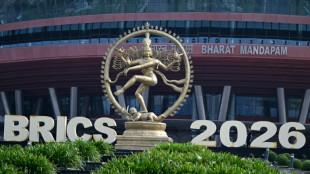 China, Russia, Iran leaders gather in India as BRICS nations seek common ground
-
Flick warns Barca stars to keep focus after perfect start

-
 Korda finally beaten as Europe grasp slender Solheim lead
-
Trump in Ireland for golf tournament, diplomatic pleasantries

-
 Zelensky says willing to meet Putin at G20 in Miami: interview
-
French police suspect train derailment was sabotage

-
 Quebec Brokerage Qubit Insurance Announces New Data on Coverage Shortfalls as Rebuilding Costs Rise
-
Trump lands in Ireland for golf tournament, PM talks

-
 Trump asks Smithsonian to install George Washington statues, exhibition
-
Xi lands in India for BRICS summit overshadowed by war

-
 'A legend': Celine Dion poised for emotional comeback in Paris
-
From crime to the Arctic: ultramarathoner film debuts in Toronto

-
 Europe eyes battle over 'pervert' AI glasses
-
Back to the drawing board for disappointed Tiafoe

-
 Philippine Muslim enclave trades bullets for election ballots
-
Lady Gaga welcomes first child with fiance: US media

-
 Children in flood-hit Nepal grapple with loss, cling to hope
-
Shelton tops Tiafoe to book US Open title clash with Zverev

-
 Bhutan business bets on hazelnuts for farming future
-
Shelton powers past Tiafoe to book US Open title clash with Zverev

-
 First bodies of Philippines ferry fire victims land as toll hits 35
-
Venice Film Festival: A look back on the highlights

-
 Gaza film, Malkovich drama vie for Venice top prize
-
'Widow's Bay' and 'The Pitt' are favorites for Emmys night

-
 DR Congo school fire stampede death toll rises to 26: UNICEF
-
'Everything different' as Zverev returns to US Open final

-
 Coastal erosion forces cancellation of California music festival
-
Top seed Zverev holds off Khachanov to reach US Open final

-
 Anthropic says UAE-linked AI op targeted UN experts over Sudan
-
James McAvoy brings new film 'Faith' to Toronto fest

-
 Rennes beat Marseille to seize top spot in Ligue 1
-
Faultless Duplantis, hungry Ingebrigtsen shine at inaugural Ultimate

-
 Duplantis delivers masterclass for Ultimate pole vault win
-
Roblox to launch wallet to pay creators faster and will allow off-platform gaming

-
 Weapons, spyware and AI scams: Anthropic exposes Claude misuse
-
Springboks wary of new-look All Blacks in Baltimore test

-
 Gary Oldman hopes Jack Lowden is the new James Bond
-
Townsend, Siniakova win US Open doubles for career Grand Slam together

-
 Six-stop race is best on tyre-shredding Madrid track says Russell
-
Verstappen unimpressed with new Madrid street track

-
 Prosecutors seek up to 10 years prison over violent burglary of Donnarumma
-
Razaullah heroics deny England quickfire win in 3rd Test against Pakistan

-
 Solheim Cup on a knife-edge after Korda record
-
Masks banned at planned UK protests: police

-
 Corruption probe targets Brazil presidential candidate Flavio Bolsonaro
-
Antonelli on top ahead of Ferraris in Madrid practice

-
 New No.1 Rybakina out to thwart Sabalenka US Open three-peat bid
-
Dance Fitness Tempe Announces Expansion of Accessible Digital Movement Programs

Wealthy nations offer $250 bn on climate but pressed for more
Wealthy nations on Friday offered $250 billion a year to help poorer nations hit hardest by global warming but faced immediate calls led by Africa to give more as UN climate negotiations extended into overtime.
At the COP29 talks in Azerbaijan, developing nations are demanding a bigger commitment from historic polluters most responsible for warming, but rich countries insist that massive financial pledges are not politically realistic.
In a draft text revealed hours before two weeks of fraught bargaining were set to end, Azerbaijan said wealthy nations had committed to providing $250 billion a year by 2035.
The text also sets an ambitious overall target to raise at least $1.3 trillion per year by 2035 from not only developed countries but the private sector.
But a red line for many climate-imperilled nations at COP29 had been securing a new commitment from developed nations well above their existing pledge of $100 billion a year.
The new target "is totally unacceptable and inadequate", said Ali Mohamed, chair of the African Group of Negotiators.
"$250 billion will lead to unacceptable loss of life in Africa and around the world, and imperils the future of our world," he said.
The Alliance of Small Island Developing States, for which climate change is an existential threat, said the target showed "contempt for our vulnerable people".
But the United States signalled it was not looking to negotiate a higher figure. President-elect Donald Trump takes office in two months and is expected to pull the world's largest economy again out of climate diplomacy.
"It has been a significant lift over the past decade to meet the prior, smaller goal. $250 billion will require even more ambition and extraordinary reach," said a senior US official, whose team in Baku comes from outgoing President Joe Biden's administration.
Germany, a longtime leader on climate where elections are due next year, said any final deal was inevitable to include debt restructuring and other financial tools to raise the money, not just government money.
Europe wants to "live up to its responsibilities, but also in a way that it doesn't make promises it can't live up to", German Foreign Minister Annalena Baerbock told reporters.
COP29 lead negotiator Yalchin Rafiyev said negotiations would press on and that $250 billion "doesn't correspond to our fair and ambitious goal".
- Less than needed -
Activists point to studies that show that far more is needed for poor countries, which bear little responsibility but are disproportionately affected by record-high temperatures and rising disasters.
Jasper Inventor from Greenpeace called the $250 billion offer "inadequate, divorced from the reality of climate impacts and outrageously below the needs of developing countries".
But Avinash Persaud, special advisor on climate change to the president of the Inter-American Development Bank, said that the offer showed the talks were "within sight of a landing zone" for the first time.
"There is no deal to come out of Baku that will not leave a bad taste in everyone's mouth," said the former advisor to Barbados Prime Minister Mia Mottley.
The United States and European Union have wanted newly wealthy emerging economies like China -- the world's largest emitter -- to chip into the pot.
China, which remains classified as a developing nation under the UN framework, provides climate assistance but wants to keep doing so on its own voluntary terms.
Apart from splits over money, many nations fear the climate deal in negotiation does not reflect the urgency on phasing out coal, oil and gas -- the main drivers of global warming.
Last year's COP28 summit in Dubai made a landmark call on the world to transition away from fossil fuels after long negotiations in Dubai.
But a Saudi official speaking on behalf of the Arab Group said the bloc would "not accept any text that targets any specific sectors, including fossil fuel" in Baku.
Top German diplomat Baerbock singled out Saudi Arabia and warned that its goal was "turning back the clock".
- Criticism of Azerbaijan -
Azerbaijan, an authoritarian state that relies on oil and gas exports, has been accused of lacking the experience and bandwidth to steer such large and complex negotiations.
"This is the worst COP in recent memory," said Mohamed Adow of the Climate Action Network.
The EU had also called for stronger leadership from Azerbaijan, whose leader, Ilham Aliyev, opened the conference by railing against Western nations and hailing fossil fuels as a "gift of God".
The annual UN-led climate talks come on what is already poised to be the hottest year in history and as disasters rise around the world.
Just since the start of COP29 on November 11, deadly storms have battered the Philippines and Honduras, while Ecuador has declared a national emergency due to drought and forest fires and Spain has been reeling after historic floods.
bur-np-lth-sct/giv
M.Vogt--VB