Crunch time: What still needs to be hammered out at COP29? / Photo: © AFP

 Anthropic boss calls for slowing pace of AI development

 BRICS nations call for 'maximum restraint' in Middle East war
 England v Pakistan Test series: Three talking points
 Marquez snatches San Marino MotoGP sprint ahead of Bezzecchi
 Philippine ferry fire death toll climbs to 76 as identification process begins
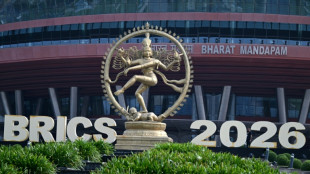 BRICS nations urge 'maximum restraint' in Middle East war
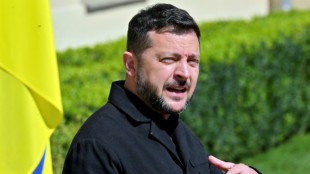 Zelensky open to meeting Putin at G20 in Miami
 England survive scare to seal 3-0 sweep against Pakistan

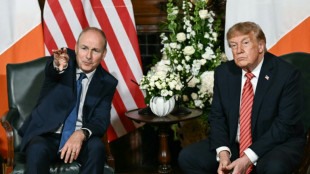 Trump says Irish unification would be 'fantastic'
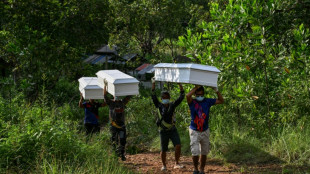 Bodies of Philippines ferry fire victims brought ashore as toll hits 35
 Flick warns Barca stars to keep focus after perfect start

 Trump in Ireland for golf tournament, diplomatic pleasantries

 French police suspect train derailment was sabotage

 Trump lands in Ireland for golf tournament, PM talks

 Xi lands in India for BRICS summit overshadowed by war

 From crime to the Arctic: ultramarathoner film debuts in Toronto

 Back to the drawing board for disappointed Tiafoe

 Lady Gaga welcomes first child with fiance: US media

 Shelton tops Tiafoe to book US Open title clash with Zverev

 Shelton powers past Tiafoe to book US Open title clash with Zverev

 Venice Film Festival: A look back on the highlights

 'Widow's Bay' and 'The Pitt' are favorites for Emmys night

 'Everything different' as Zverev returns to US Open final

 Top seed Zverev holds off Khachanov to reach US Open final

 James McAvoy brings new film 'Faith' to Toronto fest

The UN climate summit in Azerbaijan is scheduled to wrap up on Friday, yet it remains unclear how much money will be provided to developed countries to fight global warming -- and who will pay for it.
Here are the big questions and key figures about what is still expected from the COP29 talks.
- How much money? -
Developing countries need $1 trillion a year in external aid by the end of the decade and $1.3 trillion by 2035, according to estimates from two expert economists commissioned by the United Nations, Amar Bhattacharya and Nicholas Stern.
The figure that has sparked the most intense debate at COP29 has been how much of this total will be provided by wealthy countries.
In 2009, developed nations pledged $100 billion a year in climate aid for 2020-2025. COP29 is tasked with laying out their new commitment until 2030 -- or even 2035.
- Which countries should pay? -
Under a framework established by the UN back in 1992, 23 developed countries -- and the European Union -- historically responsible for most planet-heating emissions are obliged to contribute to climate finance.
These include the United States, 18 European countries as well as Japan, Canada, New Zealand and Australia.
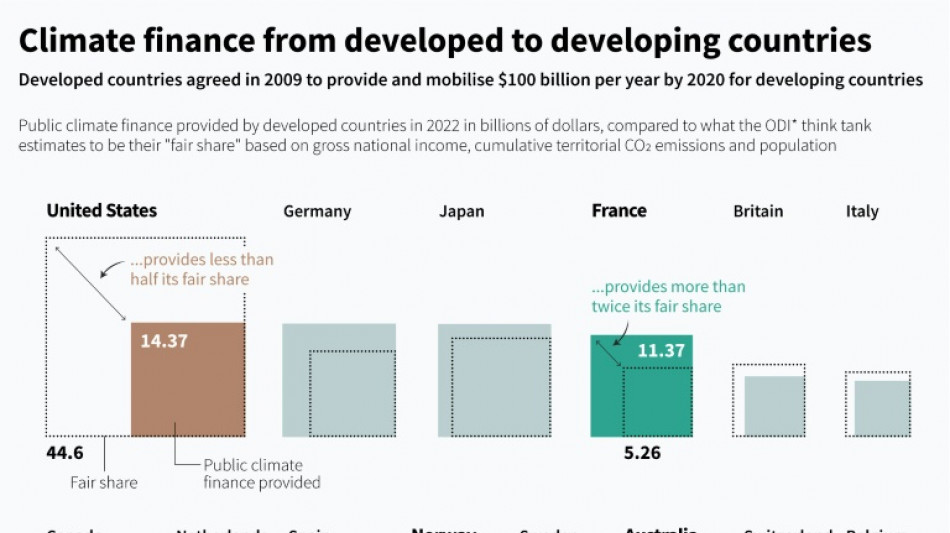
These countries coughed up $116 billion in 2022, according to the OECD, through a variety of channels including financing private projects.
The EU paid for around a third of the total.
The three biggest contributors were Germany, Japan and the United States with $14 billion followed by France with $11 billion, according to calculations by the ODI think tank.
But if wealth and the weight of historical emissions are taken into consideration, the United States is well behind, it added.
- Who does not have to pay? -
Qatar, Kuwait, Singapore, the United Arab Emirates, South Korea and other relatively well-off countries were not included in the 1992 list because they were not as rich at the time.
But the current global economy is very different from 1992, Germany's climate envoy Jennifer Morgan has emphasised. The traditionally wealthy nations are calling for the number of contributors to climate finance to be expanded.
China, the biggest current emitter of greenhouse gases, is also not on the list.
China's historical emissions have now surpassed the EU's -- and it has a bigger economy, the Europeans have repeatedly noted.
Beijing has defended itself by pointing to the financial aid it already provides to the global south.
- Key points to be decided at COP29 -
A major decision to be made at COP29 is the new target amount -- beyond the current $100 billion -- that the developed countries will provide to developing nations.
The demands from developing countries have ranged from $500 billion to $1.3 trillion a year. The EU is among the parties which have not yet named a specific figure.
Another outstanding question is whether any commitment will run to 2030 or 2035.
Other key points to be decided at the talks include:
- How should the climate finance provided by recently wealthy countries be counted? Should these countries also face mandatory funding targets? And should it all be thrown in a single pot or counted separately?
- Should there be specific rules for how climate is distributed to different groups of countries? The 45 least developed nations -- most of which are in Africa -- are asking for at least $220 billion a year, while the small island states want $39 billion.
- Should the money provided by wealthy countries include relief for nations suffering from climate disasters -- which is called "loss and damage" in UN climate-speak -- or should it be limited to efforts to reduce greenhouse gas emissions and adapt to climate change?
- How much of the money should be grants, rather than loans? Nearly 70 percent of climate finance is currently loaned, which means it is piled onto the debt of developing countries, according to the OECD.
T.Ziegler--VB