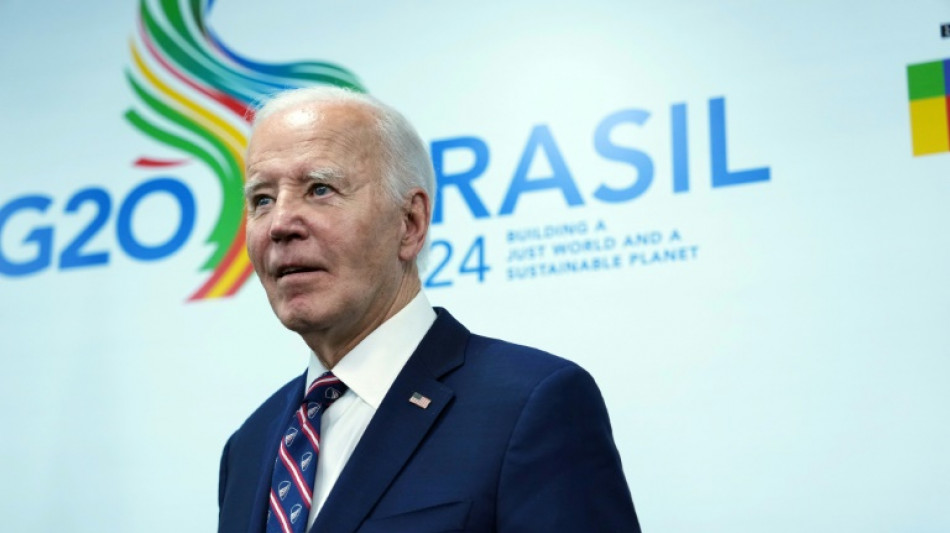
US cites new Russian tactics for decision to supply landmines to Ukraine / Photo: © POOL/AFP

 Harrison, Skupski win US Open men's doubles title
 Verstappen fears overtaking will be 'tough' at Spanish GP

 Argentina revives plan for South Atlantic naval base amid Falklands tensions

 Yemen government forces say hit Houthis in Red Sea city

 Dismal Spurs stay goalless after Everton stalemate

 Fire at nursing home in Chile kills 16

 Frustrated Hamilton urges Ferrari to 'work harder'

 Zelensky ready to meet Putin at Miami G20 but Kremlin refuses

 Anthropic boss calls for AI slowdown, Altman and Musk agree

 England back on track after 'chaos', says Root
 Shelton chases history in US Open title tilt with top seed Zverev

 Norris 'masterpiece' snatches Spanish GP pole from Antonelli

 Mas on brink of Vuelta triumph as Landa claims stage 20

 No Kerr clash as Ingebrigtsen pulls out of Ultimate 1,500m

 Anthropic boss calls for slowing pace of AI development

 BRICS nations call for 'maximum restraint' in Middle East war

 England v Pakistan Test series: Three talking points

 Marquez snatches San Marino MotoGP sprint ahead of Bezzecchi
 Philippine ferry fire death toll climbs to 76 as identification process begins

 BRICS nations urge 'maximum restraint' in Middle East war

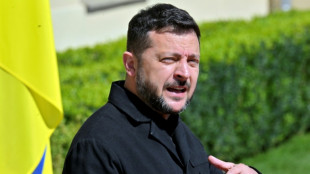
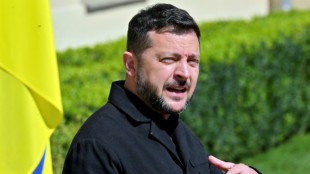 Zelensky open to meeting Putin at G20 in Miami

 England survive scare to seal 3-0 sweep against Pakistan

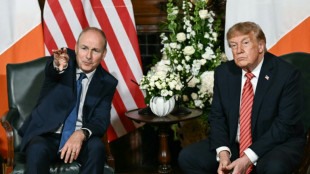 Trump says Irish unification would be 'fantastic'

 Bodies of Philippines ferry fire victims brought ashore as toll hits 35

 Flick warns Barca stars to keep focus after perfect start

The US decision to send anti-personnel landmines to Ukraine -- in a major policy shift -- was triggered by a change in Russian battlefield tactics favoring infantry over mechanized units, US Defense Secretary Loyd Austin said Wednesday.
"They don't lead with their mechanized forces anymore," Austin told reporters while on a visit to Laos. "They lead with dismounted forces who are able to close and do things to kind of pave the way for mechanized forces."
The Ukrainians "have a need for things that can help slow down that effort on the part of the Russians."
President Joe Biden's reversal of his previous curbs on US landmines comes just days after Washington gave Ukraine the green light to use US-made long-range missiles on targets within Russia, as the outgoing administration aims to give Kyiv an upper hand before President-elect Donald Trump enters office.
Biden in 2022 said the United States would mostly ban its use of landmines, at the time specifically drawing a contrast with Russia's use of the weapons in Ukraine.
The reversal comes amid concerns about the incoming Trump administration's lack of support for Kyiv.
Trump is entering office having repeatedly criticized US assistance for Ukraine, claiming he could secure a ceasefire within hours -- comments that have triggered fears in Kyiv and Europe about Ukraine's ability to withstand the Russian attacks without American support.
Both Russia and the United States -- neither of which are signatories to the UN Mine Ban Treaty -- have been criticized for their past use of anti-personnel mines in the past. Ukraine is a signatory of the treaty.
- Battlefield tensions -
Austin said the US-supplied mines would be so-called "nonpersistent" mines that can self-destruct or render themselves inactive after losing battery charge -- in theory limiting the risk to civilians.
But the decision was immediately slammed by rights groups.
Mary Wareham, deputy director at the crisis, conflict and arms division at Human Rights Watch, said Ukraine's use of the mines would contravene the Mine Ban Treaty, and questioned safety of the aging stocks Washington would be supplying.
"From a clearance perspective, de-miners have to approach any type of explosive object with the knowledge that it may explode," Wareham told AFP, adding that the self-deactivation feature is "not enough."
Amnesty International called Washington's decision "reckless" and "a deeply disappointing setback."
The Biden administration was similarly criticized last year for supplying Ukraine with cluster munitions.
Both Moscow and Kyiv are jockeying to secure battlefield advantage before Trump assumes office next January.
This week, Kyiv fired US-supplied ATACMS missiles at Russian territory for the first time.
On Tuesday, Russian President Vladimir Putin signed a decree lowering the threshold for when Russia could use nuclear weapons.
Laos, where Austin made his comments, is still recovering from heavy US bombing during the Vietnam War.
More than 20,000 people have been killed or injured from unexploded ordnance in the half century since, according to The Halo Trust, a demining group.
L.Wyss--VB