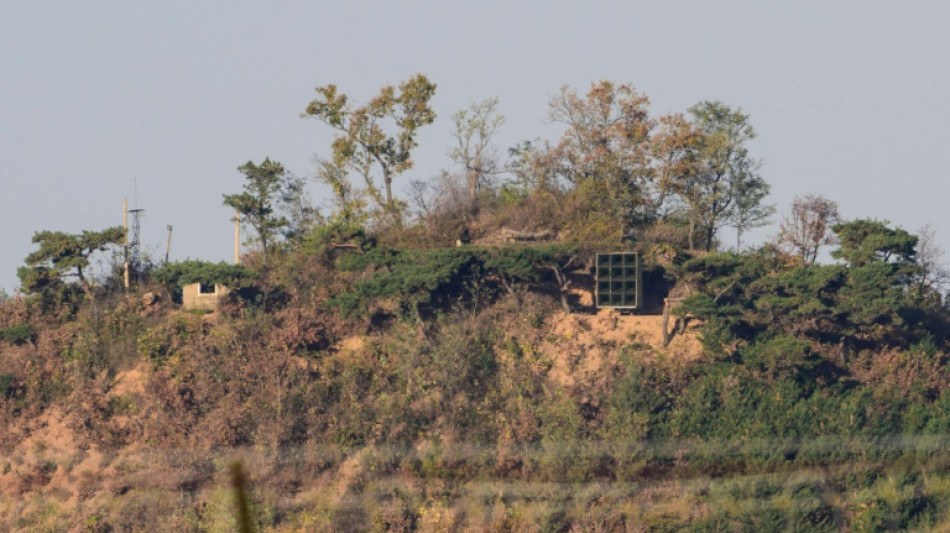
N. Korea's latest weapon? Bombarding South with noise / Photo: © AFP

 Harrison, Skupski win US Open men's doubles title
 Verstappen fears overtaking will be 'tough' at Spanish GP

 Argentina revives plan for South Atlantic naval base amid Falklands tensions

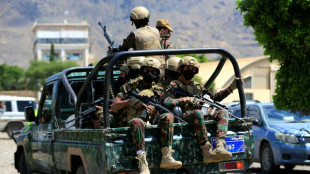 Yemen government forces say hit Houthis in Red Sea city

 Dismal Spurs stay goalless after Everton stalemate

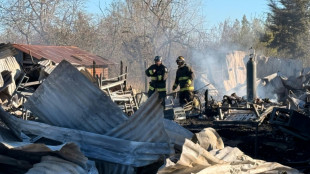 Fire at nursing home in Chile kills 16

 Frustrated Hamilton urges Ferrari to 'work harder'

 Zelensky ready to meet Putin at Miami G20 but Kremlin refuses

 Anthropic boss calls for AI slowdown, Altman and Musk agree

 England back on track after 'chaos', says Root
 Shelton chases history in US Open title tilt with top seed Zverev

 Norris 'masterpiece' snatches Spanish GP pole from Antonelli

 Mas on brink of Vuelta triumph as Landa claims stage 20

 No Kerr clash as Ingebrigtsen pulls out of Ultimate 1,500m

 Anthropic boss calls for slowing pace of AI development

 BRICS nations call for 'maximum restraint' in Middle East war

 England v Pakistan Test series: Three talking points

 Marquez snatches San Marino MotoGP sprint ahead of Bezzecchi

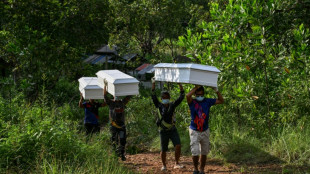 Philippine ferry fire death toll climbs to 76 as identification process begins

 BRICS nations urge 'maximum restraint' in Middle East war

 Zelensky open to meeting Putin at G20 in Miami

 England survive scare to seal 3-0 sweep against Pakistan

 Trump says Irish unification would be 'fantastic'

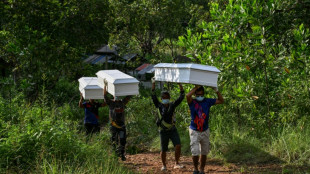 Bodies of Philippines ferry fire victims brought ashore as toll hits 35

 Flick warns Barca stars to keep focus after perfect start

Gunshots, screams, eerie laughter: South Korea's border island Ganghwa is being bombarded nightly with blood-curdling sounds, part of a new campaign by the nuclear-armed North that is driving residents to despair.
Before it started, 56-year-old Kim Yun-suk fell asleep to the hum of insects and woke to the chirping of birds. Now, she is kept awake every night by what sounds like the soundtrack of a low-budget horror movie at top volume.
"The peaceful sounds of nature... have now been drowned out," Kim told AFP.
"All we hear is this noise."
The noise campaign is the latest manifestation of steadily-declining ties between the two Koreas this year, which have also seen Pyongyang test ever more powerful missiles and bombard the South with trash-carrying balloons.
Since July, North Korea has been broadcasting the noises every day from loudspeakers along the border.
The northern point of Ganghwa -- an island in the Han river estuary on the Yellow Sea -- is about two kilometres (a mile) from the North.
When AFP visited, the nighttime broadcast included what sounded like the screams of people dying on the battlefield, the crack of gunfire, bombs exploding, along with chilling music that started at 11:00 pm.
North Korea has done propaganda broadcasts before, said 66-year-old villager Ahn Hyo-cheol, but they used to focus on criticising the South's leaders, or idealising the North.
Now "there were sounds like a wolf howling, and ghostly sounds", he said.
"It feels unpleasant and gives me chills. It's really feels bizarre."
Ganghwa county councillor Park Heung-yeol said that the new broadcasts were "not just regime propaganda -- it's genuinely intended to torment people".
- Torture -
Experts said the new broadcasts almost meet the criteria for a torture campaign.
"Almost every regime has used noise torture and sleep deprivation," Rory Cox, a historian at University of St Andrews, told AFP.
"It is very common and leaves no physical scarring, therefore making it deniable."
Exposure to noise levels above 60 decibels at night increases the risk of sleep disorders, experts said, but AFP tracked levels of up to 80 decibels late at night on Ganghwa during a recent trip.
"I find myself taking headache medicine almost all the time," An Mi-hee, 37, told AFP, adding that prolonged sleep deprivation due to the noise has also led to anxiety, eye pain, facial tremors and drowsiness.
"Our kids can't sleep either, so they've developed mouth sores and are dozing off at school."
Distraught and desperate, An travelled to Seoul and got on her knees to beg lawmakers at the National Assembly to find a solution, breaking down in tears as she described the island's suffering.
"It would actually be better if there were a flood, a fire, or even an earthquake, because those events have a clear recovery timeline," An said.
"We have no idea if this will go on until the person in North Korea who gives the orders dies, or if it could be cut off at any moment. We just don't know."
- '70s horror flick' -
The noise tormenting Ganghwa island residents appeared to be a rudimentary mix of clips from a sound library, typically common at any TV or radio broadcasters, audio experts told AFP.
The sound effects are "like something found in a South Korean horror film in the 70s and 80s," said sound engineer Hwang Kwon-ik.
The two Koreas remain technically at war since the 1950 to 1953 conflict ended in an armistice not a peace treaty.
North Korean leader Kim Jong Un this year declared Seoul his "principal enemy" and has ramped up weapons testing and built closer military ties with Russia.
The isolated and impoverished North is known to be extremely sensitive about its citizens gaining access to South Korean pop culture.
Some experts have suggested the latest broadcasts could be aimed at preventing North Korean soldiers from hearing the South's own propaganda broadcasts, which typically feature K-pop songs and international news broadcasts.
In August, just weeks after South Korea resumed K-pop broadcasts in response to Pyongyang floating trash-carrying balloons south, a North Korean soldier defected by crossing the heavily fortified border on foot.
But Lee Su-yong, an audio production professor at the Dong-Ah Institute of Media and Arts, said "if there is sound coming towards the North that you want to mask, then the sound (you use to cover it) must also be directed toward the North."
"It seems less about masking noise and more about inflicting pain on people in the South," he told AFP.
Choi Hyoung-chan, a 60-year-old resident, said the South Korean government had failed to protect vulnerable civilians on the frontier.
"They should come here and try to live with these sounds for just ten days," he told AFP, referring to officials in Seoul.
"I doubt they could even endure a single day."
E.Burkhard--VB