'Vague' net zero rules threaten climate targets, scientists warn / Photo: © AFP/File

 Trump turns to golf, family business on Irish visit's second day

 Defiant Sabalenka motivated by US Open defeat

 Houthis say hit Saudi base after renewed fighting with Yemeni govt forces

 Gilbert Arenas questions Jonathan Kuminga's decision to join Minnesota

 Cristian Mungiu's Fjord examines a family's conflict with Norwegian child authorities

 United States beats Spain 76-66 to set up World Cup final against France

 Queens residents seek renewed enforcement along Roosevelt Avenue

 Marmot research gains over $140,000 from meme-coin fees alongside wildlife contest

 Roadless Rule repeal proposal raises concerns over Midwest forests and fire risk
 KFF journalists discuss opioid funds, suicide prevention and gaps in care

 Steven Strogatz weighs AI mathematics advances and their consequences for researchers

 GTA VI draws political criticism online as preorder estimates exceed five million
 Mini 1998 GT pairs 161-hp engine with John Cooper Works chassis hardware

 Attissogbe double inspires Pau to Top 14 summit

 Guimaraes strike lights up Arsenal win over Sunderland

 Israeli-made Gaza documentary wins Venice special jury prize

 De Zerbi apologises to fans after Spurs' stalemate extends goal drought

 Lowry takes four-shot lead as Trump jets in for Irish Open

 Harrison, Skupski win US Open men's doubles title

 Verstappen fears overtaking will be 'tough' at Spanish GP

 Argentina revives plan for South Atlantic naval base amid Falklands tensions

 Yemen government forces say hit Houthis in Red Sea city

 Dismal Spurs stay goalless after Everton stalemate

 Fire at nursing home in Chile kills 16

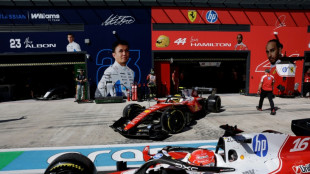 Frustrated Hamilton urges Ferrari to 'work harder'

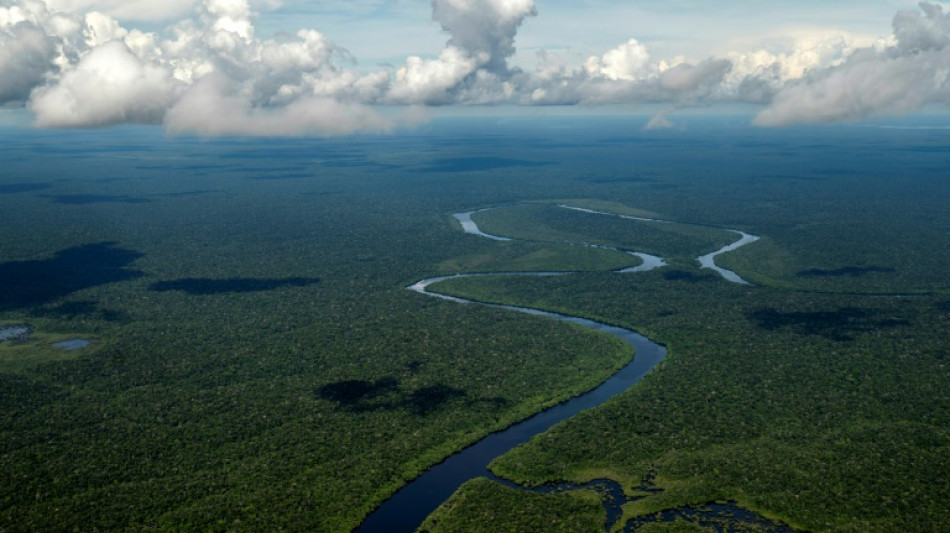
Countries must not count the carbon dioxide naturally sucked up by Earth's forests in their net zero climate plans, scientists said on Monday, warning that "vague" rules could end up with the world warming more than expected.
The scientists, who developed the original science behind net zero, issued their warning in a new study as nations gathered in Azerbaijan for the latest round of UN climate talks.
The world's oceans, forests and soil absorb planet-heating carbon dioxide from the atmosphere, meaning they play a crucial role in efforts to stop temperatures from rising further.
These "natural carbon sinks" currently suck up around half of all the carbon dioxide emitted by humanity.
Under the Paris climate agreement, nations committed to curbing global warming to 1.5 degrees Celsius above preindustrial times.
While they did not specify how they were going to achieve that target, scientists say the world needs to slash emissions almost in half this decade and reach net zero -- when humanity will no longer emit more greenhouse gas than it captures -- by 2050.
Once emissions are down to virtually zero, forests and oceans should be able to absorb some of the additional carbon dioxide that has built up in the atmosphere so that global temperatures can "stabilise," said Myles Allen, an Oxford University scientist and lead author of the study in the journal Nature.
Allen helped develop the science behind net zero in the 2000s.
But a problem has emerged since that "didn't occur to me at the time," he told a press conference.
As nations have announced their climate plans, some have claimed the amount of carbon naturally removed by their forests and land would make up for some of the emissions by their people and industries.
But natural carbon sinks cannot be counted on "to do two jobs at once," Allen emphasised.
"If we're going to count on them to mop up our historical emissions... we cannot at the same time use them to offset future fossil fuel emissions."
- Warming risk -
This may seem like a slight tweak in greenhouse gas accounting, but it could mean that the world thinks it is on a path to limiting warming to 1.5C, whereas in fact it could shoot past 2C "and have warming continuing into the future," he said.
Russia, for example, "apparently recently pointed out that they might just achieve net zero while increasing their fossil fuel use because they have such large forests," Allen said.
The European Union has recently started partly claiming the work of its forests as an offset against emissions, said Glen Peters, research director at the Center for International Climate Research in Oslo.
It is not that countries are breaking the rules, Allen said: "It's just the rules are a bit vague."
Most countries and many big companies have announced some kind of net zero plan, but the details about exactly how and when they will be carried out vary widely, threatening their integrity, experts have warned.
- 'Geological net zero' -
The researchers called for the world to set its sights on "geological net zero", which would mean that for every tonne of carbon dioxide emitted by a fossil fuel -- the main source of emissions -- a tonne would need to be sucked out of the atmosphere and permanently put back in the ground.
While there are hopes of a boom in technologies that extract CO2 from the air, just 0.1 percent of carbon dioxide emissions are currently captured and locked away -- that needs to increase to 100 percent by mid-century, Allen said.
Peters added: "If you don't take the fossil fuels out of the ground in the first place, then you're a long way to solving the problem."
Last week, it was predicted that humanity would again break the record for carbon dioxide emissions in 2024 -- which is expected to be the hottest year in recorded history.
L.Stucki--VB