Russia's invasion of Ukraine sets off Latin American fertilizer race / Photo: © AFP

 Meta pushes global AI vision amid race with OpenAI, Anthropic and China

 US judge ends graft case against India's Adani

 Anderson retires after 10 MLB seasons after 'too much pain'

 Colombia in state of emergency as quake kills 111

 Britain's Amy Hunt wins European women's 100m gold

 Trump order pushes for overhaul of childhood vaccine schedule
 Global stocks mixed while oil prices jump on Hormuz

 Turkey MPs back historic law on reintegrating Kurdish militants
 'Dreams disappear' as Gaza students await evacuation to Italy

 Third European gold for Schilder in women's shot put

 Golden relay double for Britain at Europeans as Marchand settles for silver

 US had hottest month on record in July

 Colombia quake leaves 69 dead, with more trapped under rubble

 Bookmap Announces Partnership with Plus500 to Expand Futures Trading Access
 Barcelona turn down PSG offer for Torres

 Buildings collapse as major quake rocks Colombia and neighbors

 Meta releases new AI model as Zuckerberg lays out vision
 OFunded Enters the Prop Trading Market With Broker-Backed Infrastructure From OFinancial Markets

 What next for beleaguered FIFA president Infantino?
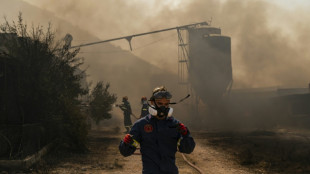 Greece contains new wind-driven fire near Athens

 Massive shake-up of Hungary media after Orban's exit
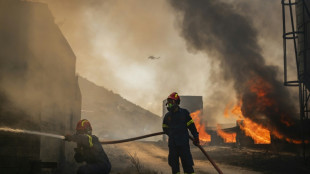
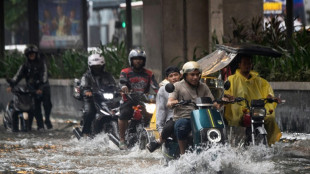 Days of heavy rain leave at least 16 dead in Philippines

 Bezos consortium nears deal to buy Liverpool stake: report

 Stocks mostly rise with focus on US inflation

 Days of heavy rain leave at least 13 dead in Philippines

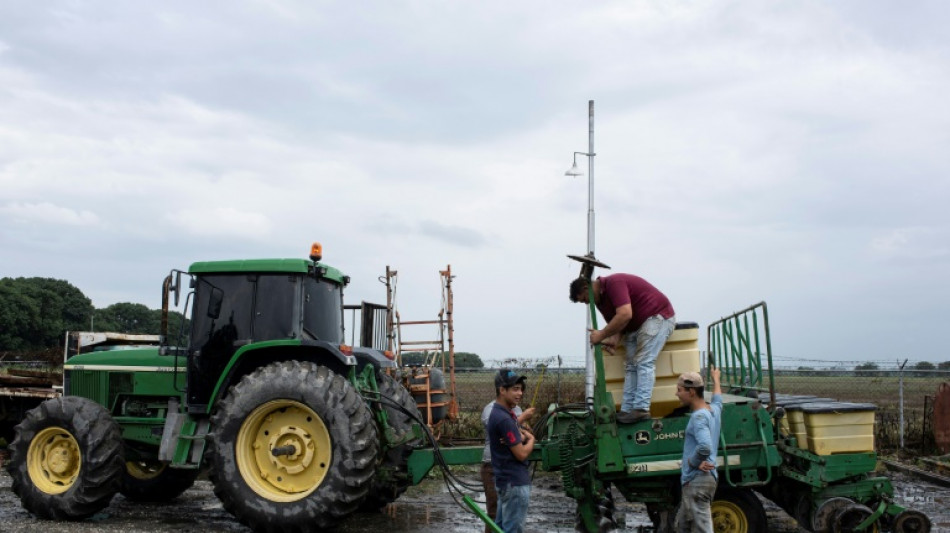
The first rainy season downpour in Venezuela's western region of Portuguesa has fallen and now it's time to plant corn, a staple in this South American country known for its traditional arepas.
But just like much of Latin America, the race is on to find enough fertilizer for the crops.
Russia's invasion of Ukraine 10,000 kilometers away has limited the supply of the key agricultural supplement throughout the region.
Some 80 percent of the 180,000 metric tons of fertilizers used annually in Venezuela are imported, mostly from Russia but also from Ukraine and Belarus, according to the Fedeagro union of agricultural producers.
Western sanctions against Russia and Belarus, as well as Ukraine's difficulties in exporting while under siege, has left the whole of Latin America scrambling to find replacements.
Russia is the world's largest exporter of fertilizers with more than 12 percent of the global market, but its sales have been virtually paralyzed by sanctions.
"Thank God we managed to buy Russian fertilizers in business talks in October and November, paid in December and they were able to arrive in February and March," Celso Fantinel, the Fedeagro president, told AFP.
However, Fantinel said they are still short by about a third of their needs -- but the weather waits for no-one, and there is no time to find alternatives.
As it is "we're producing 30 percent of our capacity" due to Venezuela's economic crisis that saw the country suffer eight years of recession and four years of hyperinflation, said Ramon Bolotin, president of the PAI independent agricultural producers.
"Even so, there aren't enough fertilizers for this 30 percent."
"Chemical fertilizers are essential," he said, for a country where three percent of the 30 million population works in agriculture "to feed the other 97 percent."
"We'll work with what we have ... although in some places they will need to underdose."
- Massive shortage -
For Venezuelan farmers, it is yet another headache in a country already suffering fuel shortages due to the collapse of its vital oil industry.
In Portuguesa, an agricultural region known as Venezuela's "granary," petrol station queues stretch for kilometers.
Venezuela's farming sector was expecting to sow 250,000 hectares of corn, 50,000 of rice, 60,000 of sugarcane and 70,000 of other products such as coffee and cacao, according to Fedeagro.
The fertilizer shortfall is a massive obstacle. One hectare of corn crops can produce 10 tons of harvest, but that figure can fall to as low as three or four tons if the conditions are not right.
The whole of Latin America faces the same issue, particularly its two agricultural giants.
Last year, Brazil imported almost 81 percent of the 40.5 million tons of fertilizer it used, and 20 percent of that came from Russia, according to the government.
Argentina imported 60 percent of its 6.6 million tons, of which 15 percent came from Russia.
Mexico, Ecuador, Colombia and Peru are also, to a greater or lesser extent, dependent on Russian fertilizers.
In March, Ecuador President Guillermo Lasso said his government would subsidize fertilizer imports due to the "increase in the price of agricultural materials" sparked by the international crisis.
Horst Hobener, a corn grower in Turen, Portuguesa, told AFP prices have risen 120 percent in a matter of months.
- Alternatives sought -
The collapse of Venezuela's oil industry has affected the petrochemical industry, which in the past covered the internal demand for fertilizers.
"This has been felt a lot," said Fedeagro vice-president Osman Quero.
"In the last three years we have been sourcing the fertilizers ourselves" through intermediaries.
Farmers have asked the government to reactivate its petrochemical complex in the northern Carabobo state, which has been semi-paralyzed since 2017.
According to state oil company PDVSA, it has the capacity to produce 150,000 metric tons of nitrogenous and phosphate fertilizers a year.
Russian fertilizers used by farmers in Turen are made up of 10 percent nitrogen, 26 percent phosphorus and 26 percent potassium.
"We have two fundamental ingredients: urea (nitrogen) and phosphorus and we would only need to import potassium chloride," said Fantinel.
They are exploring other options but the global shortfall has meant many exporters have suspended sales due to their own domestic needs.
Ruben Carrasco from the Lima Chamber of Commerce told AFP that Russia is looking for ways to use third parties such as Norway to return to the market.
"Who knows, maybe next year other alternative sources will be tried," said Bolotin.
O.Bulka--BTB