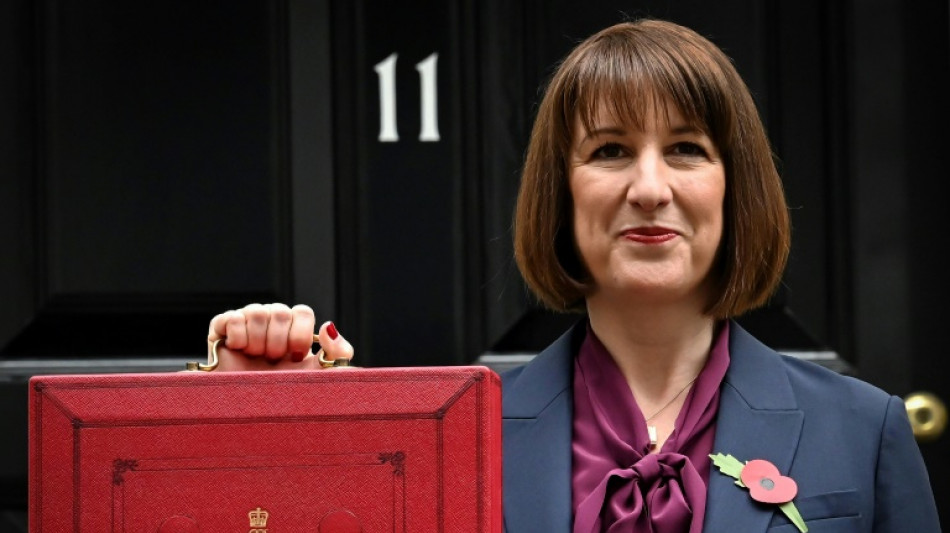
UK economy slows, hitting government growth plans / Photo: © AFP

 Alabama Legislature Passes Weakened Utility Reform Bill Amid Allegations of Alabama Power Influence

 World Athletics stance on Russia unchanged, says Coe

 Can We Predict Volcanic Eruptions Like Weather? Scientists Seek Unified Physics

 Macron, Carney to visit French islands after Trump's map post

 حمزة قورقماز يناقش العلاقة بين وضوح المبادئ واحترام الاختلاف

 اليورو يستقر في البنوك المصرية وأعلى سعر للبيع 59.85 جنيه

 Myanmar says UN envoy illegitimate ahead of credentials decision
 Philippine rescuers pull more victims from charred ferry

 دول عربية ومنظمات تدين استهداف خط أنابيب في السعودية

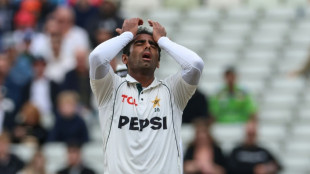 Crash and burn: Pakistan cricket at a new low after England humiliation

 'Second life': Nepal tunnel survivor recalls ordeal

 Hong Kong homes flattened for US$28 bn high-tech hub
 'Be careful what you wish for': 'Obsession' director and star reflect on success
 Messi scores but Miami held by Nashville

 US Open champ Rybakina on top of world after injury scare
 Rybakina reigns serene as new world number one

 South Africa defeat New Zealand 43-28 to complete 3-1 series victory

 Rybakina triumphs in US Open, denies Sabalenka three-peat

 Mini 1998 GT pairs 161-hp engine with John Cooper Works chassis hardware

 GTA VI draws political criticism online as preorder estimates exceed five million

 Steven Strogatz weighs AI mathematics advances and their consequences for researchers

 KFF journalists discuss opioid funds, suicide prevention and gaps in care

 Roadless Rule repeal proposal raises concerns over Midwest forests and fire risk

 Louisiana's developing roster faces USC as Trojans enter as heavy favorites

 Utah hosts Arkansas as both programs begin seasons under new coaches

Britain's economy grew less than expected in the third quarter, official data showed Friday, dealing a blow to the Labour government that has set its sights on growth expansion.
Gross domestic product (GDP) expanded 0.1 percent in the July-September period, a slowdown compared to 0.5-percent growth in the second quarter, the Office for National Statistics said.
The data covers the period of the Labour government's first few months in office and lead up to its highly-anticipated maiden budget at the end of October.
The latest GDP figure lagged behind economist forecasts of 0.2-percent growth, with analysts partly attributing the slowdown to uncertainty ahead of the budget that included business tax rises and plans for higher state borrowing.
- 'Not satisfied' -
"Improving economic growth is at the heart of everything I am seeking to achieve, which is why I am not satisfied with these numbers," finance minister Rachel Reeves said in reaction to Friday's data.
"At my budget, I took the difficult choices to fix the foundations and stabilise our public finances," she added.
Reeves spoke after addressing business leaders in a keynote speech late Thursday in which she outlined plans to drive forward Britain's economy by creating mega pension funds and cutting red tape that would enable greater risk-taking in the financial sector.
She claimed measures to tighten regulation following the 2008 global financial crisis had "gone too far".
- US, EU relations -
Reeves also used her speech Thursday to stress the need for "free and open" trade with the United States under president-elect Donald Trump -- and with the European Union.
However, she insisted Britain would not reverse Brexit by re-entering the EU single market or customs union.
Speaking alongside Reeves, Bank of England governor Andrew Bailey said Britain should "welcome opportunities to rebuild (EU) relations while respecting the decision of the British people" to exit the bloc in a 2016 referendum.
Bailey echoed analysis elsewhere by stating Brexit had impacted Britain economically.
"The changing trading relationship with the EU has weighed on the level of potential supply," he said.
"The impact on trade seems to be more in goods than services."
The EU on Friday forecast that the eurozone economy is expected to grow 1.3 percent next year from 0.8 in 2024.
Friday's UK data also showed that the country's economy shrank slightly in September.
Analysts attributed part of the third-quarter slowdown to worries about the impacts of the budget.
Lindsay James, strategist at Quilter Investors, said the persistent "gloomy messaging" in the run up to the event caused "consumers and businesses to pause spending and await what pain was to come".
The budget set out to focus on long-term growth to meet Prime Minister Keir Starmer's pre-election pledge.
It was the first Labour budget in nearly 15 years, after the party's re-election in July that ended years of Conservative rule.
The government's first few months in power has coincided with a drop to UK inflation, resulting in the Bank of England cutting interest rates, in turn helping to ease cost-of-living pressures.
F.Fehr--VB