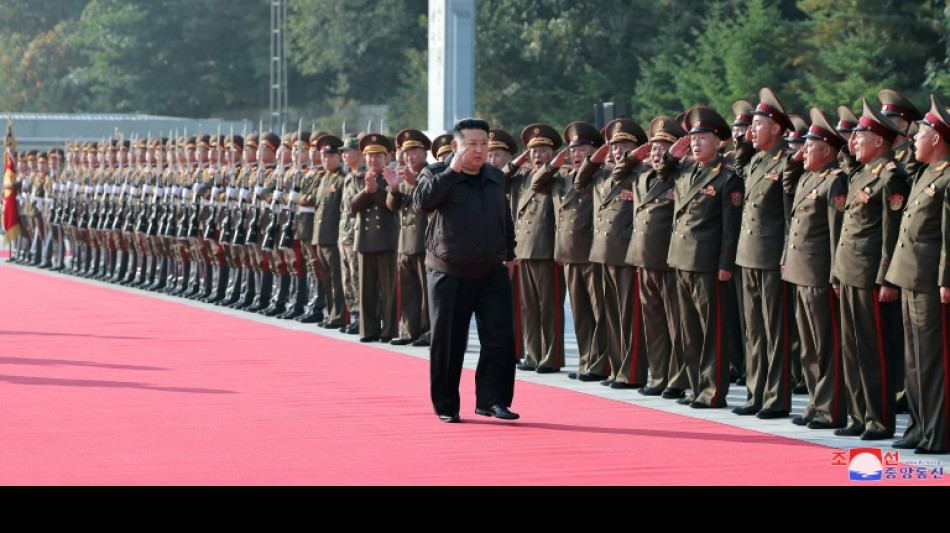
What would North Korean soldiers do in Ukraine? / Photo: © KCNA VIA KNS/AFP

 Russia's Stalin-admiring provincial leader waging an ultra-conservative crusade
 Marcelo Gallardo appointed as new Ecuador head coach
 'Widow's Bay' and 'The Pitt' tipped for success at Emmy Awards
 For club and comfort: Rodman makes it to Shelton's US Open final
 Houthis say Saudi Arabia launched over 50 strikes against them in 24 hours
 'Fed up': Thousands march against Sinaloa Cartel violence

 Controversial Zverev: from tennis nearly-man to multiple Grand Slam winner
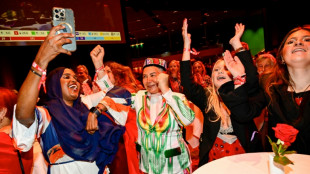 Swedish left-wing cheers far-right decline amid tight election race

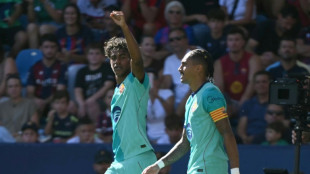 Yamal double helps Barca beat Levante, Atletico triumph

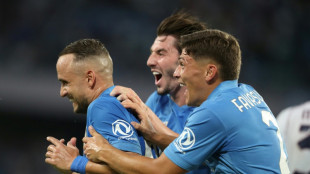 Sassuolo stun Juve, Lobotka eases pressure on Allegri with Napoli winner

 Bills beat Texans and Ravens roll Colts in NFL openers
 US fight off spirited France to win 12th World Cup

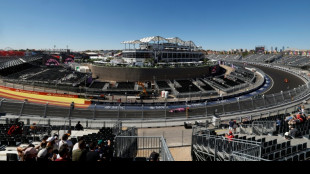 Drivers give cool reception to new Madring circuit

 Maresca makes flawless Man City start to leave Man Utd trailing

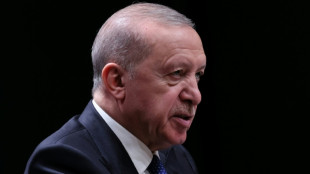 Dozens arrested in major anti-LGBTQ raids in Turkey
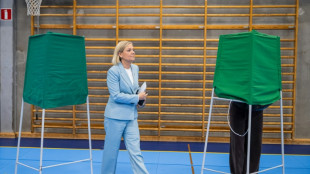 Leftwing opposition seen leading Sweden election, far-right losing ground

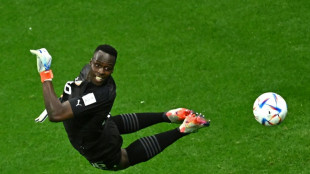 Senegal goalkeeper Mendy retires from international football

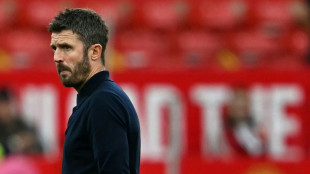 Carrick 'worried' by decision to award Man City winner

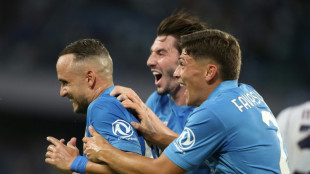 Lobotka eases pressure on Allegri with Napoli winner
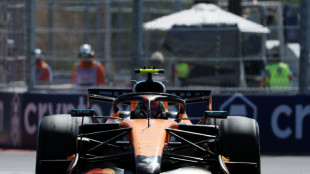
 Trump watches as Lowry wins Irish Open in record-breaking style
 Poland, Ukraine slam Russian strikes near border as 'escalation'
 Haaland fires 10-man Man City to memorable win over Man Utd
 I miss the adrenaline, but it's not my moment - Bolt
 Championship leader Antonelli to 'keep pushing' for title
 Yamal double helps Barca edge Levante thriller

The presence of North Korean soldiers alongside Russians fighting Ukraine raises many tactical and military questions, leading some analysts to wonder about their effectiveness and ultimate objectives.
North Korea had never sent troops into combat abroad before, primarily out of fear that they might defect or make unflattering comparisons between foreign armies and their own.
"The regime is worried that soldiers from the isolated country might pick up 'incorrect' ideas," wrote Fyodor Tertitskiy, a researcher at Seoul's Kookmin University.
- What type of units? -
Citing US intelligence, Secretary of State Antony Blinken had already previously mentioned a North Korean deployment in the Russian region of Kursk, which was attacked by Ukraine in August.
According to Blinken, they are equipped with Russian uniforms and trained in artillery, drones, and infantry operations, including trench clearing.
This, he said, showed that Moscow intends to use them in frontline operations.
But are they cannon fodder or special forces? South Korean analysts lean towards the latter option.
"While casualties are an inevitable part of war, what's the point of sending inexperienced and or incompetent soldiers to gain combat experience?", said Yang Moo-jin, president of the University of North Korean Studies in Seoul.
"North Korea must showcase the combat effectiveness and operational capabilities of its soldiers to maximise the outcomes of its deployments," added Lim Eul-chul at Kyungnam University.
- Limited volume -
Reliable figures are hard to come by, but Western sources say there are around 10,000 North Korean soldiers deployed, while Kyiv says there are 11,000.
This is the equivalent of current Russian losses in about 10 days of fighting.
"If Russia is having manpower issues, it will require far more North Koreans to address these challenges," observed Mick Ryan, a retired Australian general.
Others, however, argue that the contingent is non-negligible so long as the soldiers remain in the Kursk region.
"The strength of North Korean special operations forces lies in their ability to endure harsh conditions, even when food and other resources are in short supply," said Lim. "They have strong mental resilience."
- Language barrier -
Can Russians and North Koreans jointly wage a war that depends on translators?
"While translators will be helpful, this kind of communication gap can, and will, be a problem during combat operations," said Ryan.
Meanwhile, there remains a plethora of organisational questions: will the North Koreans deploy rank-and-file soldiers as well as command structures? Will they be autonomous or integrated into Russian units? For what tasks?
"Ukrainian intelligence has stated that the North Koreans arrived in Russia with 500 officers and three generals," said Ivan Klyszcz, a research fellow at the International Centre for Defence and Security in Estonia.
"This could facilitate communication if the Russian and North Korean generals manage to work together, but there are too many unknowns at this stage to be conclusive," he said.
- Limited experience -
Pyongyang's special forces are primarily trained to prevent a coup d'etat at home.
"Their complicated chain of command emerged from a system in which political commissars signed off on every military decision," wrote Tertitskiy.
"It's an open question whether this cumbersome system will be modified for the purposes of the war in Ukraine. Either way, such a change would be impossible without the personal agreement of Kim Jong Un," North Korea's leader, he said.
Moreover, North Korean troops who have not fought since 1953 would likely struggle against Ukrainians who have been at war for two-and-a-half years.
Kim's army relies on 20th-Century-style mass mobilisation with around a third of the population involved in the military, either actively or in reserve or paramilitary units, said Klyszcz.
But "despite their Communist regime being a throwback of sorts to the Soviet model, their military focus on mass power has become oddly relevant again in the 21st Century", he said.
- Valuable lessons -
The deployment will be monitored and analysed from all angles.
"Sharing lessons on modern combat, particularly on the integrated use of drones, cruise and ballistic missiles will be of great interest to North Korea," said Ryan, also pointing to valuable lessons to be learnt about "electronic warfare, countering air defences, and insights gleaned from captured Western weapons in Ukraine".
But the reverse also appears true, according to Tertitskiy, who wrote that "Seoul seems to sense an opportunity to acquire intelligence on its longstanding foe".
This is especially valuable since the pandemic-related border closure significantly reduced the number of refugees from the North reaching the South, who constitute "the main source of information" for Seoul about its neighbour.
D.Schaer--VB