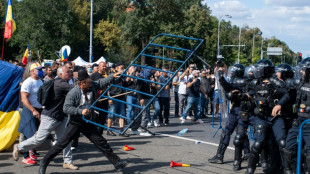
What we know about the soldiers 'held hostage' by Bolivia demonstrators / Photo: © AFP

 EU calls Russia 'reckless' after flares fired at Danish helicopter
 US Treasury chief says to meet Chinese counterpart at weekend
 Trump slams 'horrible' Supreme Court mail-in ballot ruling

 Brazil's crisis-hit Supreme Court probes judge's ties to jailed banker
 Sterling admits dangerous driving after Lamborghini crash
 Ambassador to Thailand plays down anti-Israeli protests
 BingX Evolves into a Multi-Asset Trading Platform, Connecting Users to Global Opportunities

 Flick supporting 'self-confident' Yamal Ballon d'Or bid

 As Ballon d'Or vote nears, stars campaign for the award

 Markets on edge as US Fed meets to tackle high inflation

 International Trading Institute Expands Professional Trader Development Beyond the Master’s in Trading

 Nairobi to host 2029 world athletics championships in African first
 Ukraine winemakers defy war to make a splash at home
 Prominent Greek neo-Nazi exits prison, vows return to politics: AFP

 Saudi Arabia vows to respond 'firmly' to Houthi attacks

 'We unleashed the beast': the world's fears and hopes about AI
 Carragher sees Manchester City’s winning start as challenge to Arsenal

 Oasis fans weigh ticket costs and reunion memories ahead of 2027 tour

 EastEnders previews Kat’s grief after Zoe’s death

 US military confirms Iran war has led to munitions shortfall

 SkySail Strategies Outperforms Wall Street's 30-Year Risk Standard With Proprietary AI Inference Model

 Canada ends refugee family sponsorship exemption over integrity concerns
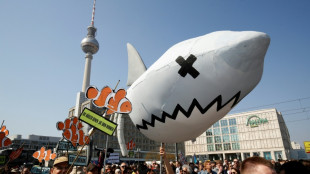 Berlin's run-down public spaces at heart of election campaign

 Ribeiro and Richie among celebrity birthdays for September 20–26

 Bob Mackie, costume designer for Cher and Madonna, dies aged 87
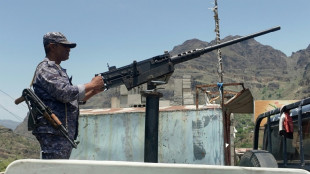
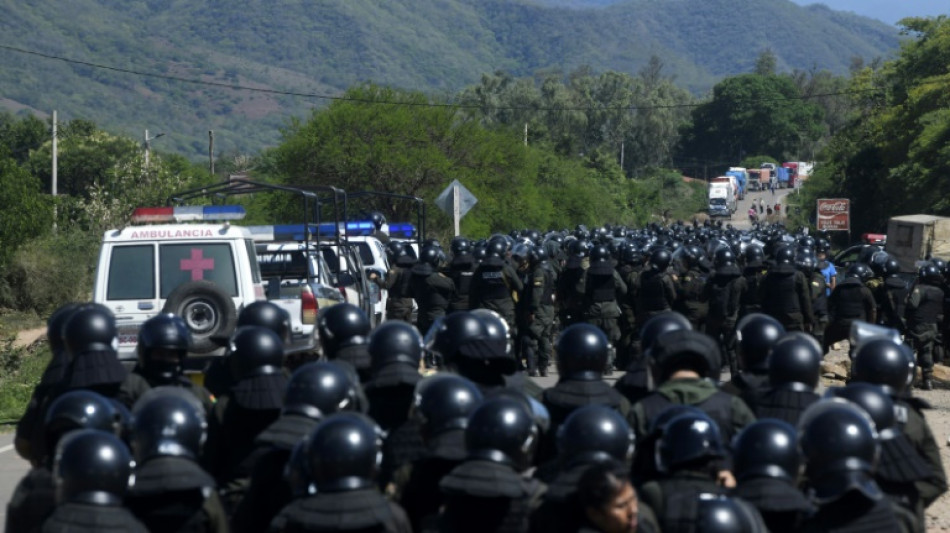
The Bolivian government said at the weekend that 200 soldiers were being "held hostage" by supporters of ex-president Evo Morales, who have been blockading roads for over three weeks to try to prevent his arrest on charges of statutory rape.
Here is what we know about the situation at the three barracks in the central Chapare region targeted by supporters of Bolivia's 2006-2019 president, who is eying a comeback in elections next year despite being barred from seeking re-election.
- What happened? -
On Friday, the Bolivian military said "irregular armed groups" had taken over a military barracks in Chapare, Morales's political stronghold in the central Cochabamba department.
It said they had "kidnapped military personnel", without saying how many, and had also seized weapons and ammunition.
In a video shared on Bolivian media, 16 soldiers were seen surrounded by protesters holding pointed sticks aloft.
"The Cacique Maraza Regiment has been taken over by Tipnis activists," a uniformed man is heard saying in the video, referring to supporters of Bolivia's first Indigenous leader.
"They have cut off our water, electricity and are keeping us hostage," the voice added.
The following day the foreign ministry said three barracks in Chapare had been "assaulted by irregular groups" who had "taken more than 200 military personnel hostage".
On Monday, Deputy Minister of Coordination with Social Movements Juan Villca told AFP that the three facilities were "still held" by protestors.
- Are the soldiers really hostages? -
Vicente Choque, leader of the Indigenous federations of Chapare, denied that the soldiers were hostages.
"There's not a single hostage, this talk of hostages is the government exaggerating or lying," he told AFP.
He acknowledged however that 2,000 to 3,000 people were maintaining "a vigil" outside the barracks of the 9th Infantry Division -- one of the three sites targeted -- to prevent other soldiers entering.
He said the protesters came to the barracks to complain about the presence of vehicles inside, which they said had been used in the "attempted assassination" of Morales on October 27.
The 65-year-old ex-leader accused state agents of trying to kill him while driving in Chapare, sharing a video online showing himself travelling in a pick-up truck riddled with bullet holes.
The government said the police fired on his vehicle after coming under fire from his convoy.
Choque said the soldiers at the barracks could "leave no problem" if they "coordinated" with the protesters.
Lawyer and retired army officer Omar Duran said however that the troops "are being held hostage and are not allowed leave".
An AFP video showed men, women and children sitting under trees in the shade outside the barracks, occupied with various chores.
Inside, soldiers could be seen standing guard but are unarmed.
Choque said the situation was the same at the other two barracks.
- How could it happen? -
Duran said he believed the military in Chapare was caught off guard due to a lack of intelligence gathering.
He blamed what he called a lack of state support for the military.
"The armed forces have been abandoned. They do not have riot gear. The few weapons they have are weapons of war," he said.
He added that the army was hesitant to use force against the protesters for fear of being disavowed by the government of President Luis Arce, a longtime Morales ally who has since fallen out with him.
"The officers believe that the moment they fire a shot the government will abandon them," Duran said.
Villca vowed there would be an "extensive investigation" into how the protesters were allowed enter the military facilities.
T.Ziegler--VB