
Ten key moments in the climate change fight / Photo: © AFP/File

 Helen Mirren delves into Patricia Highsmith's mind in 'A Talent for Murder'
 Sanders, Bannon warn of AI dangers in rare US left-right alignment
 US Senate crypto bill collapses amid partisan deadlock
 Raptors confirm Leonard return after Clippers salary cap scandal

 Empty benches as schools reopen in Venezuela's quake-hit Guaira

 US judge rules Trump's name must remain off Kennedy Center

 Samson fires India to T20 series win over Afghanistan

 Carney sells Canada to global investors but says US ties still key

 Tiny English village holds 'independence' vote over asylum seeker housing

 Trump slams Supreme Court over 'horrible' mail-in ballot ruling
 Protesting shepherds, farmers clash with Romanian police
 Saudi, Egypt demand open Red Sea, as Riyadh vows to hit back against Houthis
 Foundation Lets Ledger Users Switch to Open Source Without Starting Over
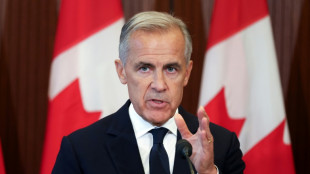 Canada remains 'most important partner' for US in 'key areas': Carney

 Carrick urges Man Utd to use derby pain as fuel against Brighton

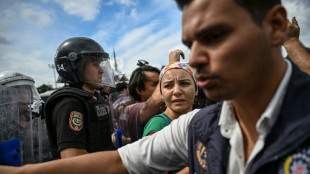 Turkey police detain dozens over pro-LGBTQ Istanbul rally

 'Kenya's moment' as Nairobi to host 2029 world athletics champs in African first

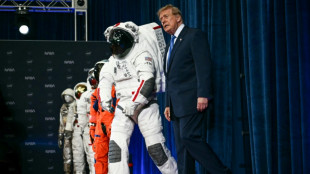 China warns against space 'battlefield' after US says weapons deployed

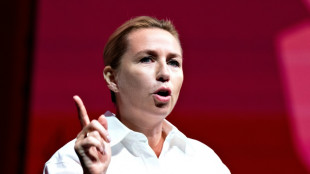 Denmark says Russian frigate fired flares at helicopter
 EU to propose curbing social media, online games for under 15s

 FX Junction Reaches 40,600 Members and 26 Million Trades

 Prominent Greek neo-Nazi exits prison, vows return to politics

 'Obsessed': explosive state crime inquiry grips South Africa

 Sri Lanka's javelin champ returns to 'broken' welcome

 Lake Energy Secures $80 Million for U.S. Renewable Energy Expansion
With the UN climate summit to start in Azerbaijan in a week, here is a recap of 10 key dates in the battle against global warming.
- 1988: key UN body created -
Alerted by scientists to signs that the Earth's surface is warming, the United Nations in 1988 establishes the Intergovernmental Panel on Climate Change (IPCC) to investigate.
Two years later, the panel reports that heat-trapping "greenhouse" gases generated by human activity are on the rise and could intensify planetary warming.
In a series of studies, evidence accumulates that human activities -- the burning of coal, oil and gas; logging of rainforests and destructive farming practices -- are heating the Earth's surface, a prelude to disruptions of its climate system.
- 1992: Earth Summit -
A 1992 "Earth Summit" in Rio de Janeiro, Brazil, creates the UN Framework Convention on Climate Change (UNFCCC), with the aim of reducing greenhouse gas emissions.
Since 1995, so-called "Conferences of the Parties", or COPs, have been meeting to pursue that elusive goal.
- 1997: Kyoto Protocol -
In 1997, nations agree in Kyoto, Japan, on a 2008-2012 timeframe for industrialised nations to reduce greenhouse gas emissions by an average of 5.2 percent from 1990 levels.
Developing countries, including China, India and Brazil, are not required to take on binding targets.
But in 2001, the United States, at the time the world's biggest carbon emitter, refuses to ratify the protocol, which takes effect in 2005.
- 2007: Nobel prize -
The IPCC reports in 2007 that evidence of global warming is now "unequivocal" and extreme weather events will probably multiply.
In October 2007, the UN panel shares the Nobel Peace Prize with former US vice president Al Gore for their efforts in raising the alarm about climate change.
- 2009: Copenhagen collapse -
Participants at the COP15 gathering in the Danish capital Copenhagen fail to achieve an agreement for the post-2012 period.
Several dozen major emitters, including China and the US, announce a goal of limiting global temperature increases to two degrees Celsius above pre-industrial levels, but are vague on how the goal will be reached.
- 2015: Paris landmark deal -
In December 2015, nearly every nation on Earth commits to limit warming to "well below" two degrees Celsius above pre-industrial levels.
A more ambitious cap of 1.5 Celsius is also adopted in the French capital Paris as the preferred target.
- 2018: Greta Thunberg -
In 2018, Swedish teen Greta Thunberg starts skipping school on Fridays to sit outside the Swedish parliament, demanding more substantive action to combat climate change.
Despite ending her Friday protests in 2023 after graduating, her protest inspires students worldwide to skip class each Friday in a bid to demand more efforts from global leaders.
- 2022: biodiversity deal -
An accord on biodiversity is reached in Montreal, Canada in December 2022, calling for the designation of 30 percent of the planet's land and oceans as protected zones by 2030, and an end of extinctions of threatened species due to human activities.
- 2023: 'beginning of end' for fossil fuels -
The COP28 in Dubai, United Arab Emirates, ends with a landmark deal to transition away from fossil fuels.
EU climate chief Wopke Hoekstra calls the agreement "long, long overdue", saying it has taken nearly 30 years of climate meetings to "arrive at the beginning of the end of fossil fuels".
- 2024: hottest on record -
The 2024 northern summer sees the highest global temperatures ever measured.
The global average temperature in August 2024 at the Earth's surface is 16.82C, according to the EU's climate monitor Copernicus.
This breaks through the level of 1.5C above the pre-industrial average -- the key threshold for limiting the worst effects of climate change.
M.Schneider--VB