-
 Hong Kong unveils plan to align economy with China's goals
-
Bank of Japan set to raise rates under pressure from inflation, US
-
 Brazilian voters the latest to eye Bukele security model with envy
-
Zverev, Shelton back on court for Davis Cup qualifiers

-
 EU chief hosts Canada's Carney in push to 'deepen' alliance
-
Peace is a 'dangerous' word in Russian city heading to polls
-
 EU chief to unveil social media, gaming curbs for under-15s
-
Meta chief pushes back on AI slowdown calls
-
 Saudi says Houthis target Mecca, warn of 'red line'
-
'Resident Evil' film brings video game's ethos to the big screen

-
 Asian stocks stutter as traders prepare for Fed decision
-
Court orders N. Korea pay Seoul $32.5 mn for blowing up office
-
 US touts its power, avoids Iran war at G20 Energy meeting
-
US military buildup in Palau stirs war fears

-
 Dead animals, barren fields, and hunger - El Nino chokes Central America
-
US Fed to deliver rate decision with markets betting on hike
-
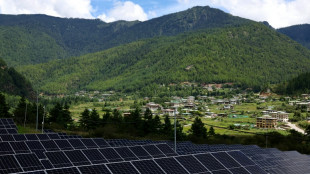 In hydropowered Bhutan, solar starts to rise
-
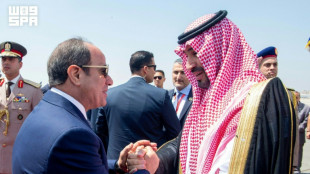
Saudi, Egypt demand open Red Sea as Riyadh vows response to Houthi attacks
-
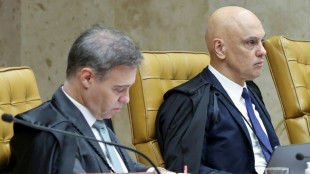 Brazil's Supreme Court clashes over handling of probe involving judge
-
Capitals say hockey star Ovechkin 'was asked' to film Putin ad

-
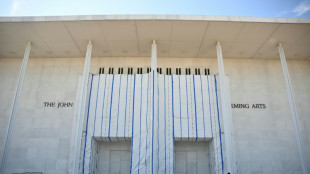 Trump threatens to keep Kennedy Center shut if his name not added
-
Spurs in 'tough moment' after League Cup exit as De Zerbi says sorry

-
 i-payout Expands U.S. Money Transmitter Licensing Footprint and Advances European EMI Strategy
-
Arteta salutes 'unbelievable' Dowman after Arsenal's teen star sinks Ipswich

-
 Artists exit Sheeran tour in solidarity with Macklemore pro-Palestinian comments
-
Empty seats as schools reopen in Venezuela's quake-hit Guaira
-
 Espi saves Real Madrid with late winner at Elche
-
Messi set for Argentina farewell in Benin friendly

-
 Liverpool pile on misery for Spurs in League Cup, Dowman dazzles for Arsenal
-
Ton-up Brook leads from the front as England hammer Sri Lanka in 1st T20

-
 Trump blasts Supreme Court justices over 'horrible' mail vote ruling
-
AI giants pursue self-regulation as safety fears mount
-
 Maduro ally pleads guilty to US money laundering charges
-
Argentina begin life after Messi with Bolivia friendly

-
 Finnish president Stubb speaks to AFP about Trump, Russia and saunas
-
Helen Mirren delves into Patricia Highsmith's mind in 'A Talent for Murder'

-
 Trump says Kennedy Center to close after judge bars name change
-
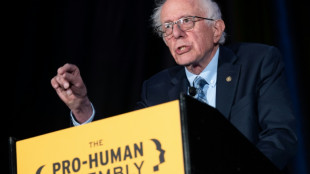
Sanders, Bannon warn of AI dangers in rare US left-right alignment
-
 South Africa intensifies hunt after eight women found dead
-
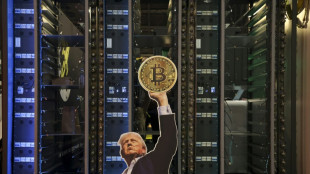
US Senate crypto bill collapses amid partisan deadlock
-
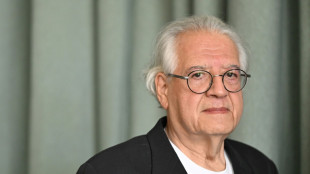 'Battle of Chile' documentary-maker Patricio Guzman dies, aged 85
-
Raptors confirm Leonard return after Clippers salary cap scandal

-
 Tuchel wanted to eat grass after England's World Cup win in Mexico
-
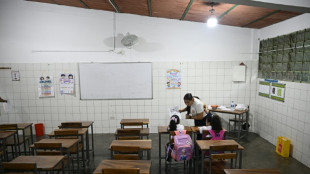
Empty benches as schools reopen in Venezuela's quake-hit Guaira
-
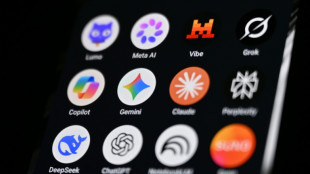 OpenAI, Anthropic and Google are working to create an AI standards body
-
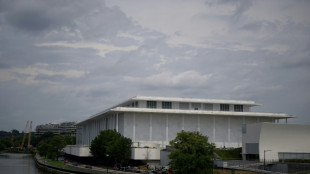
US judge rules Trump's name must remain off Kennedy Center
-
 Lens sack Toppmoeller after six games in charge
-
Samson fires India to T20 series win over Afghanistan

-
 Rob Reiner son will not face death penalty, prosecutor says
-
Carney sells Canada to global investors but says US ties still key
US, South Korea meet after North Korea fires most powerful ICBM
The United States and South Korea held high-level talks Thursday after North Korea test-fired one of its newest and most powerful missiles, demonstrating its threat to the US mainland days ahead of elections.
The weapons test was the first since North Korea was accused of sending troops to Russia to support the invasion of Ukraine, triggering alarm and warnings by Washington, Seoul and Europe.
North Korea's latest actions were certain to top the agenda as Secretary of State Antony Blinken and Defense Secretary Lloyd Austin opened previously scheduled joint talks with their South Korean counterparts in Washington.
South Korea, which previously said that the North was preparing a missile or even nuclear test ahead of US elections on Tuesday, said Pyongyang appeared to have fired a solid-propelled long-range ballistic missile.
It flew 1,000 kilometers (621 miles) after being fired on a lofted trajectory -- meaning up, not out, the South Korean military said.
Developing advanced solid-fuel missiles -- which are quicker to launch and harder to detect and destroy in advance -- has long been a goal for North Korean leader Kim Jong Un.
Kim called the sanctions-defying launch "an appropriate military action that fully meets the purpose of informing the rivals... of our counteraction will," according to the official Korean Central News Agency.
The test "updated the recent records of the strategic missile capability," of North Korea, the agency said, with Kim vowing his country "will never change its line of bolstering up its nuclear forces".
- Longest-ever launch -
Tokyo said that the "ICBM-class" missile had flown for longer than any other previously tested by the North, being airborne for about 86 minutes and hitting altitudes of 7,000 kilometers.
"We estimate that its flying altitude was the highest we have seen," Japanese Defense Minister Gen Nakatani told reporters.
Both the White House and UN Secretary-General Antonio Guterres said that the launch clearly violated UN Security Council resolutions.
The missile in theory could strike the mainland United States, although National Security Council spokesman Sean Savett said there was no immediate risk from the test-firing.
China, historically North Korea's closest ally, said it was "concerned about developments on the (Korean) peninsula" and urged a "political resolution" to the issue.
Seoul, Washington and Tokyo -- key regional security allies -- will respond with joint military drills involving US strategic assets, Seoul said.
South Korean President Yook Suk Yeol also said the country would "designate new independent sanctions" on the North and work with partners and the UN to penalize Pyongyang's "habitual violations of Security Council resolutions."
- Diverting attention? -
North Korea's missile launch "seems to have been carried out to divert attention from international criticism of its troop deployment," said Yang Moo-jin, president of the University of North Korean Studies in Seoul.
Seoul has long accused the nuclear-armed North of sending weapons to help Moscow fight Kyiv and alleged that Pyongyang has moved to deploy soldiers en masse in the wake of Kim Jong Un's signing of a mutual defense deal with Russian President Vladimir Putin in June.
Seoul has warned that Russia may be providing new technology or expertise to Pyongyang in return for weapons and troops to help them fight Ukraine.
It is possible "Russia actually provided new technology for reentering the atmosphere," said Ahn Chan-il, a defector-turned-researcher who runs the World Institute for North Korea Studies.
But it is more likely that Thursday's test was a bid to distract from the troop deployment and get "the world's attention ahead of the US presidential election," Ahn added.
Vice President Kamala Harris in a campaign rally Tuesday charged that Kim and Putin "are rooting" for her rival Donald Trump as he is "easy to manipulate with flattery and favor."
Trump as president met three times with Kim, unusually personal diplomacy that reduced tensions but did not yield a lasting agreement.
Seoul, a major weapons exporter, has said it is reviewing whether to send weapons directly to Ukraine in response to the North's troops, an idea it has previously resisted due to longstanding domestic policy that prevents it from sending weaponry into active conflicts.
North Korea has denied sending troops to Russia, but in the first comment in state media last week, its vice foreign minister said that if such a deployment were to happen, it would be in line with international law.
burs-sct/md
C.Bruderer--VB