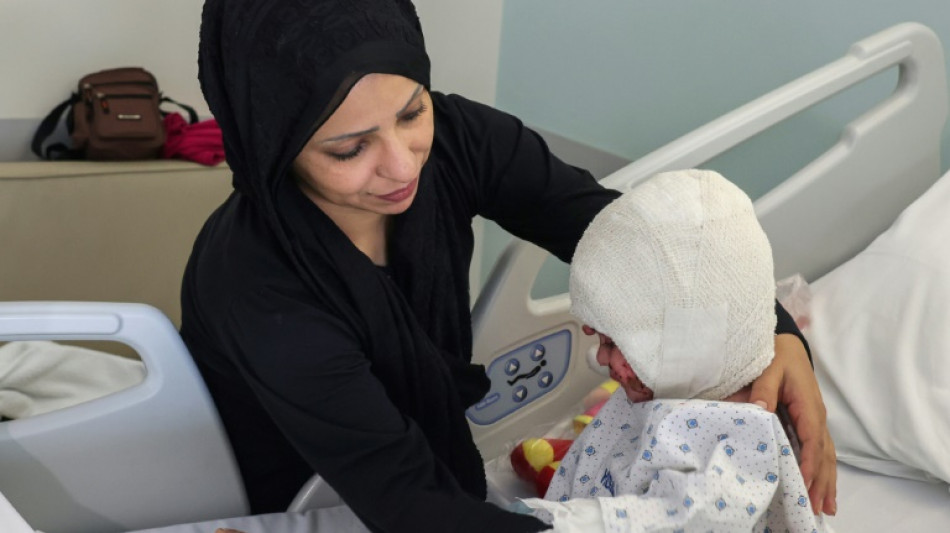
Lebanon hospital's burns unit bears scars of Israel-Hezbollah war / Photo: © AFP

 BASIS.pro Expands On-Chain Infrastructure with XDC Network Partnership and Zypher DAO as Auto Earn Goes Live

 Samson relishing battle with teen star Sooryavanshi for India spot
 Pickle-flavoured tart? AI inspires Japan's convenience stores
 Macau holds first closed-door national security trial
 Bank of Japan set to raise rates under pressure from inflation, US
 Zverev, Shelton back on court for Davis Cup qualifiers
 Peace is a 'dangerous' word in Russian city heading to polls
 Meta chief pushes back on AI slowdown calls
 'Resident Evil' film brings video game's ethos to the big screen
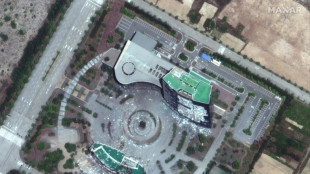 Court orders N. Korea pay Seoul $32.5 mn for blowing up office

 US military buildup in Palau stirs war fears
 US Fed to deliver rate decision with markets betting on hike

 Saudi, Egypt demand open Red Sea as Riyadh vows response to Houthi attacks
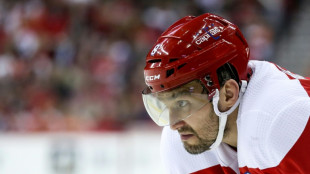 Capitals say hockey star Ovechkin 'was asked' to film Putin ad
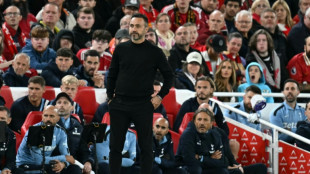 Spurs in 'tough moment' after League Cup exit as De Zerbi says sorry

 Arteta salutes 'unbelievable' Dowman after Arsenal's teen star sinks Ipswich

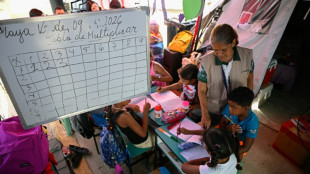 Empty seats as schools reopen in Venezuela's quake-hit Guaira

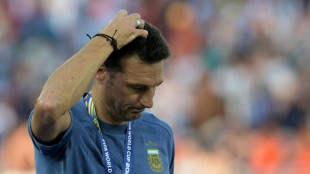 Messi set for Argentina farewell in Benin friendly
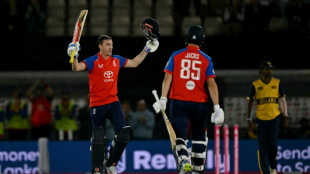 Ton-up Brook leads from the front as England hammer Sri Lanka in 1st T20
 AI giants pursue self-regulation as safety fears mount

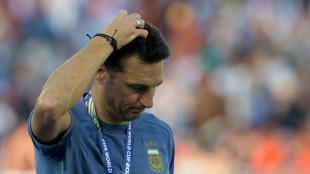 Argentina begin life after Messi with Bolivia friendly

 Helen Mirren delves into Patricia Highsmith's mind in 'A Talent for Murder'
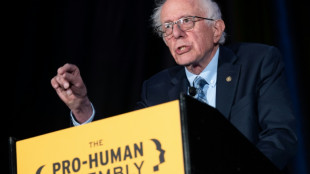 Sanders, Bannon warn of AI dangers in rare US left-right alignment
 US Senate crypto bill collapses amid partisan deadlock
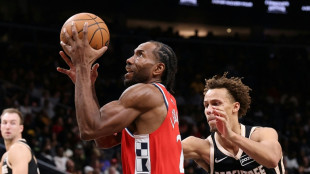 Raptors confirm Leonard return after Clippers salary cap scandal

For weeks, Fatima Zayyoun has tended to her daughter Ivana, whose bandaged fragile body is in a Beirut hospital after an Israeli strike near their home engulfed her in flames.
At the Lebanese Hospital Geitaoui, home to the country's only burns unit, 35-year-old Zayyoun is still in shock, five weeks after a third of her daughter's body was burned in a September 23 strike on south Lebanon.
Ivana, who will turn two next month, lies nearby, her arms, legs, head and face all swathed in bandages.
"I was making breakfast while Ivana was playing with her (seven-year-old) sister Rahaf in the backyard outside when the air strike hit near us," Zayyoun told AFP.
"A fire broke out and my two daughters were burned," she said, adding that she quickly pulled them into the house and "threw them out of the kitchen window" into the side of the street that was not ablaze.
The family rushed the girls to a hospital in the Chouf area south of the capital.
Rahaf was discharged after three weeks after making progress in her recovery, but Ivana was transferred to the Geitaoui hospital in eastern Beirut because of the severity of her injuries.
"I feel I'm in a movie. I haven't settled in one place yet -- I move from one hospital to another," Zayyoun said.
In the paediatric ward, Ivana keeps a doll nearby but rarely reaches for it.
Her scarred and bandaged face looks terrified any time someone enters her room.
"Ivana is a hero because she defeated the war by surviving," said Ziad Sleiman, the plastic and reconstructive surgeon charged with her case.
"She's a hero because she is slowly recovering from her injury," he told AFP. Between 35 and 40 percent of her body suffered third-degree burns.
- 'Youngest patient' -
In the weeks since Ivana arrived, doctors have carried out skin grafts in addition to regularly washing and dressing her wounds.
"She is the youngest patient to arrive at the hospital, but she's the strongest," said Sleiman. Ivana will inevitably be left with lasting scars.
She is not the only patient recovering from Israeli strikes. Geitaoui's burns unit has admitted a surge of patients since the Israel-Hezbollah war erupted on September 23.
They arrive with burns and shrapnel injuries all over their bodies, Sleiman said.
The influx has forced the hospital to assign burn patients to the paediatric ward to make more room.
They include Mohammed Ibrahim, an 11-year-old in a room beside Ivana's.
He is being cared for by his aunt because his mother is receiving treatment in another hospital.
Ibrahim and his mother were among the victims of a September 29 strike near the southern city of Sidon that hit their home.
More than 70 people were killed in that attack that toppled a six-storey residential complex in Ain el Delb.
The dead included Mohammed's father and brother, but the 11-year-old doesn't know that yet.
- 'Always full' -
The burns unit at the Geitaoui hospital, where only the most severe cases are transferred, is a snapshot of the terrible toll in the Israel-Hezbollah war.
In one room, a burn victim lies hooked to a respirator, only part of his swollen face visible.
In another, a man is fully bandaged -- with nothing showing but his hair.
A curtain is drawn over a third room, where a woman screamed as nurses changed her bandages.
"Most of the injuries are third-degree or even fourth-degree burns," Sleiman said. Some victims had been completely "charred".
He said the burns unit has admitted around 70 patients since handheld communications devices used by Hezbollah exploded last month, killing 39 and wounding almost 3,000 others.
With limited capacity, the hospital has struggled to cope.
Sleiman said he feared a shortage of medical supplies if the war continues, describing the injuries as "severe" and indicative of the violence.
The hospital's medical director Naji Abi Rached said patients require treatment for four to six weeks. Many arrive with burns covering up to 60 percent of their bodies.
"We have increased our capacity from nine to 25 beds" to treat burns patients, he said.
But "the department is always full. When a bed becomes empty, there's another patient ready to occupy it immediately," he said.
In the paediatric ward, Zayyoun told AFP it is a "miracle" her two daughters are still alive.
Before she was admitted, "Ivana could not move her legs or open her eyes," she said.
"This war should never have happened."
T.Germann--VB