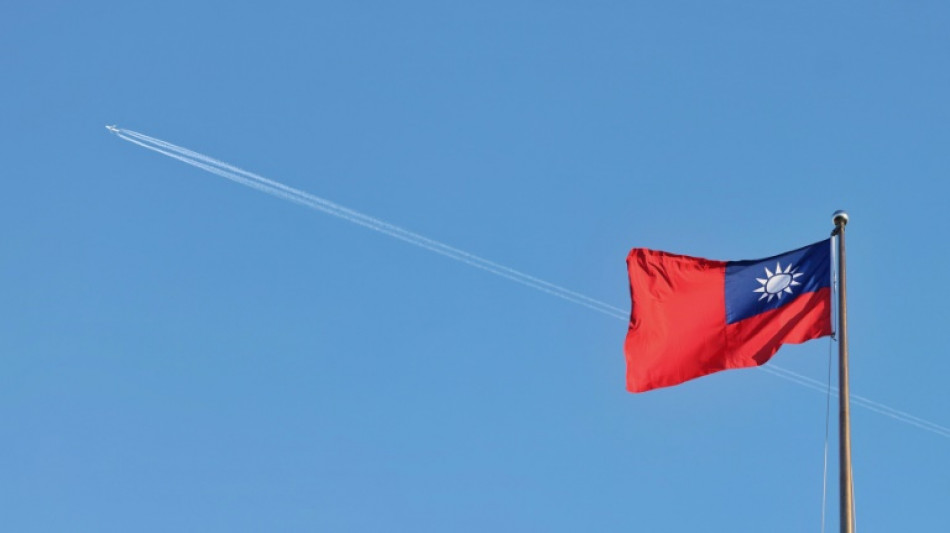
Taiwan worries about 'transactionalist' Trump as US votes / Photo: © AFP/File

 IR-MED and Dice Technologies Announce collaboration to Evaluate and Advance Pressure-Injury Prevention Platform in Japan
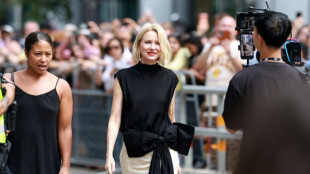 Watts, Pitt, Cruz to light up Spain's top film festival
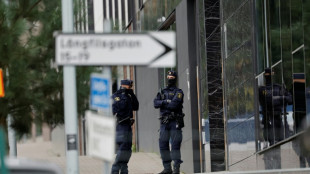 Sweden expels Iran embassy employee over anti-Jewish threats
 Toogood Gold's Table Mountain Sits in the Shadow of a Nevada Gold Rush

 MEXC July–August Security Report: 38.66M USDT in Risk Funds Intercepted, Futures Insurance Fund Hits 792M USDT

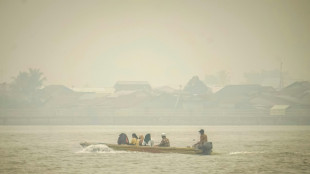 'Breathing toxin every day': Indonesians choked by haze feel helpless
 Stocks edge higher ahead of US Fed rate call

 Philippines ex-leader Duterte makes first in-person ICC appearance
 2027 Formula One calendar includes Monaco sprint race

 Palestinians are the real victims, Thunberg tells Ed Sheeran

 Hashim Thaci: From 'George Washington of Kosovo' to Hague convict
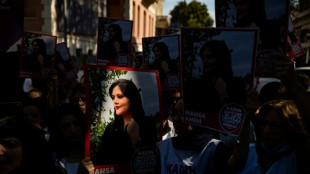 Amnesty says Iran committed 'crimes against humanity' in crackdown on 2022 protests

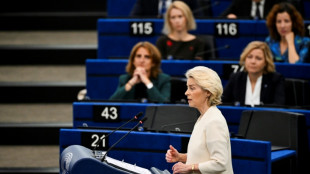 EU to ban social media for under 13s, curb access until 15

 Philippines ex-leader Duterte makes first appearance at ICC
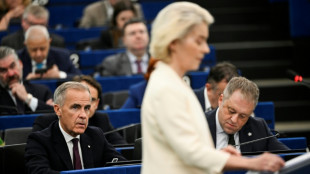 EU chief pitches 'associate member' status for Canada
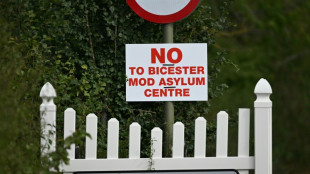 English village votes to 'secede' from UK over asylum centre plan

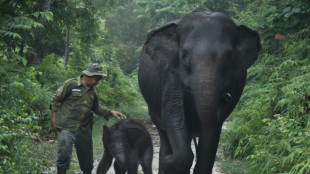 Wildfires push endangered Sumatran elephants to brink: Indonesian NGO

 Stocks head higher as traders prepare for Fed decision
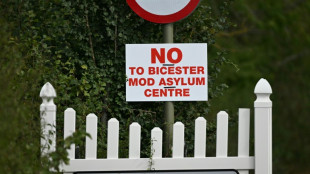 English village votes to 'secede' from UK over asylum centre
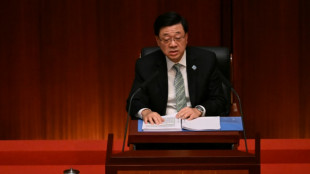 Hong Kong unveils plan to align economy with China's goals
 Brazilian voters the latest to eye Bukele security model with envy

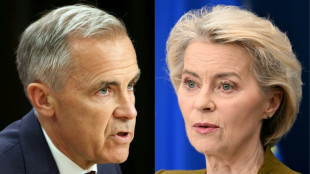 EU chief hosts Canada's Carney in push to 'deepen' alliance
 EU chief to unveil social media, gaming curbs for under-15s
 Saudi says Houthis target Mecca, warn of 'red line'

 Asian stocks stutter as traders prepare for Fed decision
While US arms sales to Taiwan will likely continue whoever wins the presidential election, analysts say there are concerns in Taipei over a re-elected Donald Trump's willingness to defend the island against China.
American voters will choose between Democratic Vice President Kamala Harris and Republican former president Trump on November 5, with polls showing the pair neck and neck.
China has in recent years ramped up military pressure on Taiwan, which it considers part of its own territory, and has refused to rule out using force to bring it under its control.
CIA director William Burns said last year that Chinese President Xi Jinping had ordered his military to be ready to carry out a successful invasion of the island by 2027, and Xi recently told troops to strengthen their preparedness for war.
"There will be more uncertainty under a Trump administration," said Fang-yu Chen, assistant professor of political science at Soochow University in Taipei.
Chen said Trump had suggested in interviews that the United States cannot commit to defend Taiwan because they want to "bargain with China", which he said was worrying.
Washington is Taipei's most important ally and biggest supplier of weapons, but has long maintained a so-called "strategic ambiguity" when it comes to deploying troops to defend Taiwan.
Democratic President Joe Biden has said on several occasions that he would intervene if necessary, which the White House has walked back each time, but neither Harris nor Trump have been clear-cut.
Harris said in a recent interview that Washington "should not seek conflict" with China and declined to say whether the United States would use military force to support Taiwan.
Trump has caused jitters by suggesting Taiwan pay the United States for its defence, as well as accusing the island of stealing the US chip industry.
John Bolton, who served as national security adviser to the former president before the two fell out, told the BBC recently that Taiwan was "potentially toast" if Trump were re-elected.
"Taiwan is no doubt anxious about the outcome of the US presidential campaign," said Wen-Ti Sung, a nonresident fellow at the Atlantic Council's Global China Hub, who is based in Taipei.
Sung said there were concerns that Harris might be "more inward looking than Biden", and worries about Trump's "transactionalist and mercantilist sentiments".
- 'Too much bad blood' -
After Washington switched diplomatic recognition from Taiwan to China in 1979, the US Congress enshrined into law a commitment to provide arms for the island's defence.
The United States has sold Taiwan billions of dollars worth of military equipment and ammunition, including F-16 fighter jets and warships, despite repeated protests from Beijing.
On Friday, the US State Department approved a $2 billion arms sales package for Taiwan that includes advanced surface-to air missile systems.
While US officials insist that conflict with China is "neither imminent nor inevitable", Washington's efforts to arm Taiwan and China's near-constant military presence around the island were fuelling a cycle of escalating tensions.
This month, China deployed fighter jets, warships and coast guard vessels to encircle Taiwan in a large-scale military exercise.
That was followed by a US and a Canadian warship transiting the Taiwan Strait, a Chinese aircraft carrier group sailing through the sensitive waterway, and Chinese and Taiwanese live-fire drills.
Each side perceived the other's actions as "threatening" and therefore in need of a "defensive response", said Rorry Daniels, managing director of the Asia Society Policy Institute.
"If you can deliver a credible reassurance that what you're doing is defensive in nature, then the risk goes down," she said, but there was "too much bad blood" for that to happen.
- Record defence spending -
Taiwan would be massively outgunned in terms of troop numbers and firepower in any war with China and in recent years has jacked up spending on its military.
Taipei allocated a record $19 billion for 2024 and next year's budget is set to hit a new high, as it seeks to bolster a more agile defence approach.
But the island has faced challenges in upgrading its defences, Taipei-based security analyst J. Michael Cole said.
A backlog of US arms sales to Taiwan now exceeds $20 billion, according to Washington think tank Cato Institute.
Cole said delivery delays for Taiwan were due to Covid-19 disruptions, and US weapons shipments to Ukraine and Israel.
And there has been resistance from some older generals in Taiwan to the move away from flashy purchases such as fighter jets and frigates to "more agile" and "survivable" equipment such as drones and missile launcher trucks.
"Turning these big conservative organisations around takes time," Cole told AFP.
"The problem for Taiwan is that we don't know how much time we have."
O.Schlaepfer--VB