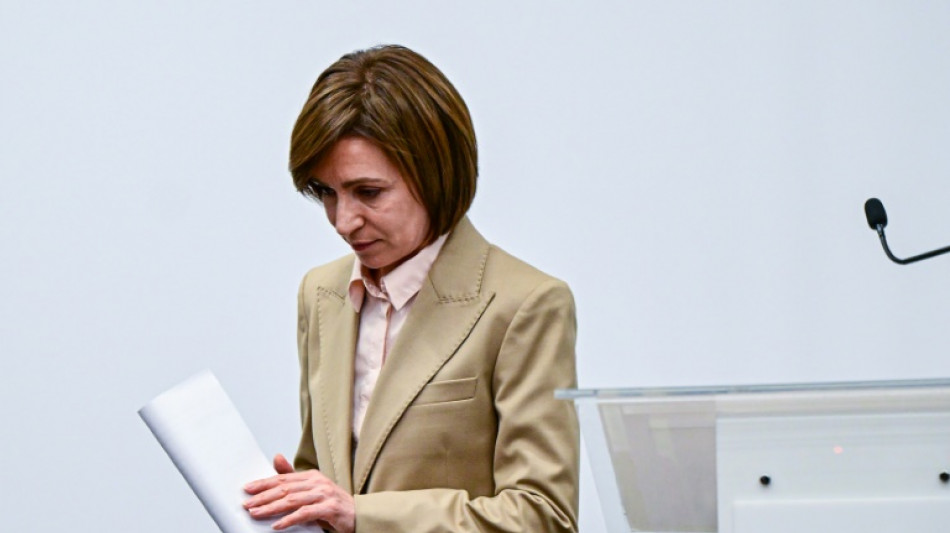
Moldova EU vote too close to call, president blames 'foreign interference' / Photo: © AFP

 Beyond Investment Returns: Families Are Measuring Wealth by Freedom, Continuity, and Legacy, According to Nour Private Wealth
 King Charles disputes claims in book by Princess Diana's brother
 Real Madrid fan group wants Mbappe apology over Ceuta shirt snub

 Nepal floods among 'most challenging' disasters: WFP
 Doubts as Italy eyes electric future for steel plant
 'One of the kindest people': Taraneh, 21, facing execution in Iran

 Japan eyes changing prostitution law to punish sex buyers

 After record rain, typhoon threatens new challenge to Asian Games

 Kids and social media: what would change under new EU law
 Modi pitches India as global chipmaking hub
 Ukraine plans record defence spending in 2027
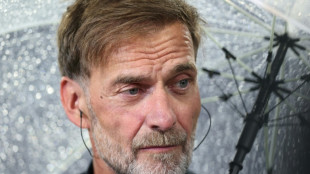 Klopp calls up 44 players in huge first Germany squad
 STARPRIME Responds to Diverging Gold Market Demand with AM/PM Fixing and XAU24/7

 Ukrainian fashion designer debuts art between air raids

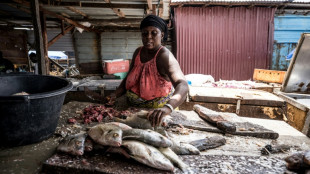 Gambian businesses struggle under prolonged blackouts
 Fiji declares national HIV crisis
 Australia to cut migration to fix housing crisis: minister
 NASA scan discovers new, 'once in a century' Moon crater
 Most stocks rise as Fed hikes and indicates drive to curb inflation
 US again denies Palestinian leader Abbas visa to attend UN assembly

 Lula says he will go to UN to tell Trump to 'stay out' of Brazil's elections

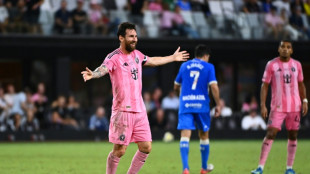 Messi heads Inter Miami to Campeones Cup triumph

 AI looms large ahead of Xi, Trump summit

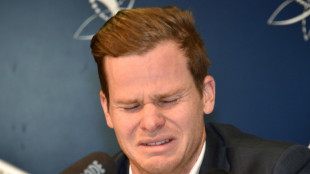 Smith still haunted by 'Sandpapergate' as he prepares for South Africa Tests
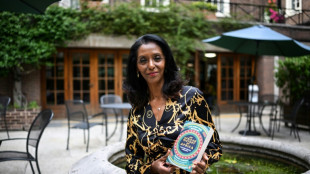 UK-Sudanese author pens book to give children 'African history of Africa'

A referendum on Moldova joining the EU was too close to call early Monday with almost all votes counted, as pro-EU President Maia Sandu blamed "criminal groups working together with foreign forces" -- a veiled reference to Russia -- for the outcome.
The close vote is a setback for Sandu, who managed to top the first round of presidential elections held at the same time on Sunday but will face a tough second round.
The referendum had been widely expected to pass in the country of 2.6 million people which neighbours war-torn Ukraine.
Sandu had applied for Moldova to join the European Union following Russia's invasion of Ukraine in 2022.
With more than 98 percent of the votes counted, the "yes" vote was slightly ahead at 50.08 percent, while the "no" camp -- which had been ahead -- stood at 49.92 percent early Monday.
A stern Sandu said late Sunday that Moldova had witnessed "an unprecedented assault on our country's freedom and democracy, both today and in recent months," blaming "criminal groups, working together with foreign forces hostile to our national interests".
In the presidential election, Sandu gained almost 42 percent of the votes, according to the results, and so will face her closest competitor, Alexandr Stoianoglo, in a second round on November 3.
The former prosecutor backed by the pro-Russian Socialists had picked up a higher-than-expected result of more than 26 percent in the race with 11 competitors in total.
- 'Weakens pro-European image' -
The referendum result -- even if it results in a slim victory for the pro-EU camp -- "weakens the pro-European image of the population and the leadership of Maia Sandu", Florent Parmentier, a political scientist at Paris-based Sciences Po, told AFP.
Describing the result as a "surprise", he said it would not impact the accession negotiations with Brussels, which began this June, though a clear "yes" would have been "a clear positive signal".
Parmentier added the results "did not bode well for the second round" for Sandu, noting many of those who supported the nine other candidates on Sunday were more likely to vote for Stoiagnolu in the second round.
Sandu, 52, a former World Bank economist and Moldova's first woman president, who beat a Moscow-backed incumbent in 2020, had been the clear favourite in the race, with surveys also predicting a "yes" victory in the referendum.
Sandu's critics say she has not done enough to fight inflation in one of Europe's poorest countries or to reform the judiciary.
The 57-year-old abstained from voting in the referendum.
In Chisinau, voter Ghenadie, who declined to give his last name, said he was worried by what he saw as the country's "Western" drift and thought the government was "making the situation worse" economically.
Another voter, Olga Cernega, a 60-year-old economist, said she had come to vote "for prosperity, peace and wellbeing in our country".
- 'Unprecedented' vote-buying scheme -
Fears of Russian interference have been looming large.
Washington issued a fresh warning recently about suspected Russian interference, while the EU passed new sanctions on several Moldovans.
Moscow has "categorically" rejected accusations of meddling.
Police made hundreds of arrests in recent weeks after discovering an "unprecedented" vote-buying scheme that they say could taint up to a quarter of the ballots cast in the country of 2.6 million.
Police said millions of dollars from Russia aiming to corrupt voters were funnelled into the country by people affiliated to Ilan Shor, a fugitive businessman and former politician.
Convicted in absentia last year for fraud, Shor regularly brands Moldova a "police state" and the West's "obedient puppet".
"You have crushingly failed," Shor posted on social networks after the vote.
In addition to the suspected vote buying, hundreds of young people were found to have been trained in Russia and the Balkans to create "mass disorder" in Moldova, such as using tactics to provoke law enforcement, according to police.
T.Suter--VB