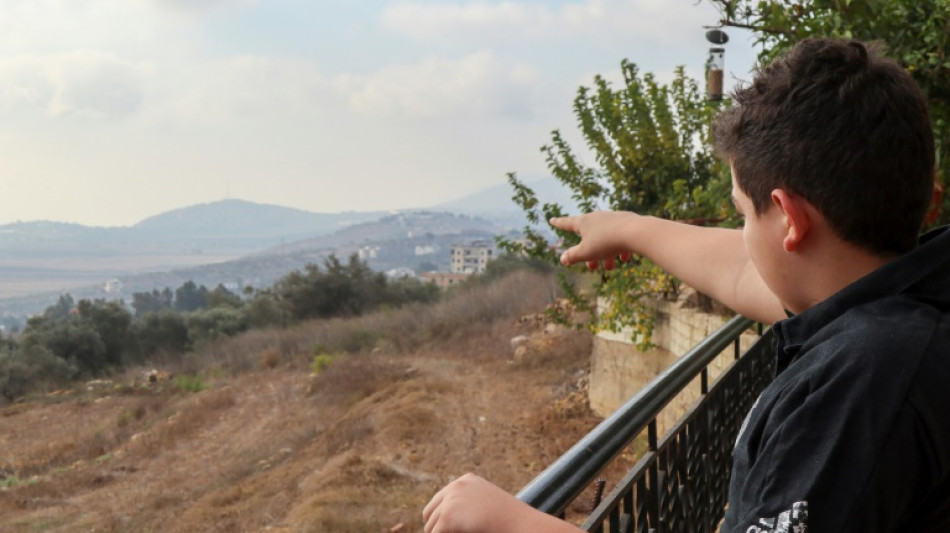
Christian villagers 'trapped' in south Lebanon crossfire / Photo: © AFP

 Alexander-Arnold and Palmer return to England squad for Nations League

 Russians vote as Ukraine war drags on for fifth year

 Backpackers fret over Australian visa crackdown
 Most Asian stocks track Wall St rally, yen drops after BoJ rate hike
 Russians begin voting in controlled election as war drags on

 Trump 'clearly' wants dialogue with Pyongyang: South Korean President

 Bank of Japan hikes rates to 31-year high to battle inflation
 Thailand's Muslim separatists vow to fight to the end

 Mideast turmoil, AI set to dominate UN gathering of world leaders

 Australia to detain tourists who overstay visa, minister says

 Championship rivals brace for renewal of bitter feuds
 In Brazil's Amazon, the hunt for oil fuels hopes and fears
 Australian athlete who soiled herself apologises for continuing Hyrox race

 Baby orangutans in India expose 'frightening' scale of trafficking

 Doom Loop? Ed Sheeran struggles against Gaza tide
 Sudanese women hold fast to threatened henna body art
 Man Utd misery puts Carrick under pressure, Spurs feeling the heat
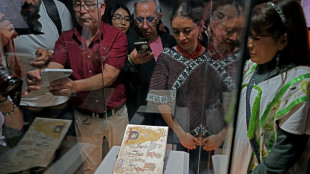 Prized Mexican relic returns on loan, two centuries on

 Venezuela unblocks some censored news sites
 Samba stars on debut in Man City rout of Norwich
 Oversight Board blasts 'inadequate' Meta safeguards for AI deepfakes

 The Easter Island origins of buzzy Malkovich drama 'Wild Horse Nine'

 Third body recovered after Grand Canyon flash flood

 Harry makes first public appearance since return to UK

 Abhishek hits record T20 ton as India sweep series 3-0
Lebanese Christian Joseph Jarjour was hoping for a peaceful retirement at home in south Lebanon, but has instead found himself caught in the crossfire of the Israel-Hezbollah war.
"We're trapped," said the 68-year-old retired teacher in the southern village of Rmeish, around two kilometres (one mile) from the Israeli border.
After almost a year of cross-border fire, Israel began conducting a wave of strikes targeting Hezbollah strongholds and sent ground troops across the border late last month.
Jarjour's hometown is among a handful of Christian villages in south Lebanon that have largely been spared the worst of the violence but remain caught between the two sides.
"When Israel bombards, it flies over our heads. And when Hezbollah fires back, it also whizzes by above," Jarjour told AFP by phone during a rare moment of internet connectivity.
"We're peaceful, we don't have any weapons. We've never liked war," he said.
"We want to stay in our homes and we don't want to choose sides."
The violence since September 23 has killed more than 1,200 people in Lebanon and forced a million more from their homes, according to an AFP tally of Lebanese health ministry figures.
Jarjour said roads out of Rmeish were unsafe so it was "very hard" to escape and drive northwards to the capital, Beirut.
- 'Hostages' -
Milad al-Alam, mayor of the village of red-tiled houses surrounded by green hills known for growing tobacco, said most of its 6,000 inhabitants had stayed put.
But today the walls of some the houses there are cracked from the nearby explosions, and fresh vegetables are no longer delivered from outside.
Ramping up the pressure on the village, hundreds of people, mostly Christians, fleeing nearby areas have sought refuge there.
"Life has stopped since October 2023," said Alam, saying most commercial activity had come to a halt since Hezbollah started launching rockets across the border into Israel.
Hezbollah and Israel have been foes for decades, exchanging fire since the Iran-backed group opened a front last year in support of its Palestinian ally Hamas after the October 7 attack on Israel.
"Anyone who had savings has spent them over the past few months," Alam said.
During the 33-day war between Israel and Hezbollah in 2006, most Rmeish villagers had also stayed put.
Alam said he had been able to organise a delivery of humanitarian aid to the village last week with the protection of the Lebanese army and UN peacekeepers.
"But we cannot replace the state," he said, in a country paralysed by political deadlock on top of its worst financial crisis in history since 2019.
Christian-majority villages have largely been spared in recent Israeli bombardments, unlike neighbouring Shiite-majority areas that have been ravaged and emptied of their inhabitants.
In January, Maronite Patriarch Beshara al-Rai, the spiritual leader of Lebanon's largest Christian sect, said villagers along the frontier had become "hostages" that were "bearing the brunt" of the conflict.
Lebanon is home to 18 officially recognised religious denominations, and around 30 percent of the population is Christian.
- 'Bound to our land' -
The Israeli military last week told south Lebanon residents to flee their homes after it said it would be carrying out "limited" incursions across the border.
But in the village of Qlayaa, some four kilometres from the frontier, hundreds of families have also remained in their homes despite shortages of fuel and medicine, and the closest hospital being forced to close.
Priest Pierre al-Rai said they had stayed in the village because they were "believers bound to our land".
"We've done our best so there are no military operations... no military installations here," he added.
Israel occupied the village from 1982 to 2000, a period during which some Lebanese Christians sided with their southern neighbour, while others were staunchly opposed.
In the morning in Qlayaa, home to a statue of Saint George, few people leave their homes as the sound of bombardment rings out overhead.
Pauline Matta, a mother of four children aged four to 18, said she cried when she saw the Israeli warning to evacuate.
The 40-year-old said she is constantly terrified.
"I can no longer stand the sound of shelling or Israeli planes breaking the sound barrier. I scream when I hear them," she told AFP.
But she can't imagine leaving either, or being able to survive away from home on her husband's modest army salary.
"They imposed this war on us. We have nothing to do with it. Why would we leave?" she said.
"I am determined to stay put."
R.Buehler--VB