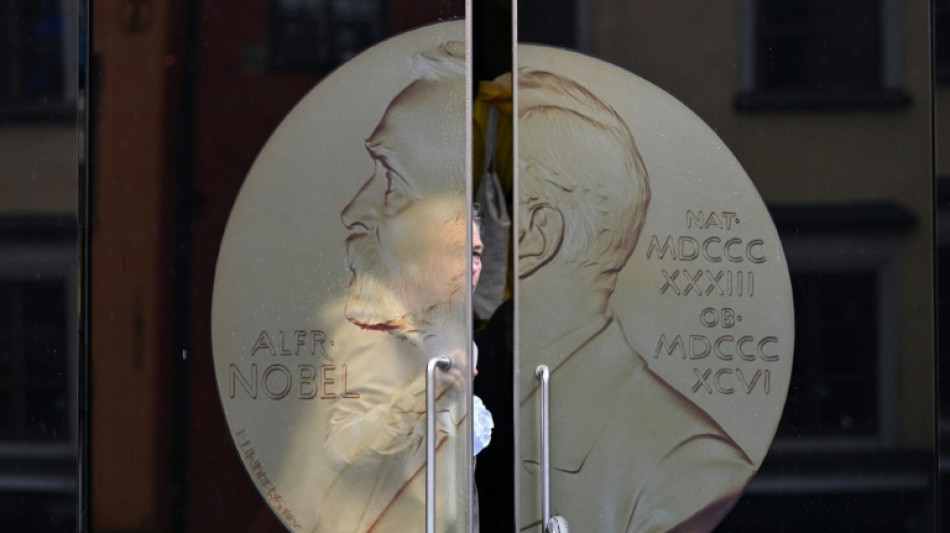
Japanese atomic bomb survivor group Nihon Hidankyo wins Nobel Peace Prize / Photo: © AFP

 Alexander-Arnold and Palmer return to England squad for Nations League

 Russians vote as Ukraine war drags on for fifth year
 Backpackers fret over Australian visa crackdown
 Most Asian stocks track Wall St rally, yen drops after BoJ rate hike
 Russians begin voting in controlled election as war drags on
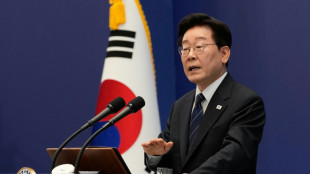 Trump 'clearly' wants dialogue with Pyongyang: South Korean President

 Bank of Japan hikes rates to 31-year high to battle inflation
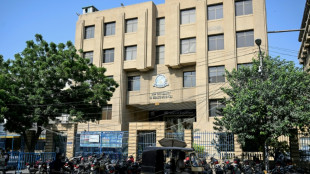
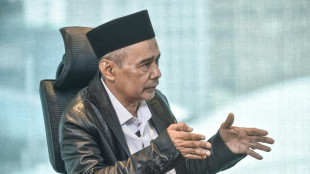 Thailand's Muslim separatists vow to fight to the end
 Mideast turmoil, AI set to dominate UN gathering of world leaders
 Australia to detain tourists who overstay visa, minister says

 Championship rivals brace for renewal of bitter feuds
 In Brazil's Amazon, the hunt for oil fuels hopes and fears
 Australian athlete who soiled herself apologises for continuing Hyrox race
 Baby orangutans in India expose 'frightening' scale of trafficking
 Doom Loop? Ed Sheeran struggles against Gaza tide
 Sudanese women hold fast to threatened henna body art
 Man Utd misery puts Carrick under pressure, Spurs feeling the heat
 Prized Mexican relic returns on loan, two centuries on

 Venezuela unblocks some censored news sites
 Samba stars on debut in Man City rout of Norwich
 Oversight Board blasts 'inadequate' Meta safeguards for AI deepfakes
 The Easter Island origins of buzzy Malkovich drama 'Wild Horse Nine'

 Third body recovered after Grand Canyon flash flood
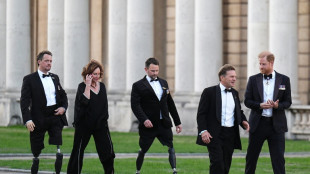 Harry makes first public appearance since return to UK
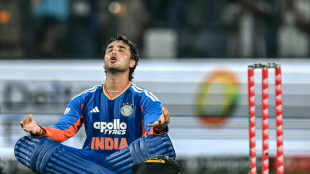 Abhishek hits record T20 ton as India sweep series 3-0
The Nobel Peace Prize was on Friday awarded to the Japanese anti-nuclear group Nihon Hidankyo, a grassroots movement of atomic bomb survivors from Hiroshima and Nagasaki, also known as Hibakusha.
The group, founded in 1956, received the honour "for its efforts to achieve a world free of nuclear weapons and for demonstrating through witness testimony that nuclear weapons must never be used again," said Jorgen Watne Frydnes, the chair of the Norwegian Nobel Committee in Oslo.
The co-head of the group expressed surprise at winning the award.
"Never did I dream this could happen," Toshiyuki Mimaki told reporters in Tokyo with tears in his eyes.
The Nobel committee expressed alarm that the international "nuclear taboo" that developed in response to the atomic bomb attacks of August 1945 was "under pressure".
The war in Ukraine has recently heightened concerns about the risk of nuclear war, in particular with Russia's announcement that it plans to review its doctrine on the use of the atomic weapons.
"This year's prize is a prize that focuses on the necessity of upholding this nuclear taboo. And we all have a responsibility, particularly the nuclear powers," Frydnes told reporters.
Japan's Prime Minister Shigeru Ishiba said the award for Nihon Hidankyo was "extremely meaningful".
- 'Greater destructive power -
The committee noted that next year will mark 80 years since two American atomic bombs killed an estimated 120,000 inhabitants of Hiroshima and Nagasaki, and a comparable number later died of burn and radiation injuries.
"Today's nuclear weapons have far greater destructive power. They can kill millions and would impact the climate catastrophically," Frydnes said.
The committee noted that nuclear powers are modernising and upgrading their arsenals.
"New countries appear to be preparing to acquire nuclear weapons and threats are being made to use nuclear weapons in ongoing warfare," Frydnes said.
"A nuclear war could destroy our civilisation," he warned.
With wars raging around the world, Nobel-watchers had struggled to predict this year's laureate, with full-scale conflicts in Ukraine and the Middle East, famine in Sudan, and a collapsing climate painting a grim picture of world affairs.
According to the Uppsala Conflict Data Program, there were 59 armed conflicts in the world in 2023, which is almost double the number in 2009.
At the Tokyo news conference, Mimaki said the situation for children in Gaza is similar to that of Japanese children at the end of World War II.
"In Gaza, children in blood are being held. It's like in Japan 80 years ago," he said.
Prior to Friday's announcement, the secretary of the Norwegian Nobel Committee, Olav Njolstad, acknowledged in an interview with AFP that "it's hard to be an optimist when you look around in the world today."
But given that context, rewarding peace efforts was "perhaps more important than ever", he said.
Last year, the prestigious prize went to imprisoned women's rights campaigner Narges Mohammadi for her fight against the oppression of women in Iran.
This year, a total of 286 candidates -- 197 individuals and 89 organisations -- are known to have been nominated, though the Nobel Committee keeps the candidates' names secret for 50 years.
- A men's year, again -
The Peace Prize is the only Nobel awarded in Oslo, with the other disciplines announced in Stockholm.
This year's Nobel season has been a predominantly male, Anglo-Saxon affair, with seven North Americans or Britons honoured, including with two prizes celebrating artificial intelligence (AI).
On Monday, the medicine prize went to US duo Victor Ambros and Gary Ruvkun for their discovery of microRNA, a previously unknown type of genetic switch that could pave the way for new medical breakthroughs.
Tuesday's physics prize honoured Canadian-Briton Geoffrey Hinton and American physicist John Hopfield for pioneering work on the foundations of AI.
The chemistry prize on Wednesday was awarded to David Baker and John Jumper of the US, and Demis Hassabis of Britain, for work revealing the secrets of proteins through computing and AI.
On Thursday, the Nobel Prize in Literature went to the only woman honoured so far this year, South Korean author Han Kang, for her work exploring the correspondence between mental and physical torment as well as historical events.
The Nobel season winds up Monday with the economics prize.
The Nobel Prizes consist of a diploma, a gold medal and a $1 million prize sum. They will be presented at ceremonies in Stockholm and Oslo on December 10, the anniversary of the 1896 death of scientist and prize creator Alfred Nobel.
H.Gerber--VB