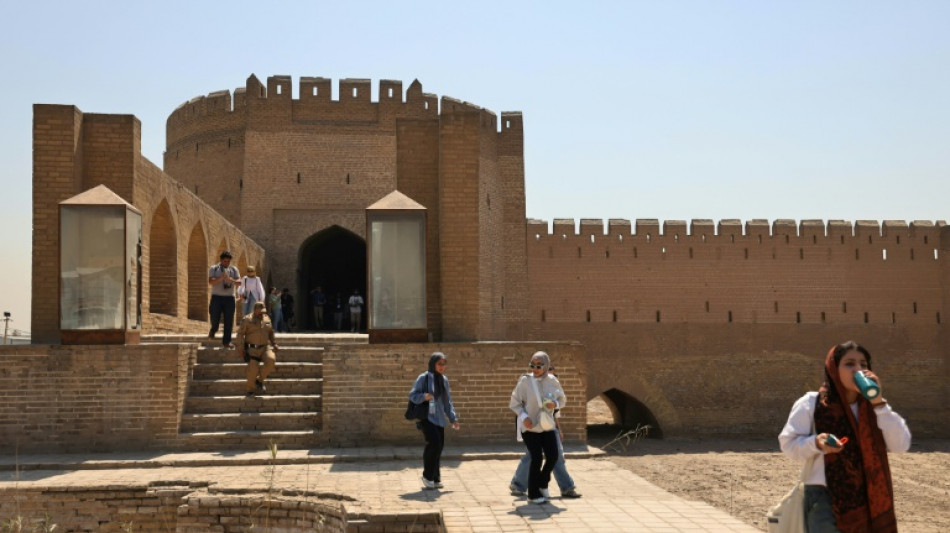
'Soul of old Baghdad': city centre sees timid revival / Photo: © AFP

 Russia seizes assets of Nestle, French firms over West's Ukraine support
 England can build on World Cup 'spirit', says Tuchel

 UNESCO can be 'moderator' in AI debate: chief to AFP

 Infantino 'must go', says German FA vice-president

 Russia seizes assets of Nestle, French firms

 Japan's busiest rail station tests robot bins
 Anthropic says AI systems moving towards building themselves
 Asian stocks boosted by falling oil, yen weakens after BoJ rate hike
 Pakistan court blocks expulsion of Afghan medical college students
 Athletes 'can't take it any more' as Asian Games issues mount

 Allen lights up Bills' new stadium with 41-31 win over Lions

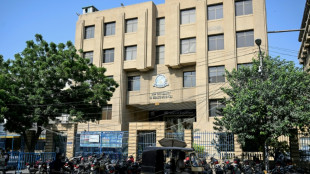 Afghan medical students in Pakistan hope court stops college expulsions
 AI doomsday warnings unlikely to slow IPOs but questions linger
 ICC eyes China in bid to expand cricket
 Nkunku craving freedom and fun on RB Leipzig return

 Bhutan's traditional archers lose ground to development
 Asian stocks track Wall St rally as oil prices drop

 South Korea makes Asian Games complaint over Japan warlord ceremony

 US aid cuts are killing Kenyan sex workers

 October 7 survivors, families take centre stage in Israel vote
 Captain Mat Ryan axed from Socceroos squad for Brazil games

 US approves sale of 48 F-35 jets to Saudi Arabia
 Juventus, Palace cruise to Europa League wins, Bournemouth beat Sociedad
 Stocks climb as oil retreats, Fed calms inflation fears

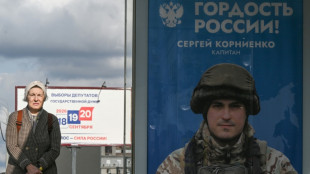
 Russians begin voting in controlled election as war drags

An Iraqi professor leading a group of students on a walking tour of Baghdad's historic centre invites them to stop and admire a centuries-old stone wall erected to shield the city from Mongol invaders.
Such a tour would have been unthinkable in the Iraqi capital through much of recent decades due to the country's successive wars, which saw Baghdad pounded from the air, targeted by suicide bombers and hit with car bomb attacks.
"Several caliphs worked on it," tour leader and professor Muaffaq al-Tai, 83, told the group as they passed under an impressive brick dome, smart phones and cameras in hand.
Braving an autumn heatwave, one of the tour organisers, Abdullah Imad, relished being able to help offer a deeper understanding of his hometown's history.
"Before, there were security events... interest was limited, almost non-existent," said architecture student Imad, 23.
"Now interest is growing... Stability has gradually returned to Baghdad," he told AFP.
"We want to show the public what Baghdad has to offer in terms of Islamic architecture, its value and identity."
Baghdad, founded in 762 AD by Abbasid caliph Abu Jaafar al-Mansur along the Tigris River, has long been a key hub in Arab and Islamic society.
In the 20th century, it thrived as a modern Arab city with top universities, a vibrant cultural scene and excellent healthcare.
However, decades of war and oppression from the late 1970s, including sectarian violence after the 2003 US-led invasion and the rise of the Islamic State group in 2014, led to significant decline.
- 'Sites worth visiting' -
A fragile stability has emerged since the defeat of IS in 2017 that has allowed a greater focus on Baghdad's infrastructure and cultural scene.
Around 30 students and amateur photographers strolled through downtown, passing an 800-year-old Abbasid palace with an inner courtyard adorned with brick facades, arches and arabesque reliefs.
They also visited Bab al-Wastani, or the Central Gate, built around the 12th century, featuring battlements and flanked by thick walls.
Fatima al-Moqdad, a 28-year-old architect, said the renewed interest in Iraq's heritage is "a source of hope for a positive change in our identity, and our heritage and its preservation".
"When young people surf the internet, they see how other nations look after their heritage. They want and deserve the same," she added.
"To be a tourist, you don't necessarily have to go abroad."
In Baghdad, home to nine million people, tuk-tuks, motorcycles and yellow cabs compete for space with porters pushing carts piled high with goods.
They push their way through the fish stalls, sunglasses vendors and counterfeit sneaker stands that have taken over the pavements of the historic centre.
On the eastern bank of the Tigris, brutalist buildings from the 1960s stand alongside elaborate facades from the 1920s, decorated with flowery mouldings and sagging wrought-iron balconies.
Around 2,400 buildings are registered in the historic centre, but around 15 percent have been destroyed or altered, according to the municipality.
Many of the properties once belonged to Jewish families or other Iraqis driven out during one of the country's many upheavals.
The waves of emigration also resulted in a brain drain, depriving Iraq of expertise particularly in architectural restoration.
- Restoration drive -
The municipality, in partnership with an association of private banks, has taken on two major restoration projects, including Al-Mutanabi Street, famous for its many bookshops.
They are also restoring another street that houses the old Serail, or Ottoman Empire's seat of government.
The restoration has primarily involved repaving sidewalks, updating lighting and cleaning up facades.
Mohammed al-Soufi, an architect overseeing the restoration, noted the "aesthetic value of the brick buildings", dating from the 19th century and the 1920s and 1930s.
Among the many challenges in restoring the area is the difficulty in obtaining permission from the original owners, many of whom no longer live in Iraq, as well as a lack of funding.
The Baghdad municipality's next focus will be Al-Rashid Street, inaugurated in 1916.
"It's the soul of old Baghdad, its identity," said the municipality's head of communications Mohammed al-Rubaye.
But the once-vital artery now houses mostly warehouses, industrial machinery and motor oil stores. Authorities plan to move these activities to the outskirts.
"We're not telling people to leave. We're telling them to stay, but let's turn the wholesale warehouses into stores, cafes, cinemas and cultural and heritage sites," Rubaye said.
O.Schlaepfer--VB