
-
 Russia seizes assets of Nestle, French firms over West's Ukraine support
-
Stock markets diverge after central bank rate hikes
-
 England can build on World Cup 'spirit', says Tuchel
-
Anti-Assad music star makes triumphant return to Syria

-
 UNESCO can be 'moderator' in AI debate: chief to AFP
-
In-form Fernandez included in Spain Nations League squad

-
 Infantino 'must go', says German FA vice-president
-
Arteta buries hatchet with Hurzeler ahead of Brighton clash

-
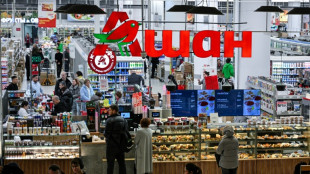 Russia seizes assets of Nestle, French firms
-
Alexander-Arnold and Palmer return to England squad for Nations League

-
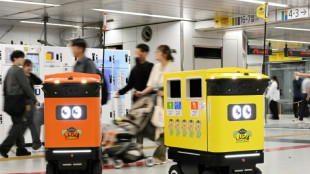 Japan's busiest rail station tests robot bins
-
Russians vote as Ukraine war drags on for fifth year
-
 Anthropic says AI systems moving towards building themselves
-
Backpackers fret over Australian visa crackdown

-
 Asian stocks boosted by falling oil, yen weakens after BoJ rate hike
-
Most Asian stocks track Wall St rally, yen drops after BoJ rate hike
-
 Pakistan court blocks expulsion of Afghan medical college students
-
Russians begin voting in controlled election as war drags on

-
 Athletes 'can't take it any more' as Asian Games issues mount
-
Trump 'clearly' wants dialogue with Pyongyang: South Korean President
-
 Allen lights up Bills' new stadium with 41-31 win over Lions
-
Bank of Japan hikes rates to 31-year high to battle inflation

-
 Afghan medical students in Pakistan hope court stops college expulsions
-
Thailand's Muslim separatists vow to fight to the end
-
 AI doomsday warnings unlikely to slow IPOs but questions linger
-
Mideast turmoil, AI set to dominate UN gathering of world leaders
-
 ICC eyes China in bid to expand cricket
-
Australia to detain tourists who overstay visa, minister says

-
 Nkunku craving freedom and fun on RB Leipzig return
-
Championship rivals brace for renewal of bitter feuds

-
 Bhutan's traditional archers lose ground to development
-
In Brazil's Amazon, the hunt for oil fuels hopes and fears

-
 Asian stocks track Wall St rally as oil prices drop
-
Australian athlete who soiled herself apologises for continuing Hyrox race

-
 South Korea makes Asian Games complaint over Japan warlord ceremony
-
Baby orangutans in India expose 'frightening' scale of trafficking

-
 US aid cuts are killing Kenyan sex workers
-
Doom Loop? Ed Sheeran struggles against Gaza tide

-
 October 7 survivors, families take centre stage in Israel vote
-
Sudanese women hold fast to threatened henna body art

-
 Captain Mat Ryan axed from Socceroos squad for Brazil games
-
Man Utd misery puts Carrick under pressure, Spurs feeling the heat

-
 US approves sale of 48 F-35 jets to Saudi Arabia
-
Prized Mexican relic returns on loan, two centuries on

-
 Juventus, Palace cruise to Europa League wins, Bournemouth beat Sociedad
-
Venezuela unblocks some censored news sites

-
 Stocks climb as oil retreats, Fed calms inflation fears
-
Samba stars on debut in Man City rout of Norwich

-
 Russians begin voting in controlled election as war drags
-
Oversight Board blasts 'inadequate' Meta safeguards for AI deepfakes

'Mood change' on migration puts deportation hubs on EU table
EU countries on Thursday discussed "innovative" ways to increase deportations of irregular migrants and rejected asylum-seekers, including controversial plans to set up dedicated return centres outside the bloc.
Far-right gains in several European countries helped put migration issues on top of the agenda as home affairs ministers from the bloc's 27 states met in Luxembourg ahead of a gathering of EU leaders later this month.
"The mood in the room has changed... that is crystal clear," Dutch migration minister Marjolein Faber, of the nationalist populist Party for Freedom (PVV), told reporters after the talks.
Faber said the Netherlands supported creating "hubs" at the bloc's external borders where those with no right to stay in Europe could be sent while their deportation is arranged -- an idea Brussels said was on the table as ministers met.
The talks come only a few months after the European Union adopted a sweeping reform of its asylum policies.
The long-negotiated package, which will come into force in June 2026, hardens border procedures and requires countries to take in asylum seekers from "frontline" states or provide money and resources.
But more than half of the EU's member countries have said it does not go far enough.
In May, 15 capitals urged the European Commission to "think outside the box", calling for the creation of return centres outside the EU.
"We must not rule out any solution a priori", France's new Interior Minister Bruno Retailleau said as he arrived for the meeting on Thursday. "All innovative solutions must be used".
But Spain said it was against creating centres in third countries and the EU's outgoing home affairs commissioner, Ylva Johansson, poured cold water on the idea, telling a press conference after the meeting that there was "no formal proposal" from the commission or "anybody else" on the matter.
Johansson also dampened hopes from the Netherlands and Hungary, which have said they want an opt-out from EU asylum rules, saying this was "not possible according to the treaty".
- 'Hotspots' -
There are no detailed plans for how return hubs could work in practice.
A diplomatic source said one potential option entailed asking EU membership candidates -- over which the bloc holds some leverage to ensure acceptable standards -- to host such centres.
But legal and fundamental rights assessments were needed to verify the feasibility of any such project, cautioned another diplomatic source.
Last year, less than 20 percent of the almost 500,000 people ordered to leave the bloc were effectively returned to their country of origin, according to Eurostat, the EU statistical office.
Repatriations are notoriously difficult -- they are costly and require the cooperation of the countries that migrants need returning to.
Some point at a deal Italy has struck with Albania to hold and process migrants there as an example of what is possible.
But other EU agreements with Tunisia, Libya and others providing aid and investments in return for help with curbing arrivals have proved hugely contentious and faced legal challenges for exposing migrants to mistreatment.
Speaking to reporters at the talks, Germany's interior minister Nancy Faeser said finding a "partner state" was "the most difficult point to resolve in practice".
Besides return hubs, some nations have suggested legal changes to allow for the sanctioning of rejected asylum applicants who are ordered to leave but fail to do so -- something experts say could pave the way for detentions.
A growing number of governments are eager to show they are trying to "get rejected migrants off the streets one way or another", Jacob Kirkegaard, an analyst at Brussels-based think tank Bruegel, told AFP.
Belgium's secretary of state for asylum and migration Nicole de Moor described the return system as "the weakest link" in the chain, adding it needed to be revised.
- 'Political show' -
Often riding anti-immigrant sentiment, hard-right parties performed strongly in June European elections, and have come out top in recent national and regional votes in the Netherlands, Austria and Germany.
France's government tilted to the right after a snap vote this summer, and Retailleau is known for his hardline stance on migration.
Irregular border crossings fell by 39 percent to almost 140,000 in the first eight months of 2024, compared to the same period last year, according to Frontex.
EU countries plus Norway and Switzerland received 85,000 asylum applications in May, down by a third compared to a peak reached last autumn, according to the European Union Agency for Asylum.
F.Mueller--VB