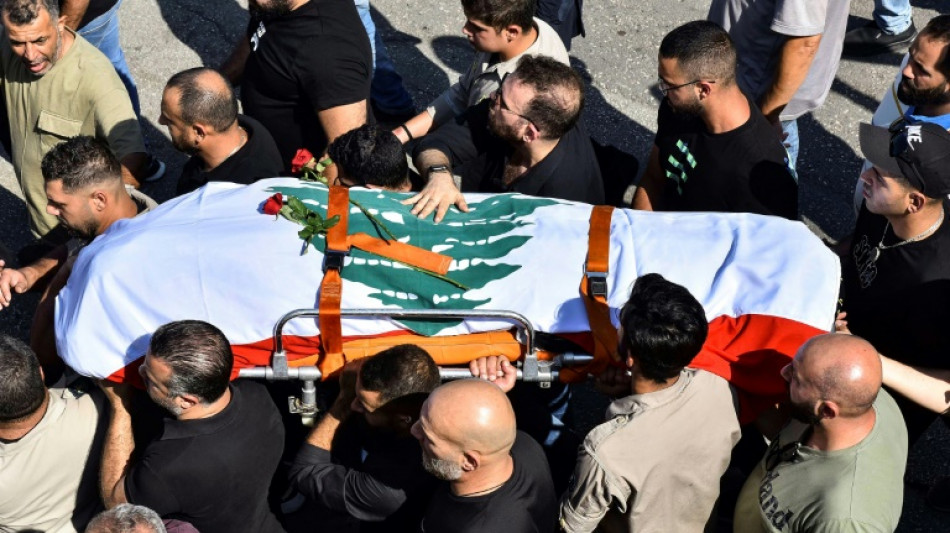
No answers on strike on reporters in Lebanon one year on: watchdog / Photo: © AFP/File

 Energy bill plan could use HMRC income data to target support

 Business owner earning £6,000 a month tackles £70,000 debt
 Nvidia chief faces inquiry after disclosing affair with suspected Chinese agent

 Comet returns as online electrical marketplace 14 years after collapse
 Aston Villa Defy History With Rare Victory at Old Trafford

 Qatar Airways Launches Bogotá-Caracas-Doha Route Linking Energy Markets

 Marc Almond to Close Soft Cell Era After Final 'Danceteria' Tour
The Committee to Protect Journalists accused Israel of a lack of accountability Thursday over the killing of a Reuters journalist and the wounding of six other reporters including two AFP staff a year after the incident.
The CPJ said the absence of serious investigations into what independent probes conclude was the firing by Israel of tank shells at a group of seven journalists in southern Lebanon gave Israel's forces license to do it again.
"A year later, Israel still has not confirmed if it has even completed a preliminary investigation into the attack," the CPJ said in a report to mark the anniversary of the deadly incident.
"The North America Media Desk of the Israel Defense Forces told CPJ in an email that the military used tank and artillery fire on October 13 to prevent a suspected 'terrorist infiltration,' and the incident was 'under review'."
The attack killed Reuters journalist Issam Abdallah and wounded six other journalists including AFP photographer Christina Assi and video journalist Dylan Collins. Christina had a leg amputated and spent five months in intensive care in hospital.
Independent investigations by rights groups concluded, like an AFP investigation, that the first strike that killed Abdallah and severely wounded Assi was most likely a tank round fired from Israel.
Two strikes hit the group of journalists in quick succession as they were working near the border village of Alma al-Shaab in an area that sees the Israeli army and armed Lebanese and Palestinian groups engage in near-daily clashes.
CPJ chief executive Jodie Ginsberg said that "in spite of extensive evidence of a war crime, a year on from the attack, Israel has faced zero accountability for the targeting of journalists."
"With over two decades of targeted attacks on journalists without any consequences, the Israeli military has been granted license to continue this deadly pattern," she added.
The Israeli military did not respond to a new AFP request for comment.
An Israeli military spokesman said after the strike: "We are very sorry for the journalist's death", adding that Israel was "looking into" the incident, without taking responsibility.
The CPJ documents over 970 journalists worldwide murdered for doing their job since 1992.
M.Vogt--VB

