Fleeing Israeli bombs, Lebanon's displaced met with suspicion / Photo: © AFP

 Hushing and hedging: US companies retreat on climate

 Springboks to face Fiji before 2027 Rugby World Cup
 Nigeria miners struggled to breathe in cell before 37 died: survivors

 McIlroy on the charge at PGA Championship as Reed withdraws

 McIlroy on the charge at PGA Championship

 Crisis-wracked Volkswagen warns of 10-bn-euro hit to profits

 Costa Rica's Grynspan tops third informal poll for UN chief: diplomat

 Stock markets retreat after central bank rate hikes

 Russia labels director of Cannes Grand Prix winner a 'foreign agent'

 Macron warns of Russian 'hybrid' threat after meeting presidential hopefuls

 UN holds third informal poll for new chief

 Kulusevski return can spark Spurs: De Zerbi

 Shakira to cap off world tour with Madrid 12-gig run

 Isolated Syrian-Druze city blames Damascus for shortages

 Isolated Syrian-Druze city shortages
 Dutch drop Depay for Germany match in Xavi's first pick

 Ronaldo named in Portugal squad for Nations League

 Stock markets diverge after central bank rate hikes

 Anti-Assad music star makes triumphant return to Syria

 In-form Fernandez included in Spain Nations League squad

 Arteta buries hatchet with Hurzeler ahead of Brighton clash

 Alexander-Arnold and Palmer return to England squad for Nations League

 Russians vote as Ukraine war drags on for fifth year

 Backpackers fret over Australian visa crackdown
 Most Asian stocks track Wall St rally, yen drops after BoJ rate hike
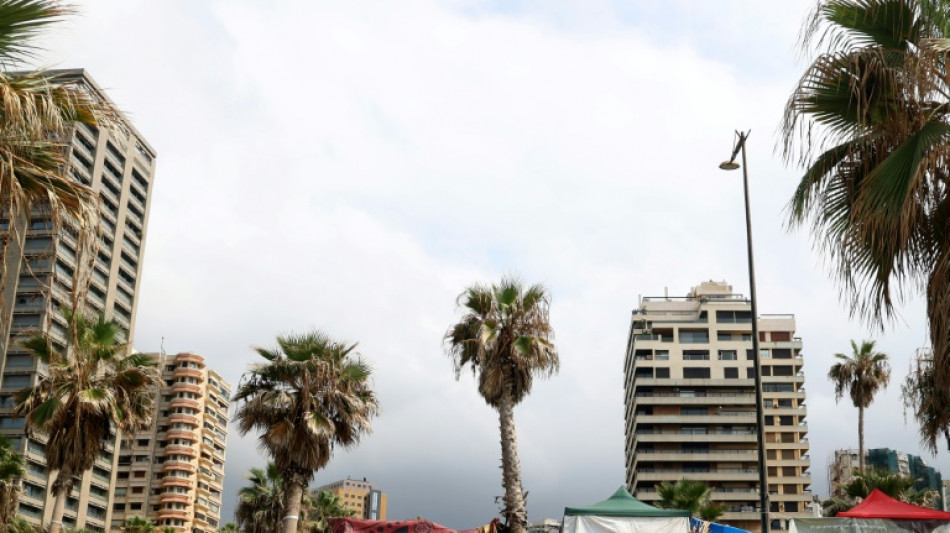
Israel's bombardment of Hezbollah's south Beirut stronghold has forced tens of thousands to flee to the capital, but many in divided Lebanon view the newcomers with suspicion, worried they might also become targets.
For weeks, Israeli strikes have widened in pursuit of Hezbollah members, causing civilians from the Iran-backed group to be shunned, as people fear they could draw further attacks.
"Our neighbours found out we were housing people from Dahiyeh (Beirut's southern suburb) and they panicked and started asking questions," said 30-year-old Christina, asking to be identified by only one name.
She took in displaced people but soon asked them to leave after neighbours, concerned the newcomers might be Hezbollah fighters, bombarded her with messages.
Hezbollah, the only side to retain its arsenal after the 1975-90 civil war, has strong support within Lebanon's Shiite Muslim community.
But Lebanon remains split over the group's decision to open a front against Israel in solidarity with Gaza and drag the country into war.
Lebanon's power-sharing system divides authority among 18 religious sects, with Shiites, Sunnis and Christians maintaining a fragile balance.
Many are still haunted by the civil war, which saw families displaced and homes seized.
"There are growing tensions and suspicions towards displaced people because they are from the same religious group as Hezbollah," Christina said.
"Some people are scared that one of their family members might be a target and they don't want to risk" it, she told AFP.
- 'Bearded men' -
After nearly a year of cross-border clashes, Israel intensified its bombing campaign on September 23, killing more than 1,110 people, according to an AFP tally of official figures.
More than one million people, about a sixth of Lebanon's population, have been displaced, many flocking to Beirut which is now overwhelmed.
The influx has strained services in the crisis-hit country, with traffic congestion, disruptions to daily life and garbage piling up on the streets.
Panic gripped Souheir, a 58-year-old homemaker, after a displaced Shiite family moved into her building.
The women wore chadors, a full-body robe that is an unfamiliar sight in central Beirut.
"We've been seeing more women in chadors, bearded men and young men in black -- a sight we're not used to seeing," she added.
Souheir admitted she was not immune to the general paranoia.
When she went for coffee at a friend's, she saw bearded men on the balcony -- displaced relatives who sought refuge there.
She cut her visit short because she worried they could be Hezbollah members.
"People are looking at each other with suspicion on the streets," she said. "They're scared of each other."
Tensions are also high outside Beirut, where Israeli strikes have hit displaced people beyond Hezbollah's stronghold, including in the Druze village of Baadaran.
"People used to rent out houses to anyone at first, but now they're being extra-cautious," said Emad, 68, who lives in a Druze village about an hour away from Baadaran.
Elie, 30, who asked to be identified only by his first name, said no one in his Christian village had rented out to the displaced, who mostly live in shelters nearby.
"People are scared because we can't know if there are Hezbollah members among" them, he said.
"They also fear that the displaced could stay in the apartments permanently or semi-permanently since many of their houses were destroyed."
- Civil war memories -
Incidents of displaced people breaking into empty buildings in search of a place to sleep have revived memories of the civil war, when more than 150,000 people were killed and militias seized homes.
Last week, police said "a very small number" of displaced people broke into private properties and that they were "working to remove them".
Businessman Riad, 60, said his sister-in-law had been house-sitting their central Beirut apartment after repeated enquiries about rentals.
"We experienced this in the '70s and '80s. Even if you asked an acquaintance to live in your house," armed groups would seize the apartment anyway and give it to displaced families from their own community, he said.
"It took some people a decade before regaining their house... This is why people are panicking," he added.
"It happened once and it will happen again."
E.Burkhard--VB