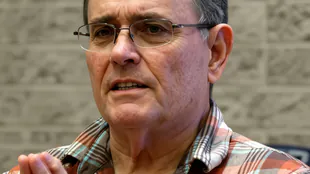
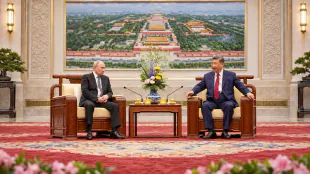
Sri Lanka's new president seek changes to IMF deal / Photo: © Sri Lanka's President Office/AFP

 Energy bill plan could use HMRC income data to target support

 Business owner earning £6,000 a month tackles £70,000 debt

 Nvidia chief faces inquiry after disclosing affair with suspected Chinese agent

 Comet returns as online electrical marketplace 14 years after collapse
 Aston Villa Defy History With Rare Victory at Old Trafford
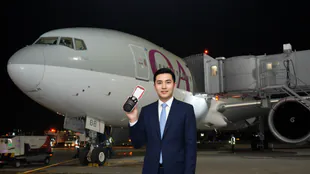 Qatar Airways Launches Bogotá-Caracas-Doha Route Linking Energy Markets

 Marc Almond to Close Soft Cell Era After Final 'Danceteria' Tour
Sri Lanka's new president Thursday urged the IMF to consider "alternative means" to continue with a $2.9 billion bailout that aided his country in the wake of a sovereign default but imposed painful austerity.
In his first face-to-face meeting with International Monetary Fund representatives in Colombo, self-avowed Marxist Anura Kumara Dissanayake said he wanted to reduce taxes on lower income groups.
He won his country's September 21 presidential election promising to reverse steep tax hikes, raise public servant salaries and renegotiate the controversial bailout secured by his predecessor, Ranil Wickremesinghe.
Dissanayake told the IMF that he wanted to continue with the four-year programme, which requires the government to reform loss-making state enterprises and improve governance.
Dissanayake reaffirmed "broad agreement" with the objectives of the IMF programme but "emphasised the importance of achieving these objectives through alternative means that relieves the burden off the people," his office said in a statement.
It said the IMF delegation headed by its Director for Asia Pacific, Krishna Srinivasan, "agreed to discuss the alternative approaches proposed by the Sri Lankan government."
However, neither side gave details of the new proposals.
The 2023 bailout helped end crippling shortages of food, fuel and medicine and returned Sri Lanka's economy to growth, but its austerity measures left millions struggling to make ends meet.
The new president has said he also wants to conclude a deal to restructure $12.5 billion in international sovereign bonds and secure more concessions for the cash-strapped nation.
Analysts, however, say Dissanayake has little room to reshape the terms of the IMF deal.
Sri Lanka declared a sovereign default on its $46 billion debt in April 2022 after running out of foreign exchange.
"There are certain red lines that the IMF will not agree to negotiate," Murtaza Jafferjee of the Colombo-based economic think tank Advocata told AFP soon after Dissanayake's election.
The IMF would be very unlikely to budge on core components of the bailout, including a ban on printing money as well as revenue and spending targets agreed by the last administration, Jafferjee said.
Sri Lanka's 2022 financial crisis that precipitated the bailout proved to be an opportunity for Dissanayake, who saw his popularity rise after pledging to change what he called the island's corrupt political culture.
Dissanayake has dissolved the 225-member parliament in which his once-marginal party had just three seats and called fresh elections for November 14, nearly a year ahead of schedule.
Any fresh deal with bondholders as well as the IMF requires approval by parliament, which is set to hold its first session on November 21.
R.Kloeti--VB