'Kill him first': Israel eyes top level targets / Photo: © AFP/File

 Ed Sheeran returns to stage after Palestinian controversy

 Asian Games to open in Japan after troubled build-up
 Drone owners rush to offload devices ahead of Beijing ban

 Trump's beef policies irk Texas ranchers, testing their loyalty

 Nvidia, OpenAI CEOs to attend Xi dinner at White House

 Anthropic picks Accenture for in-house AI safety evaluation
 Balogun returns as Monaco beat Lens to continue strong Ligue 1 start

 'Pause' on overt repression in Venezuela, but reforms still needed: HRW

 Global stocks mixed as yen falls despite Bank of Japan rate hike

 Cuba hit with seventh major blackout of the year

 Murray out with concussion so Wentz will start for Vikings
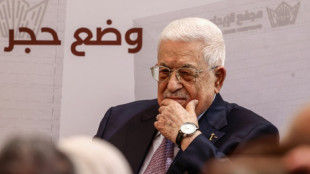 UN chief 'deeply regrets' US visa refusal to Abbas for annual meeting

 England quick Carse to face no charges over alleged nightclub assault

 Mancini brings nine newcomers into the first squad of his Italy comeback

 Czechs level Davis Cup tie against USA as South Korea eye Finals

 New France boss Zidane confirms Mbappe as captain after naming first squad
 California governor signs order to explore AI 'kill switch'

 Head leads run spree as Australia win Zimbabwe ODI series

 In-form Raphinha wants to finish career at Barcelona

 Warren Buffett steps down as Berkshire Hathaway chairman
 Carrick confident Man Utd can 'work through' tough time

 Mbappe ends Nike partnership to join Swiss brand On

 Liverpool boss Iraola puts Bournemouth love affair on hold

 'A disaster' if Man City do not win says Maresca after flawless start

 Kerry James Marshall: American 'blackness' painter celebrated in Europe

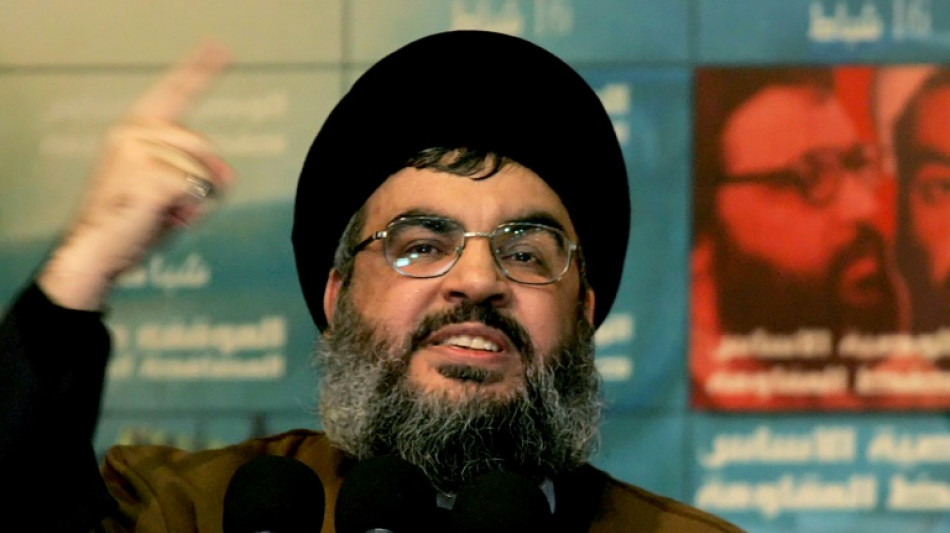
After the killing of Hezbollah's leader in Lebanon, Prime Minister Benjamin Netanyahu boasted Israel had "settled the score". But the legacy of Israel's past targeted killings calls into question how much will actually change.
Far from bringing respite to Israelis, Hassan Nasrallah's death led to an Iranian missile attack on Israel, as Tehran sought to avenge its protege in Lebanon and an Iranian general killed alongside him.
Israel has vowed to retaliate, with analysts saying it is only a matter of time.
Hezbollah, created in 1982 with Iranian help after Israel's invasion of Lebanon, has taken a major hit from Israeli attacks that have killed Nasrallah and much of his top brass.
Yet past Israeli operations show the possible limits of this strategy.
When Israel killed Nasrallah's predecessor, Abbas al-Musawi, in 1992, it did not weaken Hezbollah.
Nasrallah, then 32, replaced him and eventually became, in Netanyahu's words, "not just another terrorist" but "the terrorist".
Israel was also linked to the 2008 killing of top Hezbollah commander Imad Mughniyeh in a Damascus car bombing.
That killing, however, "didn't make Hezbollah's military operations necessarily weaker", said David Wood, senior analyst for the International Crisis Group.
"It didn't make it harder to recruit people to join Hezbollah. If anything, Hezbollah continued to develop its military programme."
This time, Israel's strikes may prove more consequential, since they "decimated" Hezbollah's senior military leadership, said Wood, calling it "an unprecedented challenge" for the group.
- 'Wrath of God' -
Israel's policy of targeted killings began after the 1972 Munich Olympic Games, where Palestinian gunmen from the Black September group killed 11 Israelis.
In response, Israel launched "Wrath of God", an operation targeting leaders of Black September and the Palestine Liberation Organization.
This strategy evolved, with Israeli hits on top Hezbollah and Hamas operatives.
But there were also blunders, like the failed 1997 attempt to poison Hamas leader Khaled Meshaal in Amman, which soured Israel-Jordan ties, just a few years after they had made peace.
Israel was then forced to release Hamas spiritual leader Ahmed Yassin in exchange for two Israeli spies arrested by Jordan.
Since Hamas's October 7 attack, Israel has carried out several high-profile killings, including Hamas leader Ismail Haniyeh, Hezbollah commander Fuad Shukr, and now Nasrallah.
Israel claimed responsiblity for Shukr's death in south Beirut but has yet to confirm its role in Haniyeh's killing in Iran.
- 'Massive degrading' -
Netanyahu defended targeted killings days ago by quoting the Talmud, the central text of Judaism: "He who comes to kill you, rise up and kill him first."
For years up until the October 7 attack, Israel had mostly held its breath as Hezbollah and Hamas amassed formidable arsenals, said John Hannah of the Jewish Institute for National Security of America.
October 7 changed that, after Palestinian gunmen stormed across the border and staged an unprecedented attack on Israel that resulted in the deaths of 1,205 people, mostly civilians, according to an AFP tally based on Israeli official figures that include hostages killed in captivity.
The latest attacks on Hezbollah show "the doctrines of pre-emption and prevention have returned with a vengeance to Israel's national security" strategy, said Hannah.
"Israel is now engaged in a massive degrading of the military capabilities of both Hamas and Hezbollah," he added.
This week, Israel's military announced the launch of "limited" raids in south Lebanon against Hezbollah, which began firing on northern Israel in support of ally Hamas after the October 7 attack.
The announcement came after a week of deadly bombardment on Hezbollah strongholds around Lebanon.
Israel says its shift in focus to securing its northern front aims to ensure the safe return of more than 60,000 Israelis displaced from the border by Hezbollah cross-border strikes in the past year.
Within Israel, meanwhile, some have questioned whether Nasrallah's killing will help serve that purpose.
Yossi Melman, an intelligence commentator for the left-leaning Israeli daily Haaretz, said Nasrallah's death would only be a "game-changer" if it is followed by serious diplomatic efforts to end the fighting.
"Hezbollah, despite the heavy blows it has suffered, will keep targeting" northern Israel, said Melman, author of a history of Israeli espionage titled "Spies Against Armageddon".
"And as long as the shelling continues the evacuees will not return."
R.Flueckiger--VB